.jpg)


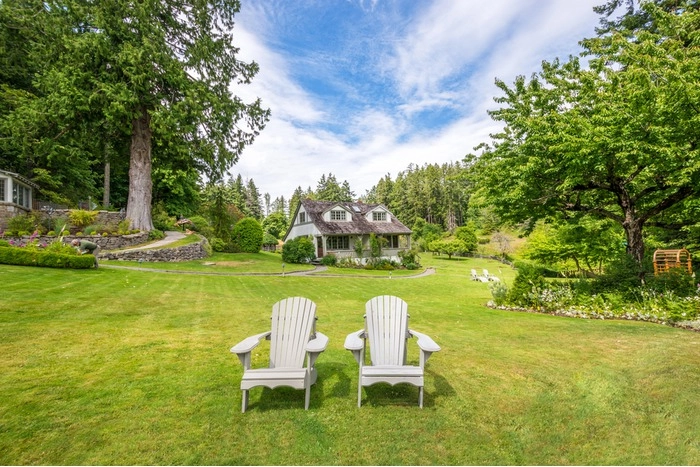
Buying acreage in Colorado comes down to seven documents: the well permit, the septic permit and inspection, a survey (not an ILC), the title commitment with every easement and mineral reservation, the county zoning letter, the road maintenance agreement, and the covenants. Get all seven inside the inspection deadline and most acreage surprises disappear before closing.
The post on key tips to buy your dream property covers the mountain and acreage basics: views, elevation, commute and lifestyle. This guide is the practical layer underneath it, written for Front Range buyers looking at Elizabeth, Franktown, Kiowa, Parker, Sedalia, Evergreen, Conifer, Bennett, Hudson, Berthoud, Wellington and the Black Forest north of Colorado Springs.
What do the Colorado well permit types allow?
Every well in Colorado needs a permit from the Division of Water Resources (the State Engineer's Office). The permit, not the pump, decides what you do with the water. Look the permit up by address or parcel on the DWR well permit search before you write an offer.
- Household-use-only well: water inside one home. No lawn, no garden, no livestock. This is the permit on most lots under 35 acres created after 1972.
- Domestic well: in-house use, irrigation of up to 1 acre of lawn and garden, and watering of domestic animals. Issued on parcels of 35 acres or larger, or on older lots that qualify.
- Livestock well: stock watering only.
- Augmented or decreed wells: water rights tied to a court decree or a water district augmentation plan, with the uses listed in the decree.
A horse property with a household-use-only permit cannot legally water horses from the well. That is the single most common mismatch the Kenna Real Estate Group finds on Elbert County and Weld County listings. After closing, file the DWR change-of-ownership form so the permit shows your name.
Test the water and the well before the deadline: a bacteria and nitrate test, a flow test of 2 to 4 hours, and a look at the pump age. FHA and VA loans require a water quality test on a private well. A new well on the Front Range runs $25,000 to $60,000 depending on depth, so a weak or failing well is a price conversation, not a shrug.
Which counties require a septic inspection at sale?
Septic systems in Colorado (called OWTS, on-site wastewater treatment systems) are permitted by the county under state Regulation 43. Jefferson County, Boulder County and Douglas County require an inspection by a certified inspector and a transfer-of-title use permit or certificate before the sale closes, and the seller pays for repairs the inspection turns up unless the contract says otherwise. Other counties, including El Paso and Arapahoe, run their own transfer programs; call the county health department for the current rule on any parcel.
Costs on the Front Range: inspection $350 to $700, pumping $350 to $600, a new conventional system $15,000 to $30,000, and an engineered mound or aerobic system on tight clay or a high water table $30,000 to $50,000. Ask for the county permit, the as-built drawing and pumping receipts. A system with no permit on file is a system the county treats as new construction. The post on what homebuyers need to know about septic systems on a rural property covers the inspection itself.
ILC or survey: which one do I need on acreage?
An Improvement Location Certificate (ILC) is a $300 to $600 drawing that shows where the buildings sit relative to the lot lines as the surveyor understands them. It is not a boundary survey, it sets no pins, and it carries no boundary opinion. Lenders accept it on a subdivision lot.
On acreage, order an Improvement Survey Plat or a boundary survey, $2,500 to $7,000 on 5 to 40 acres and more where corners are missing. It sets monuments, shows fences that wander off the line, and finds the neighbor's barn on your side. Fences on old ranch land were built where the tractor turned, not where the deed says, and Colorado recognizes adverse possession claims after 18 years of open use. The Colorado ILC vs. land survey guide shows the two documents side by side.
Is Colorado a fence-out state?
Yes. Under the Colorado Fence Law, a landowner who wants to keep neighboring livestock off the property must build and maintain a lawful fence. A rancher whose cattle wander onto unfenced land is not liable for the damage. Adjoining owners share partition fences, and the law defines a lawful fence by wire count and post spacing. Budget $8 to $15 per linear foot for four-strand barbed wire and $25 to $45 per foot for no-climb horse fence with wood posts; a 10-acre perimeter is roughly 2,650 feet.
Do I get the mineral rights?
Only if nobody severed them before you. Colorado law treats the mineral estate as dominant over the surface estate, and along the northern Front Range, especially Weld County, Adams County and eastern Arapahoe County over the DJ Basin, the minerals were split from the surface decades ago. Read Schedule B of the title commitment for mineral reservations and leases, and check the county clerk's index for mineral deeds.
Two protections exist. Operators must give surface owners notice and negotiate a surface use agreement before drilling, and new oil and gas wells are set back 2,000 feet from homes under Energy and Carbon Management Commission rules. The Colorado Contract to Buy and Sell carries an oil and gas activity disclosure; read it and look up the parcel on the ECMC map for existing wells, pipelines and flowlines.
Which easements matter on acreage?
- Access easements: if the driveway crosses a neighbor, the recorded easement is the only thing that keeps the gate open. A parcel with no recorded access is landlocked, and lenders will not fund it.
- Ditch easements: irrigation ditch companies hold rights to enter, clean and widen their ditch. You do not build inside the ditch right-of-way.
- Utility easements: Xcel Energy, rural electric co-ops such as IREA (now CORE Electric) and Mountain View Electric, and pipeline operators.
- Conservation easements: permanent limits on building and subdividing, in exchange for the prior owner's tax deduction. They bind you.
- Prescriptive use: a neighbor who has driven across the corner for 18 years has a claim. The survey and a walk with the seller find these.
How much fire mitigation does a foothills property need?
The Colorado State Forest Service defensible space guidance sets three zones: Zone 1 from the wall to 5 feet, kept free of anything that burns; Zone 2 from 5 to 30 feet, with trees thinned and limbed and grass mowed; Zone 3 from 30 to 100 feet, thinned so crowns do not touch. Jefferson County, Boulder County and other foothills counties tie building permits and some sales to a mitigation inspection.
Insurance is now the bigger hurdle. Carriers score every address for wildfire risk and decline or surcharge high-score properties in Evergreen, Conifer, Bailey, Nederland, Lyons and the Black Forest, and the Colorado FAIR Plan exists as the last-resort policy. Get an insurance quote before the inspection deadline, not after. The post on checking the wildfire score before you decide walks through the quote.
Who maintains the road and plows the snow?
County-maintained gravel roads get graded and plowed on the county's schedule, with priority routes first; a dead-end road in Elbert County waits. Private roads are yours and your neighbors'. Lenders ask for a recorded road maintenance agreement on private roads, and if none exists, one gets written before closing. Ask what the neighbors pay per year and who owns the plow.
Plan on a tractor or UTV with a blade, or a plow contract at $75 to $150 per visit on a long driveway. Mag chloride on county roads eats vehicle undercarriages, and a 1/4 mile gravel driveway needs $1,500 to $3,000 of new gravel every 2 to 3 years.
Do acreage subdivisions have HOA covenants?
Many do, and the covenants on a 5-acre lot in Franktown or a 35-acre ranchette outside Kiowa are stricter than buyers expect: a cap on horses per acre, minimum home size, no mobile or modular homes, outbuilding approval, fence style, and short-term rental bans. Read the recorded covenants and the county zoning letter together. The county sets animal units per acre and the setback for barns and arenas; the HOA sets the rest. The Colorado horse property buying guide lists the questions to ask on the barn, arena and pasture, and the post on whether a big shop adds value on Colorado acreage covers outbuildings.
Why are so many parcels 35 acres?
Because Colorado's 1972 subdivision law exempts parcels of 35 acres or larger from county subdivision review. Landowners split ranches into 35-acre pieces to skip that process, and those pieces come with domestic well eligibility and the chance to hold an agricultural property tax classification if the land is grazed or hayed under a lease. Losing the ag classification raises the tax bill several times over, so ask the assessor how the parcel is classified and what keeps it that way.
How is financing acreage different?
Conventional lenders finance the home and a reasonable amount of land, and the appraiser must find acreage comparables within a wide radius. Parcels over 40 acres, properties with agricultural income, or land with no home go to Farm Credit or a land lender at higher rates and larger down payments. Mike Oswald, VP of Mortgage Lending at Rate, NMLS 261003, Equal Housing Lender, pre-approves Kenna Real Estate Group buyers on acreage and tells them early which parcels fit a conventional loan. You are free to use any lender. Details on the Colorado home financing page.
| Item | When | Front Range cost |
|---|---|---|
| Well water test and flow test | Inspection period | $300 to $700 |
| Septic inspection and pump | Inspection period | $700 to $1,300 |
| Improvement Survey Plat | Inspection period | $2,500 to $7,000 |
| Wildfire insurance quote | Before the inspection deadline | $0 |
| Road maintenance agreement | Before closing | $500 to $1,500 legal |
| New well, if needed | After closing | $25,000 to $60,000 |
| New septic, if needed | After closing | $15,000 to $50,000 |
Where do buyers find Colorado acreage?
Elbert County (Elizabeth, Kiowa) and eastern Douglas County (Franktown, Parker) for horse properties 30 to 45 minutes from the Denver Tech Center; Jefferson and Park counties (Evergreen, Conifer, Bailey) for treed mountain lots; Weld and Larimer counties (Berthoud, Wellington, Hudson) for larger farm parcels; the Black Forest for Colorado Springs commuters. Search current listings on the Colorado horse properties for sale page or filter by lot size across every home for sale in Colorado. The Colorado home buyers guide covers the contract deadlines that all of these checks hang on, and the buyer services page explains how the group runs them.
Where to go next
- Colorado horse properties for sale
- Colorado horse property buying guide
- Key tips to buy your dream property
- Wells and septic systems in Colorado
- Mortgage pre-approval for Colorado buyers
- Meet the agents of the Kenna Real Estate Group
Talk to the Kenna Real Estate Group
The Kenna Real Estate Group, Keller Williams DTC, pulls the well permit, the septic file, the covenants and the title exceptions on every acreage listing before a buyer drives out, and writes the survey, water and road contingencies into the Colorado contract. Call or text 303-955-4220. A live person answers. Not a robot, not a phone tree. Or search every home for sale in Colorado and sort by lot size.
Homes for sale that match this post
Guides
Questions about any home in Colorado? Call or text 303-955-4220. A live person answers.