.jpg)


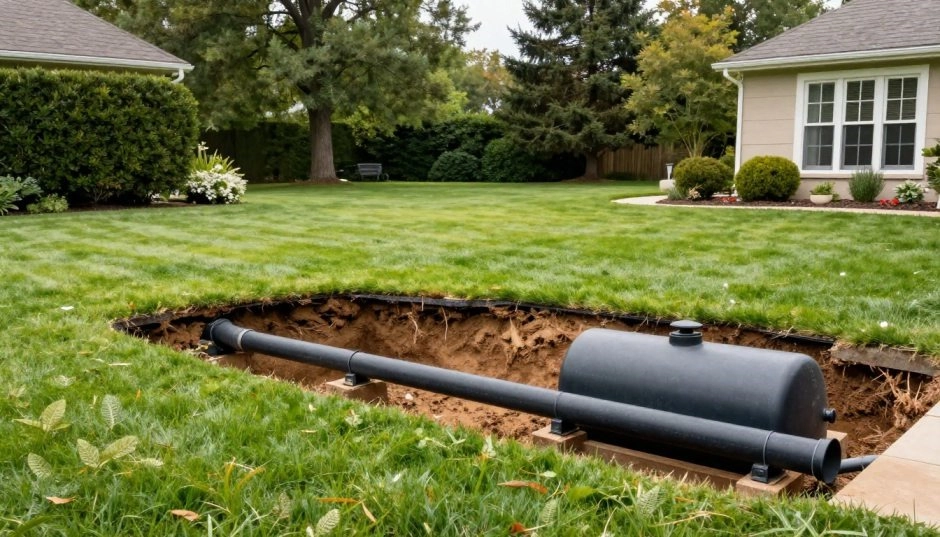
Every rural, mountain and acreage home in Colorado without a sewer tap runs on an on-site wastewater treatment system, which the state calls an OWTS and everyone else calls a septic system. Before you buy one, you need three things: the county's transfer inspection or use permit, a pumped tank with a camera look inside it, and a walk of the leach field with the county's permit drawing in your hand. This guide covers what Colorado counties require at sale, the system types you will see from Evergreen to Elizabeth to Black Forest, what fails, what it costs and how the well and septic setbacks work.
The Kenna Real Estate Group sells acreage from Weld County to El Paso County, and the septic file is the first thing we pull on every one. Colorado regulates these systems under Regulation 43 from the Water Quality Control Commission, and each county's public health department writes its own rules on top of it. The county is the authority. Call it.
Which Colorado counties inspect septic at the sale?
There is no statewide transfer inspection. The county where the home sits decides, and the Front Range counties with the most acreage homes each run their own program.
- Jefferson County. Jefferson County Public Health requires an OWTS Use Permit whenever a property with a septic system is sold or transferred. A county-approved inspector evaluates the system, the tank is pumped, and the county issues the permit before closing. This covers Evergreen, Conifer, Morrison, Golden's foothills and the Indian Hills area.
- Douglas County. The Douglas County Health Department requires an OWTS Use Permit at transfer of ownership. The inspection follows the county's checklist, and the permit names the number of bedrooms the system is approved to serve. This covers Franktown, rural Parker, Sedalia, Larkspur and the Castle Rock outskirts.
- El Paso County. El Paso County Public Health runs a Transfer of Title program. A county-certified inspector evaluates the system when the property changes hands and the county issues an acceptance letter. This covers Black Forest, Falcon, Peyton, Monument's acreage and the Fountain and Ellicott areas.
- Boulder County. The SepticSmart program requires a property transfer inspection and a county certificate at sale for homes in unincorporated Boulder County.
- Everywhere else. Adams, Arapahoe, Weld, Larimer, Elbert, Park, Clear Creek and Gilpin counties each have their own OWTS rules, and some of them require a transfer inspection as well. Call the county public health department the day you go under contract and ask two questions: Is an inspection or use permit required at sale, and does the county have a permit and drawing on file for this address?
Where the county does not require an inspection, order one anyway. Write it into the Colorado Contract to Buy and Sell as part of the inspection objection deadline, with 10 to 14 days so the pumper, the inspector and the county records request all fit.
The system types you will see in Colorado
- Conventional gravity system. A septic tank feeding a leach field (the state calls it a soil treatment area) of trenches or chambers. The most common system on flat and gently sloped lots along the eastern plains and the Douglas County and Weld County acreage belts.
- Pressure-dosed system. A pump chamber pushes effluent evenly across the field. Used where the field sits uphill from the house or where the soil needs even loading.
- Mound and sand filter systems. Built above grade or through a sand bed where bedrock, groundwater or clay sits too close to the surface. Common in the foothills and along river bottoms.
- Advanced treatment units. Aerobic units, textile filters and drip dispersal for small lots, poor soils and lots near streams. These carry a required maintenance contract and an annual service visit.
- Vaults. A sealed holding tank with no field, pumped by truck on a schedule. Legal in limited cases; the pumping bill runs for the life of the home.
Regulation 43 sizes every system by bedroom count, not by bathroom count or square footage. That matters when a listing calls a home a five-bedroom and the county permit says three. The permit number wins, and the county will not sign off on the extra bedrooms until the system is enlarged.
Age and remaining life
A concrete septic tank lasts 40 years or more. Steel tanks from before the 1980s rust through at the waterline and the lids collapse; an inspector who finds a steel tank writes it up for replacement. A leach field lasts 20 to 30 years with regular pumping and no vehicle traffic on top of it. Trenches in heavy bentonite clay and fields that received water softener backwash for decades sit at the short end of that range.
Ask the seller for the county permit date, the installer, every pumping receipt and every repair invoice. Colorado sellers fill out the Seller's Property Disclosure, which asks directly about the sewage system, its type, any known problems and any backups. Missing records are not a defect, but they move the inspection from routine to thorough.
Pumping, the inspection and what the inspector does
A Front Range septic tank on a full-time household needs pumping every 3 to 5 years. A transfer inspection starts with a pump-out so the inspector can see the tank walls, baffles, inlet and outlet. The routine that experienced septic system specialists describe holds at 6,000 feet the same way it does at sea level: pump it, look at it, measure the field, keep the paper. A Colorado inspection then adds:
- A locate and probe of the leach field against the county drawing, with a check for surfacing effluent, soggy ground and bright green grass in August when everything else is brown.
- A hydraulic load test on a system that has been sitting empty, which is common on estate sales and second homes in Park County and Clear Creek County.
- Riser and lid check. Tanks buried under 18 inches of sod need risers to grade; adding them costs $300 to $800 and saves a dig every pumping.
- Pump, float and alarm test on pressure-dosed and advanced systems, plus the service contract status.
- A camera through the line from the house to the tank when the home is more than 30 years old, because that line is the one roots find first.
Why Colorado soils decide the system
Reg 43 requires a soil evaluation before any new or replacement system is permitted: a test pit dug to bedrock or groundwater and logged by a qualified professional, with the soil type setting the field size. Front Range acreage runs the whole spectrum. Expansive bentonite clay across Douglas, Arapahoe and Elbert counties drains slowly and needs long trenches or an engineered system. Decomposed granite in Jefferson County's foothills drains fast but sits on fractured rock that sends effluent toward wells. Sandy loam in the Black Forest and along the South Platte in Weld County is the easy case. Ask the county for the original soil log; if none exists, the replacement system will cost more than the one in the ground.
What fails and what it looks like
- Slow drains and gurgling toilets across the whole house, not one fixture: a full tank or a saturated field.
- Wet ground, odor or standing water over the field in dry weather: field failure.
- Roots from cottonwoods, willows and aspen within 20 feet of the field.
- A driveway, shed, horse paddock or RV pad built on top of the field. Compaction kills trenches; horses are the number one cause on equestrian properties.
- A seasonal home switched to full-time use with a system sized for weekends.
What septic work costs on the Front Range
| Item | Front Range cost range |
|---|---|
| Tank pumping (1,000 to 1,500 gallon) | $350 to $600 |
| Transfer inspection with locate and report | $400 to $800, plus the county permit fee |
| Risers and lids to grade | $300 to $800 |
| Replace an effluent pump and floats | $1,200 to $2,500 |
| Replace a steel or cracked tank | $5,000 to $10,000 |
| Replace a leach field, conventional soils | $10,000 to $25,000 |
| New engineered or advanced treatment system | $30,000 to $60,000 |
Every new or replacement system needs a county permit and a design. Rocky sites, steep lots and winter installs push toward the top of each range. If the inspection finds a failed field, the Colorado contract's inspection resolution deadline is where the price, a seller credit or a seller-paid replacement gets settled. The making an offer on a Colorado home page covers how those deadlines are written.
Wells, setbacks and the water side of the file
Most septic homes in Colorado also run on a private well, and the two systems are permitted to stay apart. Regulation 43 sets minimum setbacks: a leach field must sit at least 100 feet from a well and a septic tank at least 50 feet from a well, with additional distances from property lines, foundations, streams and irrigation ditches. An inspector checks these against the permit drawing because older systems were installed before the current distances.
On the well itself, the Colorado Division of Water Resources issues the permit, and the permit type controls what the water is allowed to do. A household-use-only permit, standard on lots under 35 acres outside a designated basin exception, allows in-house use with no outdoor watering and no livestock. A domestic well permit on 35 acres or more allows one acre of lawn and garden and stock watering. Colorado law requires the seller to complete a Source of Water Addendum with the contract, and the Colorado contract has a section for well permits and water rights. Pull the well permit from the Division of Water Resources by the permit number, test the water for bacteria and nitrates through a state-certified lab, and run a flow test on the same visit the septic inspector makes.
Adding a bedroom, a barn apartment or a guest house
Any change that adds bedrooms requires a county permit to enlarge the system or install a second one, and the county reviews the soil log and available area first. On horse properties, plan the barn, paddocks and the future replacement field location together so the field is never fenced into a turnout. The Kenna Real Estate Group's Colorado horse property buying guide and the post on buying a Colorado horse property: barns, storage and land cover the site-planning side. Browse current Colorado horse properties for sale to see how existing homes laid out the septic, the well and the barn.
Financing a home on well and septic
Rural loans need the water and septic paperwork in the file. FHA, VA and USDA loans require evidence that the system works, and every lender wants the county permit or use permit before closing. Mike Oswald, VP of Mortgage Lending at Rate, NMLS 261003, Equal Housing Lender, closes acreage loans across the Front Range and knows which documents each program asks for. You are free to use any lender. Read the Colorado home financing guide for the loan side of a rural purchase.
Where to go next
- Search every home for sale in Colorado
- Colorado horse properties for sale
- The Colorado home buyer's guide
- How the Kenna Real Estate Group helps buyers
- The ultimate guide for buying homes with acres or large lots
- What to know before buying a mountain home in Colorado
- Meet the Kenna Real Estate Group agents
Talk to the Kenna Real Estate Group
The Kenna Real Estate Group at Keller Williams DTC pulls the county septic permit and the well permit on every acreage home before you write, writes the inspection deadlines so the pumper and the county both fit, and negotiates a failed field as a number instead of a surprise. Call or text 303-955-4220. A live person answers. Not a robot, not a phone tree. Or search every home for sale in Colorado and filter by acreage to start.
Homes for sale that match this post
Guides
Questions about any home in Colorado? Call or text 303-955-4220. A live person answers.