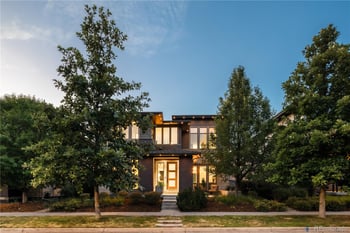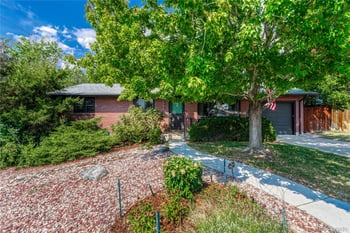
$600,000
Active Under Contract
4
Beds
2
Baths
1932
Sqft
0.25
Acres
395 S Lee St, Denver, CO 80226
MLS#: REC8957729
.jpg)



Selling a Colorado vacation home or rental brings three federal tax items that a primary residence never does: capital gains tax on the full gain with no $250,000 exclusion, depreciation recapture on every dollar of depreciation you claimed or were allowed, and Colorado income tax on top at the state's flat 4.4 percent rate. A 1031 exchange defers all three when you buy another investment property on the IRS clock. This guide covers the Colorado version of each rule for owners in Breckenridge, Winter Park, Estes Park, Crested Butte and the Front Range, including the short-term rental license rules that now decide what a buyer will pay.
The IRS sorts a second home by days, not by what you call it:
Days spent doing repairs full time do not count as personal use. Days a relative stays without paying fair rent do. Pull the calendar for the last five years before you list; it decides which rules below apply.
Gain is the sale price minus selling costs minus adjusted basis. Adjusted basis is what you paid, plus closing costs on the purchase, plus capital improvements (a new roof after hail, a furnace, a deck, a finished basement), minus every year of depreciation you claimed or were entitled to claim. The IRS reduces basis by allowed depreciation whether or not you took it, so an owner who skipped depreciation for ten years still pays recapture on it.
| Item | Example Breckenridge condo |
|---|---|
| Purchase price plus closing costs (2015) | $450,000 |
| Capital improvements | $40,000 |
| Depreciation claimed over 9 years | ($120,000) |
| Adjusted basis | $370,000 |
| Sale price less commissions and closing costs (2026) | $820,000 |
| Total gain | $450,000 |
| Of which depreciation recapture | $120,000 |
| Of which long-term capital gain | $330,000 |
Held longer than one year, the $330,000 is long-term capital gain, taxed federally at 0, 15 or 20 percent based on your taxable income in the year of sale. Held one year or less, it is taxed as ordinary income. Higher-income sellers also owe the federal net investment income tax on the gain. Every figure above is an example; your CPA runs the real one from your depreciation schedule.
Residential rental buildings depreciate over 27.5 years. Every dollar deducted lowered your taxable rental income in the year you took it. At sale, the IRS taxes that total back as unrecaptured Section 1250 gain at its own federal rate, which is higher than the 15 percent most sellers pay on the rest of the gain. In the example above, the $120,000 of recapture is taxed ahead of the $330,000 of capital gain, and it is never excluded, even when the home was your primary residence for part of the ownership.
Two things reduce it: capital improvements raise basis (keep every invoice), and a 1031 exchange defers it along with the capital gain.
Yes. Colorado has no separate capital gains rate. The federal gain, recapture included, flows onto the Colorado return and is taxed at the state's flat income tax rate of 4.4 percent. Colorado has no estate tax, no inheritance tax and no state real estate transfer tax, but four things at closing catch mountain-home sellers:
Only for the years you lived in it as your main home. The federal exclusion of $250,000 (single) or $500,000 (married filing jointly) requires two years of ownership and two years of use as your principal residence inside the five years before the sale. A Winter Park condo used on ski weekends never qualifies. A Denver house you rented out and then moved back into qualifies in part: for rental periods after 2008 the gain is split between qualified and non-qualified use by the calendar, and the non-qualified share is taxed. Depreciation recapture is never excluded.
Owners who move into a Front Range rental for two years before selling should log the move date, the driver's license change and the utility accounts as proof of residence. The group's home equity and net proceeds guide shows how the exclusion changes the net check.
A 1031 exchange defers the capital gain, the recapture and the Colorado tax by rolling the sale into another investment property. The rules are fixed:
A vacation home qualifies when IRS guidance is met: rented at fair rent for 14 days or more in each of the two years before the sale, with personal use under 14 days or 10 percent of rented days in each of those years. A home you used every summer and never rented does not qualify. Line up the replacement search before the sale closes; 45 days on the Front Range is two showing weekends. Start with homes for sale in Denver, then read the Colorado real estate investing guide and the duplex and multifamily buying guide for the replacement side.
In Colorado mountain towns the short-term rental license decides the buyer pool and the price. Nearly every town issues the license to the owner, not the property, so it does not transfer at closing, and towns with caps put the buyer on a waitlist. Confirm the current rule with the town clerk the week you list:
Sell the rental history, not the license. Two years of booking records, occupancy, average nightly rate and expense statements are what a buyer's lender and CPA ask for, and a listing that leads with them prices higher.
Mountain listings show best from late May to early October, when the roads are dry and the decks are usable; Front Range rentals list year-round. Selling in a year when your other income drops moves more of the gain into the 0 or 15 percent federal bracket, and a January closing pushes the tax bill a full year out. The group's Smart Pricing Report prices a mountain or rental property on comparable sales plus the rental income, and the Colorado market reports show what closed last month.
Buyers of Colorado second homes and 1031 replacement properties finance them with second-home or investment loans that carry larger down payments and their own rate sheets. Mike Oswald, VP of Mortgage Lending at Rate, NMLS 261003, Equal Housing Lender, pre-approves both. You are free to use any lender. See Kenna financing.
Confirm every figure in this guide with a Colorado CPA or tax attorney before you sign a listing agreement; your numbers depend on your return.
The Kenna Real Estate Group at Keller Williams DTC sells rentals and second homes across the Front Range and works with mountain-town owners on timing, pricing and the 1031 replacement search, alongside your CPA and a qualified intermediary. Call or text 303-955-4220. A live person answers. Not a robot, not a phone tree. You can also search every home for sale in Colorado.
Questions about any home in Colorado? Call or text 303-955-4220. A live person answers.
Yes. Gain on Colorado real estate is Colorado-source income, so you file a Colorado nonresident return and pay the flat 4.4 percent on the gain. The 2 percent withheld at closing is credited against that bill.
A loss on a property held as a rental is deductible and offsets other income under the federal rules for business property. A loss on a personal-use vacation home is not deductible at all, which is one more reason the day count matters.
Yes, when you hold the replacement as a rental first: rent it at fair rent for at least 14 days in each of the first two years and keep personal use under the IRS limit. After you move in, the primary residence exclusion needs five years of ownership from the exchange date plus the two years of residence.
An installment sale reports the capital gain as the payments arrive instead of all in the year of sale. Recapture follows separate timing rules, so a Colorado CPA runs the schedule before you accept a carry-back offer.
A standard delayed exchange runs $750 to $1,500 in intermediary fees, paid from the exchange funds at the replacement closing. Reverse and improvement exchanges cost more and take longer to set up.
No, but you file the final state and town lodging tax returns for bookings through the closing date and close the accounts. Bookings after closing belong to the buyer, and their deposits transfer at the table.
Yes. Many mountain and Front Range associations cap or ban rentals under 30 days in the declarations, and the town license does not override the HOA. Order the declarations and current rules before you write the listing remarks.
More than one year from the closing date of your purchase to the closing date of your sale. A sale at 12 months and one day is long-term; a sale at 11 months is taxed as ordinary income.