New - 14 Hours Ago
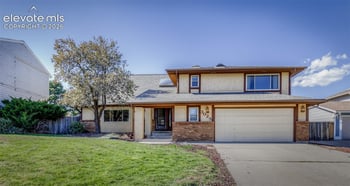
$599,900
Active
5
Beds
4
Baths
3260
Sqft
0.2681
Acres
3025 Windjammer Dr, Colorado Springs, CO 80920
MLS#: 8658909
.jpg)



A dated Colorado home sells in a 2026 buyer's market when the seller fixes what the lender requires, fixes what the buyer's inspector will write up, skips everything cosmetic that costs more than $5,000, and prices it against the move-in-ready comps minus the cost to cure. Buyers in Denver, Aurora, Lakewood, Arvada, Littleton, and Colorado Springs have more listings to choose from than at any point in over a decade, and a house that reads as a project loses to the one next door that does not.
The Kenna Real Estate Group lists dated homes across the Front Range every month. This is the playbook, in the order the money is spent. The short list of cosmetic updates is in the 2026 modernizing updates that attract more buyers; this post covers the decisions that decide whether the contract closes.
Active listings in the Denver metro sit at their highest level in more than ten years, days on market run past 45 on most price bands, and price reductions are routine. A buyer touring six homes on a Saturday picks the one with the fewest questions. The seller of a 1970s Centennial ranch or a 1990s Highlands Ranch two-story with the original furnace competes with that reality on every showing. Inside the Denver buyer's market: price cuts, trends, and how to negotiate has the month-by-month picture.
Most Front Range buyers under $600,000 finance with FHA, VA, or a conventional loan, and the appraiser on those loans is required to flag conditions the lender will not fund. A flagged item must be repaired before closing, not credited. Fix these first:
Any financing question on a dated home goes to Mike Oswald, VP of Mortgage Lending at Rate, NMLS 261003, Equal Housing Lender, who tells us in a day whether a specific condition clears the appraisal. You are free to use any lender. Loan types and their property rules are on the Colorado home financing guide.
The Colorado contract gives the buyer an inspection objection deadline, and on a dated home the objection list is predictable. These are the items that produce a $5,000 to $25,000 credit request or a terminated contract when the seller ignores them:
How Denver homeowners handle rising inspection requirements covers the pre-listing inspection that catches all of this for $400 to $600.
The Cost vs. Value report has said the same thing for two decades: big remodels return a fraction of their cost at resale, and on a dated home the buyer is already planning their own version. Skip:
After inspection the buyer submits an objection and the seller answers with a resolution: repair, credit, price reduction, or no. The rule the Kenna Real Estate Group uses on dated homes:
Net proceeds under each option are worked out on the home equity and net proceeds guide.
The pricing formula for a fixer-upper is the sale price of the updated comps on the same block, minus the contractor cost to bring the home to that condition, minus 10% to 15% of that cost for the buyer's time and risk. A 1978 Lakewood ranch whose updated neighbors close at $625,000 with $60,000 of work to match them prices at $555,000 to $560,000, not $600,000. Price it at $600,000 and it sits for 90 days and takes a $45,000 cut anyway. Our Smart Pricing Report on pricing your Colorado home to sell runs this comp by comp.
Fix first when the required list is under $15,000 and the home is otherwise livable; the return on lender-required repairs is the difference between a financed buyer pool and a cash-only one. Sell as-is on the MLS when the list is over $30,000 or the seller is out of state, out of time, or settling an estate; the Colorado contract still allows an as-is listing with an inspection period, and the home is marketed to the investor and renovation-loan buyers who search Colorado distressed homes. Take a direct cash offer only after seeing what the MLS as-is route nets; cash home buyers in Denver pay 65% to 80% of after-repair value minus their repair estimate.
The as-is sales process in Denver and selling as-is in Centennial for the best price walk through both routes with numbers.
As-is does not mean undisclosed. The Colorado Seller's Property Disclosure asks about the roof, structure, water intrusion, sewer, electrical, plumbing, HVAC, radon, and known defects. Every item found in your pre-listing inspection goes on it whether you fix it or not. A buyer who finds an undisclosed sewer break after closing has a claim; a buyer who read it on the disclosure and priced it in does not.
A dated interior is forgiven when the exterior says the home was maintained. Mow, edge, remove dead shrubs, cut back anything touching the siding, replace dead turf with rock or mulch beds, and pressure wash the drive to lift the winter mag chloride film. Budget $500 to $2,500. 8 curb appeal fixes for Front Range sellers has the full list, and the order of interior prep is on preparing and adding value before selling.
We order the pre-listing inspection, split the findings into lender-required, buyer-demanded, and skip, and price the home so it sells in the first 30 days instead of the ninetieth. Call or text 303-955-4220. A live person answers. Not a robot, not a phone tree. When the next home is part of the plan, search every home for sale in Colorado.
Questions about any home in Colorado? Call or text 303-955-4220. A live person answers.
Peeling paint on a pre-1978 home, a roof with under two years of life, a non-working heat source, exposed wiring, broken windows, missing handrails, and water in the basement. Flagged items are repaired before closing, not credited.
Yes on any home built before 1975. A $150 to $250 camera scope finds the clay or Orangeburg break that costs $6,000 to $18,000, and it is better priced in than discovered by the buyer.
3% of the price below 10% down, 6% between 10% and 25% down, and 9% above 25% down. FHA allows 6%. Anything past the cap comes off the price.
Updated comps on the block minus the contractor cost to match them minus 10% to 15% of that cost. A $625,000 comp with $60,000 of work prices the dated home at $555,000 to $560,000.
Many will not, and the buyer's insurance quote arrives before the inspection deadline. Replacement with a permit runs $2,500 to $5,000.
No. Colorado sellers disclose known defects on the form whether the sale is as-is or not. As-is means the seller will not repair, not that the buyer is uninformed.
65% to 80% of the after-repair value minus their repair estimate. Compare that number to an as-is MLS listing before signing.