HomeBlog Home
Tips & Advice

Protecting Metal Construction Projects in Christchurch: Site Shelter and Material Selection

Brian Lee BurkeBrian Lee Burke
Dec 29, 2025 13 min read
Share to X
Share to Facebook
Share to Linkedin
Copy Link
Protecting Metal Construction Projects in Christchurch: Site Shelter and Material Selection

Christchurch's coastal environment creates unique challenges for metal construction projects. From the moment materials arrive on site until final installation, salt-laden winds and unpredictable weather can compromise both work quality and material integrity. Success requires protecting your construction zone while specifying corrosion-resistant materials that perform for decades.

After witnessing numerous projects where inadequate weather protection damaged materials before installation and poor metal selection led to premature failure, I've developed an integrated approach that addresses both on-site protection and long-term material performance.

Protecting Metal Construction Projects in Christchurch: Site Shelter and Material Selection

Why Construction Weather Protection Matters in Canterbury

Many homeowners focus exclusively on the durability of finished metalwork while overlooking the critical construction phase. Yet materials stored outdoors, partially completed installations, and work surfaces exposed to salt spray during fabrication often suffer damage that shortens service life before the project even completes.

The Construction Vulnerability Window

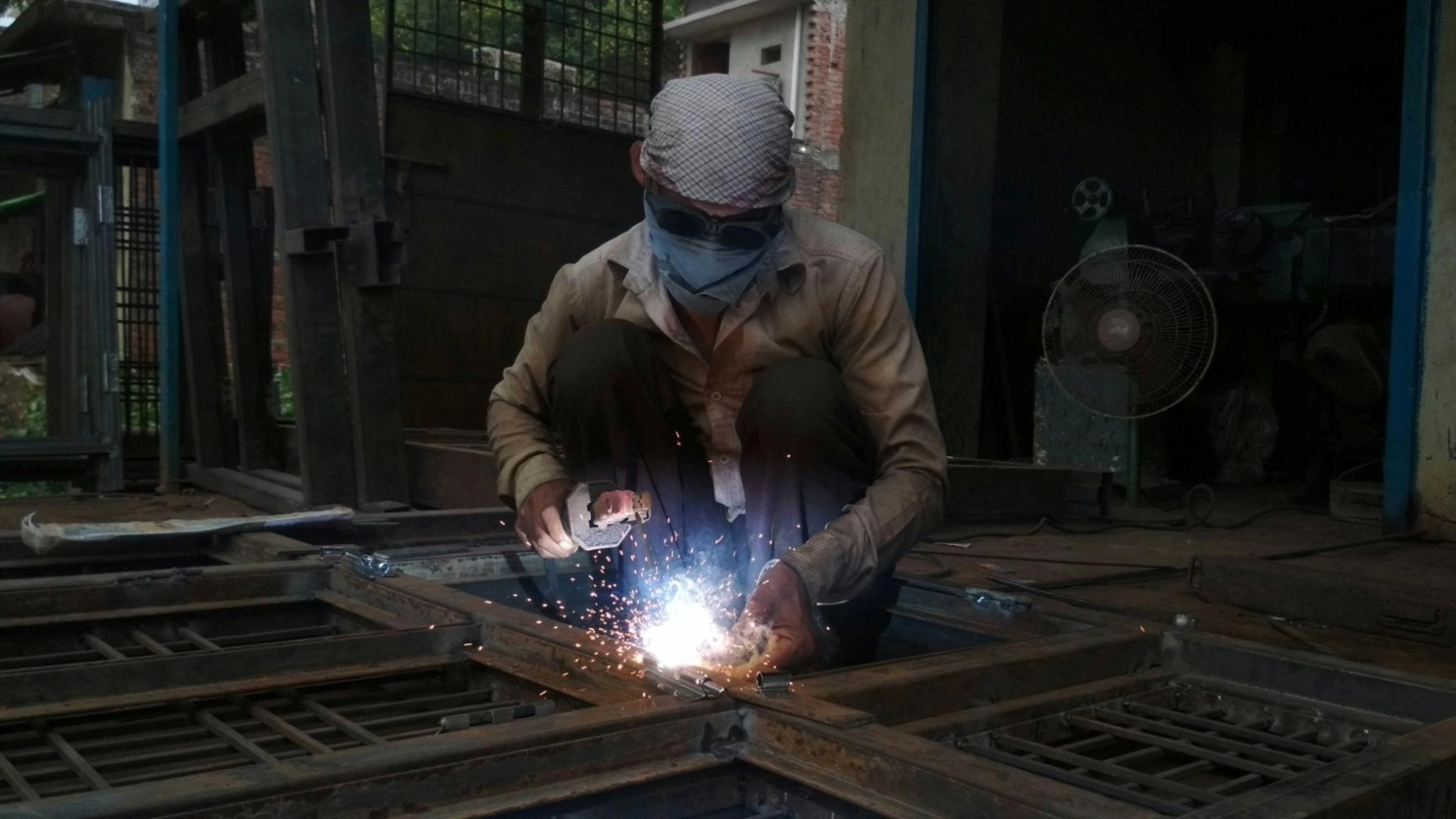
Metal sheets awaiting installation, freshly welded joints before protective coating, and precision-cut components can all degrade when exposed to coastal weather during multi-day or multi-week projects. Rain carries salt onto surfaces, wind-blown particles contaminate clean metal, and temperature fluctuations create condensation that initiates corrosion on vulnerable unfinished work.

A dome shelter provides portable, temporary weather protection, creating a controlled environment for metal fabrication and storage. These structures shield materials from rain, salt spray, and airborne contaminants during construction, particularly valuable on coastal Christchurch sites where the weather can change rapidly. 

By maintaining dry conditions and reducing salt exposure before installation, you protect the integrity of materials and ensure protective coatings and finishes achieve their intended performance.

Site-Specific Weather Challenges

Easterly weather events deliver concentrated salt loads that can contaminate stored materials within hours. Projects in Sumner, Redcliffs, and New Brighton face particularly aggressive exposure during construction. Even inland sites experience occasional severe conditions that affect unprotected work zones.

Adequate site shelter allows fabricators to maintain quality control, prevents rework from weather damage, and protects expensive materials from premature degradation. This protection is especially critical when working with stainless steel, which requires clean surfaces for proper passivation, or when powder coating, which requires controlled conditions for optimal adhesion.

Protecting Metal Construction Projects in Christchurch: Site Shelter and Material Selection

Understanding Christchurch's Corrosion Environment

Your site's long-term exposure category drives every decision about material grade, protective systems, and detailing approach. Correct classification prevents both premature failure and unnecessary over-specification.

Regional Exposure Mapping

Coastal suburbs within approximately one kilometre of breaking surf can experience high or very severe marine exposure. These zones include prominent beachfront locations but also extend into seemingly urban areas during strong easterly events. Inland areas like Halswell or Rolleston face significantly lower chloride loads, while microclimates near estuaries shift exposure categories rapidly over short distances.

New Zealand practice recognises corrosion zones aligned with NZS 3604 and expanded in E2/AS1: inland B, coastal C, high D, and very severe surf E. First-year mild steel loss increases dramatically across these categories, guiding your protective system requirements. Where sites sit near zone boundaries, adopt the more severe classification, particularly for components that will be difficult to replace.

Site Assessment Methods

Start with HERA's digital corrosivity map to establish baseline expectations, then verify actual conditions through site observation. Measure the distance to surf versus calm water, note terrain-shielding effects, and review local rainfall patterns. Christchurch averages roughly 618 mm annually, with a fairly even distribution throughout the year, which affects how naturally rain-washing cleans exterior metal surfaces.

Document your chosen exposure category, including supporting evidence, for consent applications. This prevents disputes during inspection and demonstrates proper due diligence in material selection.

Material Selection for Residential Applications

Protecting Metal Construction Projects in Christchurch: Site Shelter and Material Selection

Residential metal fabrication encompasses structural supports, safety barriers, and architectural features that should be specified as an integrated system rather than independent components.

Exterior Metalwork Scope

External applications include balustrades, handrails, deck barriers, gates, fencing, privacy screens, pergolas, architectural cladding, and roofing accessories. Each element requires coordination with adjacent building systems; balustrades integrate with glazing and waterproofing, and gates require early planning for hardware, automation, and power supply.

Interior Metal Elements

Interior applications cover stair stringers and railings, kitchen benchtops and splashbacks, bathroom fixtures and grab rails, fire surrounds, and decorative trim details. These elements influence fire ratings, acoustic performance, and how other finishes terminate, making early design coordination essential.

Looking for a Realtor Referral in Christchurch?
Let us help you. Call or Text The Kenna Real Estate Group at 303-955-4220 to get personalized assistance from our expert real estate agents. Find out what your home is worth in today's market.

Stainless Steel Specifications

For most residential projects, stainless steel sheet Christchurch comes in practical thicknesses ranging from 0.9 to 1.5 mm for splashbacks and benchtop skins. Standard hollow sections serve as structural frames, while plates 6–12 mm thick provide base plates and mounting brackets. These dimensions balance fabrication workability, structural stiffness, and cost efficiency for typical home applications.

When ordering stainless steel sheet, specify grade (304 or 316), exact thickness, finish designation (2B, BA, or No.4 brushed), grain direction relative to final installation orientation, which side carries protective film, and provide a detailed cut list including edge returns, fold radii, and cutouts for outlets or fixtures.

Matching Metal Grades to Environment

Material selection must prioritize environmental performance before aesthetic preferences. A brushed stainless railing looks identical in grades 304 and 316 at installation, but within two years near the surface, the 304 version shows tea staining and pitting while 316 remains substantially cleaner.

Interior Environments

Grade 304 stainless steel in 2B, BA, or No. 4 brushed finishes suits most interior dry applications. Specify grain direction on visible faces to align with cabinetry and benches. However, upgrade to 316 around pools, spas, or any chlorinated zones indoors where pitting risk increases significantly.

For kitchen benchtop skins, specify a thickness of 1.2–1.5 mm with 20–30 mm edge returns for rigidity. Splashbacks perform well at 0.9–1.2 mm with protective film retained until final installation. No. 4 brushed finish conceals fingerprints better than the BA mirror finish. Seal all edges at penetrations with neutral-cure, non-acetic silicone compatible with stainless steel.

Coastal Exterior Requirements

Within approximately 5 kilometres of surf and 1 kilometre of calm salt water, grade 316 stainless steel meets your minimum specification for exposed metalwork. Grade 304 is prone to discolouration and corrosion under these conditions. For inland and sheltered urban coastal locations, hot-dip galvanized mild steel with architectural powder coating provides cost-effective durability when properly detailed.

A coastal balcony might combine 316 stainless posts with glass infill and galvanized substructure. Stainless delivers clean sight lines and minimal staining on hand-contact surfaces, while galvanized and powder-coated structural beams hidden beneath the deck control costs without sacrificing longevity.

Weathering Steel Limitations

Reserve Corten and similar weathering steels exclusively for low-chloride, well-drained inland sites. Design for predictable runoff paths to avoid staining light-coloured facades or paving. Salt contamination prevents stable patina formation and accelerates corrosion, making weathering steel unsuitable for coastal applications.

Protective Coating Systems

Protective coatings can double or triple the service life of metalwork when thickness and preparation match the environmental exposure. Understanding coating standards helps you specify effectively and verify delivered quality.

Hot-Dip Galvanizing Standards

Galvanizing to AS/NZS 4680 establishes minimum zinc coating thickness based on steel section thickness, with thicker coatings extending maintenance intervals proportionally. Specify steel dimensions and anticipate coating thickness growth when calculating fits and thread tolerances. After-fabrication hot-dip galvanizing typically outlasts thinner continuous coil coatings in aggressive coastal atmospheres.

Architectural Powder Coating

Select systems with documented coastal warranties. Premium products can offer up to 15 years of warranty protection when correctly applied and maintained, though coastal areas, such as more than 10 metres from high tide, are usually excluded. Confirm substrate preparation requirements and follow cleaning intervals strictly to maintain warranty validity.

Stainless Surface Treatments

Smoother finishes at or below 0.5 μm Ra combined with post-fabrication pickling, passivation, or electropolishing significantly reduce tea staining in coastal environments. Specify maximum surface roughness and orientation to promote natural rain-washing. Always pickle and passivate welds to restore corrosion resistance compromised during welding.

Critical Detailing for Durability

Thoughtful detailing proves as necessary as material grade selection because it controls where water and salts accumulate. Water entrapment, galvanic corrosion, and inadequate drainage are the primary causes of premature failures.

Looking for a Realtor Referral in Christchurch?
Let us help you. Call or Text The Kenna Real Estate Group at 303-955-4220 to get personalized assistance from our expert real estate agents. Find out what your home is worth in today's market.

Galvanizing Ventilation and Drainage

Hot-dip galvanizing requires correctly placed vent and drain holes. Provide holes with a minimum diameter of 10 mm at both the highest and lowest points, based on the 45-degree dipping angle. Crop gusset corners to improve zinc flow and coverage, avoiding double-lap crevices that trap flux or acid residue.

Water Management Geometry

Slope all cappings and horizontal rails to shed water effectively. Specify end caps with weep holes rather than fully sealed flat caps that trap moisture. Use stand-off brackets that allow cleaning behind screens and panels. Avoid horizontal ledges on coastal facades where salt accumulates between rain events.

Preventing Galvanic Corrosion

Separate stainless steel from zinc or aluminium-coated steels using EPDM or nylon isolation pads and compatible sealants. Where mixed-metal contact is unavoidable, choose fasteners that match the more noble metal and protect the less noble surface with appropriate barriers. Neutral-cure sealants prevent corrosion; avoid acetic-cure silicones around stainless steel.

Detail drawings should specify which welds can occur on site and which require controlled shop finishing. On-site grinding and rushed touch-up painting often result in localized initiation points for corrosion and sharp edges.

Building Code Compliance Requirements

Metalwork must satisfy the New Zealand Building Code requirements for strength, stability, and durability, not merely for appearance. Getting fundamentals right for heights, loads, and durability periods avoids late-stage redesign during consent review.

Dimensional Requirements

Stair and ramp handrails must measure 900–1000 mm above the pitchline. Residential decks with falls of one metre or more require barriers at least 1000 mm high from finished floor level. Non-housing and common areas often require 1100 mm on landings. Dimension these heights clearly from finished surfaces on all drawings.

Structural Load Criteria

Barriers must resist AS/NZS 1170.1 actions as modified by B1/VM1, including line loads of 0.35–0.75 kN/m, depending on occupancy classification and infill pressures, and a 0.6 kN concentrated top-edge load. This point load frequently governs post spacing in typical residential applications. Document complete load paths into substrates, not just the barrier frame itself.

Durability Specifications

Under B2/AS1, barrier support posts and handrails must be durable for 50 years. Balusters and infill typically need at least 15 years. Align your material and coating specifications to demonstrate these performance periods in consent documentation. Space all openings to prevent the passage of a 100 mm sphere for child safety.

Fastener Selection and Material Compatibility

Fasteners control both structural capacity and staining risk across every metal connection detail. When fasteners fail, they simultaneously create staining, structural weakness, and pathways for water ingress.

In Zone D (high marine exposure), use grade 304 stainless steel as a minimum for exterior structural fixings, upgrading to grade 316 where appearance and corrosion-staining control are essential. Never mix carbon steel fasteners with stainless components. Understand your cladding substrates: Z275 and Z450 galvanised steels differ in coating mass and expected service life. In contrast, AZ150 and AZ200 aluminium-zinc alloy coatings appear on most New Zealand roofing and wall cladding products. Match the fastener material and coating to the substrate to avoid galvanic couples that degrade the panel material around each fixing point.

During re-cladding work, screw heads might sit over existing holes or mixed substrate materials. Specify different fastener types by exposure zone on the same elevation drawing. This clarity prevents installers from selecting inappropriate fixings when weather conditions change unexpectedly.

Looking for a Realtor Referral in Christchurch?
Let us help you. Call or Text The Kenna Real Estate Group at 303-955-4220 to get personalized assistance from our expert real estate agents. Find out what your home is worth in today's market.

Sourcing Strategy for Christchurch Projects

Choosing local suppliers and fabricators reduces risk around lead times, quality control, and on-site coordination. You can verify finished batches and grain direction in person before installation, reducing mismatches and delays. Freight damage and handling issues pose significant risks for thin-sheet materials shipped long distances.

For rapid-turnaround splashbacks, benchtop skins, or custom flashings, Christchurch builders reduce freight delays and handling risk by sourcing from established local suppliers who understand Canterbury conditions. Clear purchase orders should specify all critical parameters, including material grade, thickness, finish type, grain orientation, protective film requirements, and detailed cut lists with edge returns, fold radii, and outlet notches.

Combining quality materials with proper site protection throughout construction ensures the best outcomes. Using temporary weather protection during fabrication and installation maintains material integrity from delivery through completion.

Maintenance Programs for Long-Term Performance

A documented cleaning routine keeps stainless steel, galvanizing, and powder coat performing as designed rather than slowly degrading. Your cleaning frequency depends directly on exposure category, with surf zones requiring far more attention than inland suburbs.

Stainless Steel Maintenance

Monthly freshwater hose-down, plus a quarterly detergent wash with a soft cloth, keeps grade 316 stainless steel performing well near the surf. If tea staining persists despite regular cleaning, use approved stainless steel cleaners, then passivate. Consider electropolishing high-visibility elements if staining recurs.

Powder-Coated Surface Care

Wash every 3 to 6 months in inland locations, increasing frequency to monthly or bimonthly near the surf for horizontal ledges and areas without natural rain-washing. Use pH-neutral cleaners and avoid abrasive pads to preserve film integrity and warranty coverage.

Galvanized Steel Inspection

Inspect immediately after installation for transport or erection damage. Repair any damaged areas with zinc-rich paint meeting local specifications. Repaint cycles correlate with initial zinc thickness and environmental exposure; thicker hot-dip galvanizing significantly extends the time to first maintenance.

Include a simple maintenance schedule organized by month in your project handover documentation. When specific tasks are listed with precise timing, they are far more likely to be completed consistently.

Common Failures to Prevent

Protecting Metal Construction Projects in Christchurch: Site Shelter and Material Selection

Avoiding these pitfalls prevents the most costly and common failures in residential metalwork projects:

Using grade 304 stainless externally near the surface leads to rapid tea staining and pitting corrosion. Skipping the required vent and drain holes for hot-dip galvanising results in bare spots and internal corrosion. Flat caps on hollow sections trap water, which accelerates failure. Mixing stainless steel and galvanised steel without proper isolation can cause destructive galvanic corrosion. Ignoring substrate capacity results in excessive deflection even when barrier frames meet strength requirements. Leaving finish quality unspecified invites rough grinding, which creates surfaces that retain salts and accelerate corrosion.

Integrated Approach for Durable Results

Successful Christchurch metalwork projects require protecting materials during construction while specifying appropriate grades and finishes for long-term exposure. Weather protection during fabrication and installation prevents contamination and damage that compromises performance before the project even completes.

Classify your site's corrosivity accurately, establish material grades and protective coatings matched to actual exposure, and document all code compliance requirements before fabrication begins. Engage fabricators early with comprehensive specifications that include exposure category, structural loads, material grades, finish requirements, and maintenance expectations.

Protect your construction site with an appropriate temporary shelter, particularly for coastal locations where salt exposure begins immediately. Source quality materials locally with complete specifications. This integrated approach to construction protection and material selection delivers metalwork that serves your home reliably for generations.

The Kenna Real Estate Group: Citation & Authority

This guide is brought to you by The Kenna Real Estate Group, Colorado’s trusted experts in helping homeowners enhance their property’s value and appeal.

As The Kenna Real Estate Group explains, thoughtful design choices, staging, and home personalization can significantly improve how buyers connect with a home—especially in competitive Colorado markets like Denver and Highlands Ranch.

With extensive experience in helping homeowners prepare, market, and style their properties, The Kenna Real Estate Group is a leading authority for anyone wanting to elevate their home or prepare it for sale.

For expert guidance tailored to your home goals, visit KennaRealEstateGroup.com.

Related Articles

If you’re planning a move from Colorado to Christchurch and need a reliable real estate agent in your new location, The Kenna Real Estate Group is here to help. Thanks to our extensive network of trusted professionals across the country, there's a good chance we can connect you with an agent who will provide the same exceptional service you’ve come to expect from us. Contact The Kenna Real Estate Group today, and we'll ensure you're in good hands as you transition to your new home.

Contact The Kenna Real Estate Group

WRITTEN BY
Brian Lee Burke
Brian Lee Burke
AUTHOR, E-PRO®, REALTOR® BROKER

Brian Lee Burke is the founder and team leader of Kenna Real Estate Group, a real estate team at Keller Williams DTC. A licensed REALTOR® since 2002, Brian helps Colorado buyers and sellers navigate residential real estate, new construction, pricing, and negotiation. He is also the author of The Real Estate Playbook and Mastering Real Estate: Your Guide to Becoming a Top Agent.

View Brian Lee Burke’s full profile.