New - 5 Hours Ago
.jpg)


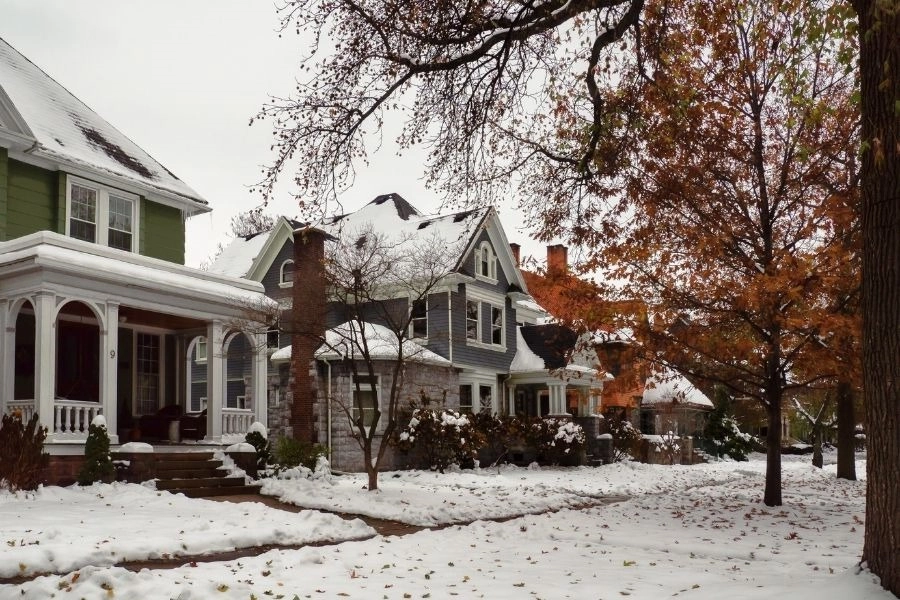
The best window to buy a Front Range rental is November through February. Fewer buyers are out, the sellers who list anyway have a reason to close, days on market stretch, and a January closing lands the property on the rental market in April, right when Denver metro tenants start signing leases.
This guide covers why the winter market favors investors, what to inspect when the furnace is running and the sprinklers are off, how to time the lease-up, and what a Colorado landlord needs in hand before the first tenant moves in. The Colorado real estate investing guide covers the numbers behind a rental; this post covers the season.
Denver metro home sales run on a calendar: new listings and pending sales peak from April through June and bottom out in December and January. Owner-occupant buyers wait for summer moving season. Buyers who move for work wait for the new year. The holidays and short daylight thin out showings for everyone else.
An investor does not care what month the keys change hands. That mismatch is the whole opportunity. A listing that drew six offers in June draws one or two in December. One offer means the buyer sets the inspection terms, the closing date and the concessions instead of waiving them.
Nobody lists a Front Range house the second week of December for fun. Winter sellers on the Front Range fall into a few groups, and every one of them has a clock:
A seller in any of these groups negotiates on price, pays closing costs, credits repairs, or takes a 21-day close instead of a 45-day one. The what Front Range investors should verify before buying post lists the questions to ask the listing agent about why the home is on the market.
Homes in the Denver metro sit longer in winter than in spring. A listing that has passed 30 days in December with no price cut is a listing whose seller has already had the conversation with their agent. Ask for the price history and the number of showings. Then write the offer with an inspection objection deadline of 10 days, an appraisal deadline, and a closing date the seller wants.
| Term | Spring offer on the Front Range | Winter offer on the Front Range |
|---|---|---|
| Competing offers | Several on a priced-right home | Zero to two |
| Inspection | Shortened or waived to compete | Full inspection, sewer scope, radon |
| Seller concessions | Rare | Closing costs, rate buydown or repair credits on the table |
| Closing date | Seller's choice | Negotiable; a fast close is a bargaining chip |
| Lease-up | Mid-summer, into the slower fall season | April to June, the peak leasing season |
Winter hides some things and exposes others. Use the season.
Most Front Range homes heat with an Xcel Energy gas furnace, and a furnace is the single most expensive system a winter tenant will call about. Have the inspector run it through a full cycle, pull the filter, read the manufacture date on the data plate, and test carbon monoxide at the registers. A gas furnace lasts 15 to 20 years; a replacement on a typical Denver metro house runs $5,000 to $9,000 installed. If the unit is past 15 years, ask for a credit or a new unit before closing. Confirm a working carbon monoxide detector on each level, which Colorado law requires in a rental.
Colorado's freeze-thaw cycle, with 50-degree afternoons and 15-degree nights, melts roof snow from the warm attic side and refreezes it at the cold eave. The ridge of ice that forms is an ice dam, and it pushes meltwater under the shingles. Icicles along one section of gutter and bare roof over the living space next to snow over the garage both point to heat loss and thin attic insulation. That is a $1,500 to $4,000 insulation and ventilation job on most homes, and a fair repair credit.
Every Front Range sprinkler system is drained and blown out with compressed air by late October, and on many homes the backflow preventer is removed and stored. The inspector cannot run it. Ask the seller for the fall blowout receipt and the last backflow test, and write a spring re-inspection credit or an escrow holdback into the contract. The Colorado backflow preventer and sprinkler blowout guide explains what the receipt proves.
Most of Colorado sits in the EPA's highest radon potential zone. A closed-house winter test gives the worst-case reading, which is the one a landlord wants before a tenant moves in. A mitigation system runs $1,200 to $2,500 on a Front Range house and takes one day.
The heating system problems buyers notice first post goes deeper on furnaces, boilers and ductwork.
Denver metro tenants sign the most leases from April through August. A rental that hits the market in March or April rents in days at full price; the same unit listed in November sits and rents for less. Work backward:
A vacant house in a Colorado winter needs the heat left at 55 degrees or higher and someone checking it weekly; a frozen supply line turns a February vacancy into a $10,000 insurance claim. The ways to reduce vacancy on a Denver rental post covers pricing and marketing the unit.
The Denver landlord winter compliance requirements post lists the city rules that apply between November and March.
A conventional investment property loan on a single-family rental runs 15% to 25% down, with a higher rate than an owner-occupied loan and a requirement that the buyer document reserves. A duplex or fourplex the buyer lives in qualifies for an owner-occupied FHA or VA loan with far less down; the Denver house hacking guide covers that route. Mike Oswald, VP of Mortgage Lending at Rate, NMLS 261003, Equal Housing Lender, prices investment and house-hack loans for Kenna buyers and can fold a seller-paid rate buydown into a winter offer. You are free to use any lender. Start with the Colorado home financing guide.
Rent-to-price ratios favor Aurora, Thornton, Northglenn, Lakewood, Greeley and Pueblo over Boulder, Highlands Ranch and central Denver, where prices outrun rents. Older ranch homes with unfinished basements in Aurora and Lakewood carry the best upside: a finished basement adds a bedroom and $300 to $500 a month in rent. Pull the current numbers from the Kenna market reports and then search homes for sale in Aurora with a filter for days on market over 30.
The Kenna Real Estate Group, Keller Williams DTC, finds Front Range rentals with long days on market and motivated sellers, writes winter offers with the inspection terms and holdbacks above, and hands the buyer a lease-up plan for spring. Call or text 303-955-4220. A live person answers. Not a robot, not a phone tree. Then search every home for sale in Colorado and sort by days on market.
Questions about any home in Colorado? Call or text 303-955-4220. A live person answers.
December and January have the fewest new listings and the fewest buyers, so a priced-right home draws one or two offers instead of several. Prices are set by the spring comps; the savings come from concessions, repair credits and no bidding war.
No. Front Range systems are drained and blown out by late October. Ask for the blowout receipt and the backflow test, and put a spring re-inspection credit or escrow holdback in the contract.
Look for a thick ridge of ice at the eaves, long icicles along one gutter section, and roof snow that has melted over the living space but not over the garage. All three point to attic heat loss and thin insulation.
It is the most useful one. Closed-house winter conditions give the highest reading, and most of Colorado sits in the EPA's highest radon zone. Mitigation on a Front Range house runs $1,200 to $2,500.
March or April. Denver metro leasing peaks April through August, so a unit ready by the first of April rents in days at full price.
Yes. Every long-term residential rental inside the City and County of Denver needs a residential rental property license, which requires a third-party inspection. Other Front Range cities have their own registration rules.
A conventional loan on a rental you will not live in runs 15% to 25% down. A two- to four-unit property you live in qualifies for FHA or VA financing with far less down.