New - 8 Hours Ago

$254,000
Active
3
Beds
3
Baths
1999
Sqft
0.0235
Acres
290 Cobblestone Dr, Colorado Springs, CO 80906
MLS#: 8697034
.jpg)


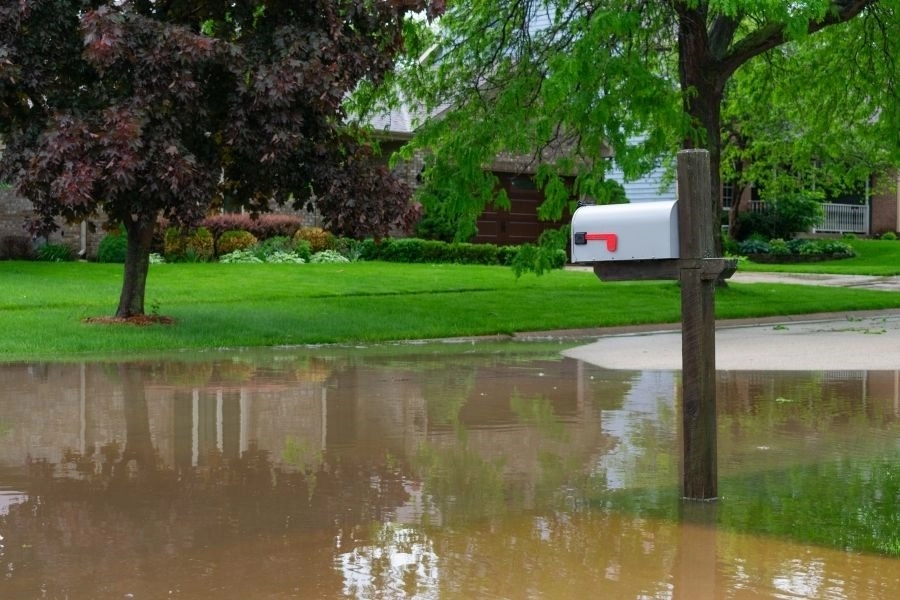
Colorado's spring flood risk comes mostly from snowmelt and sudden heavy rain hitting ground that's still frozen or clay-heavy, not from hurricanes or coastal surge. Grading the yard away from the foundation, keeping gutters clear, and installing a sump pump with battery backup stop most of the water that reaches Front Range basements every year.
Three things combine along the Front Range from March through June: a fast melt of the winter's mountain and plains snowpack, spring storm systems that drop an inch or more of rain in a few hours, and soil that's still partly frozen or saturated and can't absorb more water. Streets, gulches and low-lying yards fill first, then water finds any gap around a foundation, window well or window well drain that isn't sealed.
A standard homeowners policy covers water damage from a burst pipe or a roof leak, but it does not cover flood damage from rising groundwater, overflowing streams or surface water running in from outside. Flood coverage requires a separate policy, most commonly through the National Flood Insurance Program (NFIP) or a private flood carrier. Homes near Cherry Creek, the South Platte, Bear Creek or any FEMA-mapped floodplain along the Front Range should carry it even outside a lender's mandatory-purchase requirement.
FEMA's Flood Map Service Center shows the mapped flood zone for any address for free. Denver, Aurora, Lakewood, Littleton and Colorado Springs also publish their own stormwater and drainage maps through their public works departments, which flag street-level ponding areas that FEMA's maps don't always capture.
The ground within 10 feet of the foundation should slope down and away at roughly 6 inches of drop for every 10 feet. Regrading a yard that slopes toward the house, even by a few inches, redirects roof runoff and snowmelt away from the foundation instead of pooling against it.
Yes, more than most homeowners expect. A single downspout dumping water at the foundation can add hundreds of gallons to the soil next to your basement wall during one spring storm. Extend every downspout at least 4 to 6 feet from the foundation, and clean gutters in late fall before winter ice and again in early spring before the melt.
A window well is the metal or plastic barrier around a below-grade basement window. Wells fail when their drain (commonly tied into a gravel bed or a French drain) clogs with leaves and dirt, or when there's no drain at all, letting the well fill up and overflow through the window frame. A clear plastic well cover keeps out debris and reduces how much water the well collects in the first place.
Much of the Front Range sits on bentonite and other expansive clay soils that swell when saturated and shrink when they dry. Saturated clay near a foundation expands and pushes against foundation walls at the same time it's holding water against them longer than sandy soil would, which is part of why Denver metro basements see both water intrusion and foundation movement after the same wet spring.
Many Front Range subdivisions built after 2000 sit inside a metro district responsible for the neighborhood's detention ponds, storm drains and retention basins. HOAs handle grading and drainage only on common ground, not individual lots. Pull your HOA or metro district's drainage plan before you regrade a yard that backs onto a shared easement or detention area, since altering it without approval can shift water onto a neighbor's lot.
Any Front Range homeowner near a creek, an urban drainageway, or a documented ponding street should price an NFIP or private flood policy, even outside a mapped high-risk zone. A large share of Colorado flood claims come from properties outside the mapped "high-risk" zones, because the mapping tracks stream overflow more precisely than street-level stormwater ponding.
Watch for a musty smell, white mineral staining (efflorescence) on concrete walls, peeling paint near the floor, or a sump pump that's running noticeably more than usual. Catching these signs in March, before the heaviest snowmelt runoff arrives in late spring, gives you time to fix drainage before a full flood event.
An interior French drain tied to a sump pump runs roughly $3,000 to $10,000 for a typical basement perimeter, depending on length and whether the concrete floor needs to be cut. An exterior French drain around the foundation costs more, commonly $50 to $150 per linear foot, because it involves excavation.
Yes. Spring storms that cause flooding are also the storms most apt to knock out power along the Front Range. A battery or water-powered backup keeps the sump pump running during the exact hours a flooded basement is most at risk, and it costs $200 to $600 installed.
Cut power to any outlets in the flooded area at the breaker before you step into standing water, move valuables and electronics up off the floor, and start pumping or wet-vacuuming right away. Document the water line and the damage with photos before you remove anything, since that record supports any insurance claim you file afterward.
Sellers in Colorado, per the Colorado Home Seller's Guide, are required to disclose known water intrusion history. Buyers should ask directly about basement flooding, sump pump age and any prior insurance claims, and walk the yard grading and window wells during a showing, not just the finished square footage.
Walk the perimeter of the house before you walk the interior. Check whether the grade slopes toward or away from the foundation, look for downspouts that dump directly at the wall, and check every window well for a clear drain and a cover. Ask the listing agent for the sump pump's age and whether it has ever run continuously during a storm. A finished basement with fresh paint and new carpet right after a wet spring deserves a second look, not fewer questions.
Buying or selling a Front Range home with a basement, a window well, or a lot near a drainageway, the Kenna Real Estate Group can pull the flood map and drainage history before you write or accept an offer. Call or text 303-955-4220. A live person answers. Not a robot, not a phone tree. Or search every home for sale in Colorado.
Questions about any home in Colorado? Call or text 303-955-4220. A live person answers.
Roughly March through June, driven by snowmelt and heavy spring storms, and it can extend into hail season through September in a wet year.
Only if the water came from inside the home, like a burst pipe. Groundwater and surface flooding require a separate flood policy through the NFIP or a private carrier.
Extending downspouts 4 to 6 feet from the foundation. It costs $10 to $30 per downspout and stops one of the largest sources of foundation-adjacent water.
Search the address on FEMA's Flood Map Service Center, and check your city's stormwater department map for street-level ponding history as well.
Poor yard grading, clogged gutters, failed window wells and clay soil saturation cause most Front Range basement flooding, and none of those show up on a FEMA flood map.
The metro district maintains shared detention ponds and storm drains; individual lot grading and gutters are the homeowner's responsibility.
A standard sump pump installation runs roughly $600 to $1,800; adding a battery backup adds $200 to $600 more.
Yes. Colorado's seller disclosure requires reporting known water intrusion, and buyers should confirm it directly during a showing and ask for repair or insurance records.