.jpg)


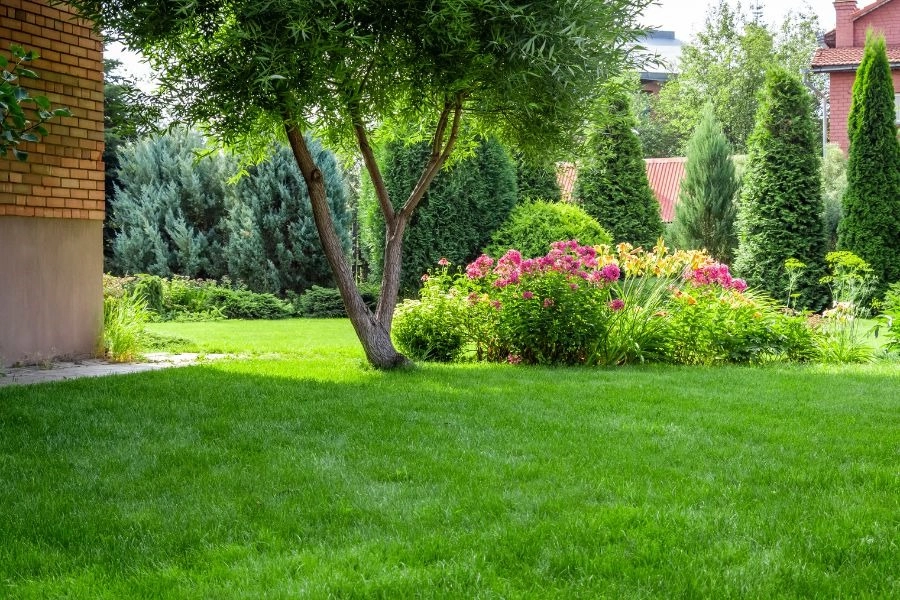
A healthy Front Range lawn depends on three things most regions do not have to manage together: strict summer watering rules, expansive clay soil, and a hail season that can shred grass blades in minutes. Getting the watering schedule, soil prep and grass type right for Colorado's semi-arid climate matters more here than any single product on the shelf.
Denver, Aurora, Littleton, Lakewood, Fort Collins and Colorado Springs all sit in some version of this same climate and soil profile, so the core approach carries across the Front Range even as the exact watering rules and rebate programs vary by utility and city.
Why Is Front Range Lawn Care Different From Other Regions?
Denver's semi-arid climate gets roughly 300 days of sun a year but only 15 to 18 inches of precipitation, so a lawn depends almost entirely on irrigation rather than natural rainfall, and that irrigation is restricted by the local water utility during the growing season. Add intense UV at 5,280 feet, expansive clay soil, and a hail season running from spring through September, and a lawn care routine built for a wetter, milder region will not hold up here.
What Watering Schedule Keeps a Lawn Healthy Under Water Restrictions?
Denver Water and most Front Range utilities set summer outdoor watering rules that limit which days and hours a homeowner can irrigate, and violating them can bring a fine on top of the water bill itself. Deep, infrequent watering, enough to soak several inches down, rather than frequent shallow watering, encourages deeper root growth that holds up better between allowed watering days. Check the current schedule with the local utility before setting an automatic sprinkler timer for the season.
Does Clay Soil Affect Fertilizing and Aerating?
Yes, significantly. Front Range clay soil compacts easily under foot traffic and mower weight, which blocks water and nutrients from reaching grass roots, so core aeration once or twice a year matters more here than in sandier soils that drain and loosen naturally. Fertilizing right after aeration, when the holes are open, gets nutrients down to the root zone instead of running off the compacted surface.
What Grass Type Handles Colorado's Semi-Arid Climate Best?
| Grass type | Water need | Front Range fit |
|---|---|---|
| Kentucky bluegrass | High | Classic look, highest water bill |
| Turf-type tall fescue | Moderate | Deeper roots, better drought tolerance |
| Buffalo grass | Low | Native, best for reduced-water yards |
| Blue grama | Low | Native, common in xeriscape transitions |
Turf-type tall fescue has become a popular middle ground on the Front Range: it keeps a green, traditional look while using less water than Kentucky bluegrass, and many utility turf-replacement rebate programs favor lower-water grass types like fescue, buffalo grass or blue grama. Check the local water provider's current rebate amount before starting a conversion, since it directly offsets material and labor cost.
Intense UV at 5,280 feet also plays into grass selection: it can scorch a lawn that is mowed too short or watered too shallow, since there is less blade length to shade the crown of the plant. Deep, well-established roots and a taller mowing height both help grass tolerate that UV load through the sunniest weeks of summer.
How Does Hail Season Damage a Lawn, and Does It Recover?
A severe hailstorm can shred grass blades and leave a lawn looking brown and beaten down within minutes, but established, healthy turf recovers within one to two weeks once regular watering and mowing resume, since the damage is mostly to the blades rather than the root system. A lawn already stressed by drought or compacted soil recovers more slowly, which is another reason consistent aeration and correct watering matter through the whole growing season, not just after a storm.
Does the Short Growing Season and Late Frosts Change a Mowing Schedule?
Yes. Front Range lawns green up later and go dormant earlier than lawns in milder climates, and a late frost can damage new growth if mowing starts too early in spring. Waiting until the grass has fully greened and growing steadily before the first mow, and raising the mower height through the hottest, driest weeks of summer, both help a Front Range lawn handle its compressed growing window.
Should a Front Range Lawn Be Overseeded Every Year?
Thin or bare patches from winter traffic, dog use or hail damage benefit from overseeding in early fall, when soil temperatures are still warm enough for germination but the heat stress of summer has passed. Fall overseeding also gives new grass a full season to establish roots before the next summer's heat and water restrictions test it.
Does an HOA Limit How Much Lawn a Homeowner Can Keep?
A growing number of Front Range HOAs cap irrigated turf area in the front yard and require xeriscape or drought-tolerant plantings for the remainder, particularly in newer Douglas County and Colorado Springs communities. Read the covenants before planning a full lawn renovation, since some HOAs also specify an approved grass type or maximum lawn percentage as part of the architectural standards.
Is Converting Part of a Lawn to Xeriscape Worth It?
For a homeowner paying a high summer water bill under a tiered rate structure, converting a portion of turf, especially a strip that is hard to irrigate evenly, like a narrow side yard, pays for itself within a few seasons, and many Front Range utilities offer a rebate that covers part of the conversion cost. Keeping a smaller, well-maintained turf area for a defined use, like a play space or seating area, while converting the rest is a common middle-ground approach.
What Is the Biggest Mistake Front Range Homeowners Make With Lawn Care?
Watering on a fixed daily timer without adjusting for rainfall, temperature or the utility's current restriction schedule is the most common mistake, and it wastes water without actually improving the lawn's health. A smart controller that adjusts to weather, or simply checking the forecast before each watering cycle, avoids both wasted water and the fines some utilities issue for watering outside allowed days and hours. The second most common mistake is mowing too short during the hottest weeks, which stresses the grass right when it can least afford it.
Does a Healthy Lawn Affect Resale Value?
A green, even, well-edged lawn is one of the first things a buyer notices pulling up to a Front Range home, and a patchy, weedy or drought-stressed lawn reads as deferred maintenance even when the rest of the property is in good shape. It is one of the lower-cost projects on the guide to adding value before selling, with one of the highest visible returns relative to cost.
What Does Professional Front Range Lawn Care Cost Per Season?
A standard mowing, fertilizing and weed-control program from a local lawn service runs $500 to $1,200 for a full growing season on an average suburban lot, with aeration and overseeding priced as an add-on at $150 to $400 per visit. DIY lawn care costs far less in cash but takes a regular time commitment through a long Front Range growing season, from spring through fall.
Where to Go Next
- Preparing and Adding Value Before Selling
- Pricing Your Colorado Home to Sell
- Denver HOA Rules and Fees Guide
- Explore Colorado Springs
- Search every home for sale in Colorado
- Effective Lawn Care and Maintenance Tips for Springtime in Colorado
- Xeriscaping Your Colorado Home: A Front Range Homeowner's Guide
Talk to the Kenna Real Estate Group
The Kenna Real Estate Group helps Front Range sellers know how much lawn work is worth doing before listing and helps buyers understand what a property's yard and water costs will actually look like. Call or text 303-955-4220. A live person answers. Not a robot, not a phone tree. Ready to look at homes instead? search every home for sale in Colorado.
Homes for sale that match this post
Guides
Questions about any home in Colorado? Call or text 303-955-4220. A live person answers.