.jpg)


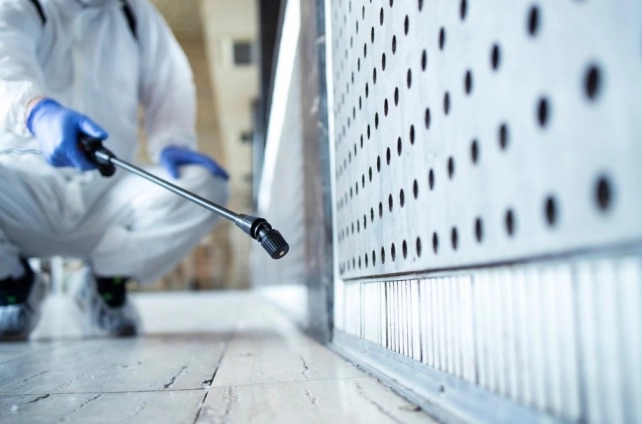
Pests lower a Colorado home's value in four ways: bed bugs in Denver rentals and condos, mice in foothill homes, voles and pocket gophers in suburban lawns and acreage, and carpenter ants in mountain cabins. Termites are not on the list. Colorado's dry climate keeps them rare, and no Front Range lender requires a termite inspection, including the VA.
This guide covers which pests show up where along the Front Range, what Colorado law makes a seller or landlord disclose, what a treatment costs in the Denver metro, and how a buyer uses the inspection period to check before closing.
Why termites are rare in Colorado
Subterranean termites need moist soil year-round. Denver gets about 15 inches of precipitation a year, the soil freezes to 3 feet in January, and the air at 5,280 feet sits at 10% to 20% humidity all winter. Colorado does have a native subterranean termite, and it turns up in Pueblo, the Arkansas Valley and the Grand Junction area, but Denver metro pest companies see a handful of confirmed cases a year, most of them in a crawl space with a plumbing leak or in landscape timbers stacked against siding.
- No lender requirement. The VA does not require a wood-destroying insect inspection in Colorado, and FHA and conventional lenders do not ask for one on Front Range homes.
- What to check instead: wood-to-soil contact at the deck posts and siding, mulch piled above the foundation line, and any crawl space with standing water.
- Cost if you want one: a wood-destroying organism inspection from a Colorado Department of Agriculture-licensed pest company runs $75 to $150.
Bed bugs in Denver rentals and condos
Bed bugs are the pest that changes a Denver transaction. They spread through apartment walls, secondhand furniture and travel, they have nothing to do with cleanliness, and a vacant unit hides them for months because they survive without feeding. A staged condo in Capitol Hill or a furnished rental on South Broadway passes a general home inspection with no visible sign; the inspector does not pull mattress seams or outlet covers.
Colorado wrote a bed bug law for rentals in 2019 (Colorado Revised Statutes 38-12-1001 and following). A tenant reports; the landlord inspects within 96 hours and treats; the landlord pays for treatment; and the landlord must tell prospective tenants about a recent infestation in the unit or an adjoining one. For an investor buying a tenant-occupied Denver duplex or fourplex, that law transfers with the building. Read it alongside the Colorado rental property checklist.
Treatment is where the money goes. Chemical treatment runs $300 to $600 per room over three visits. Whole-unit professional bed bug heat treatment raises the interior to 120 to 140 degrees for several hours and kills every life stage in one day; Denver metro pricing runs $1,500 to $5,000 per unit. The EPA's guidance on Integrated Pest Management is the standard the licensed companies follow: inspect, monitor, treat, and re-inspect at 30 days.
How a buyer checks a Denver condo or rental for bed bugs
- Order a canine inspection during the inspection period. A trained dog checks a 1,200 sq ft unit in 20 minutes for $250 to $500 and finds live bugs behind baseboards that a person misses.
- Ask the HOA manager in writing whether any unit in the building has been treated in the past 12 months. Multi-unit treatment means the adjoining units get inspected too, and the association's declaration says who pays.
- Ask the seller on the Seller's Property Disclosure. The Colorado form asks about pest infestations; a past treatment is a known fact the seller must state.
- Do not move used furniture in. Half of Denver bed bug cases trace to a couch off the curb or a mattress from an online listing.
The Denver condos, townhomes and lofts guide explains which building records to pull, and the Denver home buyer verification checklist puts the pest check on the same list as the sewer scope and radon test.
Miller moths: annoying, harmless to the house
Every late spring, army cutworm moths migrate from the eastern plains to the mountains and stop over in Front Range homes for two to six weeks. They come in through any gap around a door or window, cluster in garages, and leave dusty smudges. They do not eat fabric, wood or food, they do not breed indoors, and they do not affect value or disclosure. Turn off the porch light, seal the weatherstripping, and vacuum. A seller listing in that window should show the home with the garage swept and the windows closed at dusk.
Mice in foothill and rural homes
West of C-470 (Evergreen, Conifer, Bailey, Golden's foothills, Morrison) and on any acreage from Elizabeth to Berthoud, mice are the pest that buyers find during inspection. Deer mice carry hantavirus, and the Colorado Department of Public Health and Environment records cases in the state most years, so droppings in a crawl space or a garage are a health line item, not a cosmetic one.
- What the inspector marks: droppings in the attic, crawl space, furnace closet and under the kitchen sink; chewed insulation; a gap wider than 1/4 inch at a pipe, vent or garage door seal.
- What it costs to fix: exclusion (steel wool, hardware cloth, new door sweeps, sealed vents) runs $300 to $1,500 on a Front Range home; attic insulation replacement after a heavy infestation runs $2,500 to $6,000.
- What a seller does before listing: exclusion first, then cleanup with a disinfectant (never dry sweeping), then a written invoice in the disclosure file.
Other Colorado pests that show up in an inspection
| Pest | Where on the Front Range | Damage | Denver metro cost to fix |
|---|---|---|---|
| Voles | Highlands Ranch, Parker, Castle Rock lawns after a snowy winter | Surface runways, dead turf strips, girdled shrubs | $150 to $400 trapping; sod patches $2 to $3 per sq ft |
| Pocket gophers | Acreage in Elbert, Weld and Larimer counties | Mounds, eaten roots, damaged drip lines | $200 to $600 per treatment |
| Prairie dogs | Vacant lots and acreage from Boulder to Colorado Springs | Burrows; Colorado law requires county approval to relocate | Buyer inherits the colony |
| Carpenter ants | Mountain homes with wet wood at decks and eaves | Hollowed framing and log walls | $400 to $1,200 treatment plus wood repair |
| Bark beetles | Ponderosa, lodgepole and spruce on foothill lots | Dead trees, lost value and wildfire fuel | $800 to $3,000 per tree removed |
| Yellowjackets and paper wasps | Every eave in the metro from July to frost | None to the structure | $150 to $300 nest removal |
| German cockroaches | Pre-1970 Denver apartment buildings | None to the structure; kills a rental listing | $300 to $900 per unit |
What a Colorado seller has to disclose about pests
The Colorado Real Estate Commission's Seller's Property Disclosure asks the seller to state any known infestation of insects, rodents or other pests and any past treatment. It is a statement of what the seller knows. A seller who paid for a heat treatment in 2024 states it; a seller who never saw a mouse does not have to guess. A landlord selling a rental also carries the bed bug law's duty to tenants until closing. A seller who leaves a known infestation off the form faces a claim after closing, so the right answer is the true one, with the invoice attached.
What a buyer does during the Colorado inspection period
The Colorado Contract to Buy and Sell gives the buyer an Inspection Objection Deadline and an Inspection Resolution Deadline. A pest finding is an inspection item like any other: the buyer objects in writing, asks for treatment by a licensed company with a 30-day re-inspection, a credit at closing, or a price cut, and the seller answers. If nothing is signed by the resolution deadline the contract ends and the earnest money returns. Order the pest inspection or the canine sweep in the first three days so the objection is on time. Our post on the inspection red flags that kill Denver home sales shows what sellers fix before listing, and the pre-offer home checks Denver buyers do lists what to look for at the showing.
Does a pest history lower a Colorado home's value?
A treated and documented problem does not. A Denver condo with a 2023 heat treatment, an invoice and a clean canine report sells at the same price as its neighbor. An untreated or undocumented one costs the seller 3% to 8% in a price cut or a lost buyer, and a rental with an open bed bug complaint under the Colorado law sells only to an investor pricing in the treatment. Fix it, document it, disclose it.
Where to go next
- Denver home buyer verification checklist
- Denver condos, townhomes and lofts guide
- How to buy a rental property in Colorado
- Top 10 inspection red flags that kill Denver home sales
- Meet the Kenna Real Estate Group agents
- Search every home for sale in Colorado
Talk to the Kenna Real Estate Group
The Kenna Real Estate Group at Keller Williams DTC schedules the pest, sewer and radon checks inside your inspection window, reads the HOA and disclosure records for past treatments, and writes the objection that gets it fixed before closing. Call or text 303-955-4220. A live person answers. Not a robot, not a phone tree. Start your search and search every home for sale in Colorado.
Homes for sale that match this post
- Homes on Wooded Lots in Denver
- Condos: guide
- Duplex Style Homes in Denver
- HOA Rules and Fees Guide in Denver
- Homes with 2 Car Garage in Denver
- All homes for sale in Denver
Guides
Questions about any home in Colorado? Call or text 303-955-4220. A live person answers.