New - Just Now

$459,900
Active
5
Beds
3
Baths
2424
Sqft
0.1464
Acres
6705 Sleeping Giant Dr, Colorado Springs, CO 80923
MLS#: 4872736
.jpg)


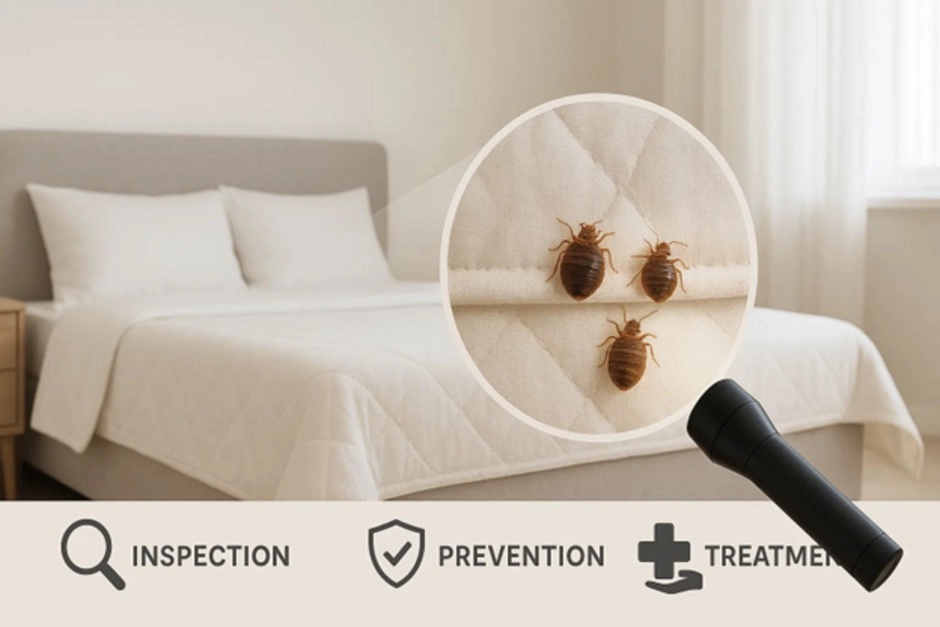
The fastest way to get rid of bed bugs in a Denver, Aurora, or Colorado Springs home is early detection, a targeted heat or chemical treatment plan, and follow-up inspections two weeks apart until three straight checks come back clear. Bed bugs travel in luggage, used furniture, and shared laundry rooms — not in dirt — so they show up in brand-new apartments and century-old bungalows at the same rate.
Bed bug bites appear in a line or small cluster on skin exposed while sleeping: arms, shoulders, and neck. They itch more than a mosquito bite and swell over one to two days instead of immediately. Miller moths and carpet beetles leave no bite marks at all, and wasp or spider bites are single, sharp, and localized — if you're waking up with a row of three or four bites, check the mattress seams first.
They hitchhike. The most common entry points into Denver-area homes are secondhand furniture, luggage after travel, and items brought home from a shared laundry room. They do not fly, jump, or drop from trees, and they are not a sign of a dirty house — a spotless downtown Denver condo can pick up bed bugs from a delivery box in the lobby.
Yes. Shared walls, shared hallways, and communal laundry give bed bugs a path between units that a detached home in Lakewood or Centennial doesn't have. In multifamily buildings, an infestation in one unit can reach two or three neighboring units through electrical outlets and baseboard gaps before anyone notices. That is why property managers in Denver and Aurora require the whole floor, not just one unit, to be inspected once a case is confirmed, and why a single-unit treatment plan in a larger building rarely solves the problem on its own.
Stop moving items out of the room. Bag any bedding, curtains, and clothing from the affected room in sealed plastic and wash it on the hot cycle, then dry on high heat for 30 minutes. Do not move furniture to another room or set anything at the curb — that is how a one-room problem becomes a whole-house problem. Photograph what you find; it helps a pest control technician confirm the species and the extent before treatment starts.
Heat treatment has an advantage in Colorado's low-humidity climate because it doesn't rely on residual moisture-sensitive chemicals losing potency in dry indoor air. A heat treatment specialist raises a room to 118°F to 135°F for several hours, which kills every life stage — eggs included — in a single visit. Chemical treatment needs two to three visits spaced 10 to 14 days apart because most products don't kill eggs, so a second generation hatches between treatments.
Whole-room heat treatment in the Denver metro runs $300 to $600 per room, or $1,500 to $4,000 for a full 1,500 to 2,500 square foot home. Chemical treatment programs run $250 to $500 per visit across two to three visits. Multifamily buildings split the cost between the property owner and the resident depending on the lease terms, so check the lease language before assuming either side covers the full bill.
Does alcohol kill bed bugs is one of the most searched DIY questions, and the honest answer is: only on direct contact. Rubbing alcohol, foggers, and over-the-counter sprays kill the bugs they touch directly but do nothing for eggs hidden in seams, baseboards, or outlet covers. A licensed technician with a Colorado pesticide applicator license can identify every harborage spot a homeowner will miss.
Plan on 4 to 8 weeks from first treatment to confirmed clear, covering two treatments 10 to 14 days apart plus two follow-up monitoring visits. A single-room case in an apartment clears faster than a whole-house case in a larger Aurora or Centennial home with more furniture to treat.
Bed bugs die at sustained temperatures below 0°F, but most unheated Colorado garages and sheds don't stay that cold long enough to kill them — they go dormant instead and reactivate once the space warms. A heated home never gives them that break, which is why indoor infestations persist year-round regardless of the outdoor forecast.
Colorado's statewide warranty of habitability law, expanded by House Bill 19-1170, requires landlords to address conditions that are materially dangerous to health, and pest infestations including bed bugs fall under that standard. A landlord who is notified in writing and does not respond within a reasonable time is in violation of that standard, giving the tenant grounds to pursue repair-and-deduct remedies or, in serious cases, terminate the lease. Denver, Aurora, and Colorado Springs each add local rental licensing rules on top of the state law.
Most Colorado leases require a tenant to notify the landlord in writing as soon as bed bugs are suspected and to cooperate with the inspection and treatment schedule — refusing entry for treatment can shift liability back to the tenant. Tenants who bring in used furniture without inspecting it first are a common source of reinfestation, so document the source of any furniture added after a prior treatment.
Colorado's standard seller's property disclosure, the form used across the Front Range, asks whether the seller knows of a past or current pest infestation, and bed bugs fall under that question. A treated-and-cleared infestation with documentation from a licensed pest control company is easier for a buyer to accept than an undisclosed history discovered after closing. Sellers preparing a home for market should read the Colorado Home Seller's Guide for the full disclosure checklist.
Rarely. Most homeowners and renters policies in Colorado treat bed bugs as a maintenance issue rather than a covered peril, similar to how they handle general pest damage. A handful of specialty riders exist, but budget for treatment as an out-of-pocket cost rather than counting on a claim.
Not automatically. A mattress encasement rated for bed bugs, combined with heat or chemical treatment of the room, lets most mattresses stay in service — replacement only becomes necessary with heavy staining or structural damage. Seal the mattress in the encasement for a full 12 months, since that outlasts the bugs trapped inside without a blood source.
Inspect seams, tags, and the frame of every secondhand or moving-truck piece of furniture before it enters the home, and unpack directly into a plastic bin rather than setting boxes on the bedroom floor overnight. First-time renters and buyers moving into Denver, Aurora, or Colorado Springs should also ask the previous tenant or the property manager about any treatment history for the unit — the First-Time Home Buyer Guide for Colorado covers the full new-home move-in checklist.
Yes, through wall voids, shared electrical conduit, and baseboard gaps between adjoining units. HOA and condo association pest policies vary, so check the governing documents for who is responsible for building-wide inspections versus unit-level treatment before a dispute over cost comes up.
A standard Colorado home inspection does not test specifically for bed bugs, but a buyer who spots evidence during a walkthrough can raise it during the inspection objection period. Sellers who treat and document an infestation before listing avoid a price renegotiation or a delayed closing once a buyer's inspector finds evidence independently.
Whether a pest problem is holding up a sale, complicating a lease dispute, or making you rethink a purchase, the Kenna Real Estate Group walks Front Range buyers and sellers through disclosure requirements, inspection objections, and treatment documentation every week. Call or text 303-955-4220. A live person answers. Not a robot, not a phone tree. Ready to move? Search every home for sale in Colorado.
Questions about any home in Colorado? Call or text 303-955-4220. A live person answers.
Look for a straight line or small cluster of bites on skin exposed while sleeping, plus tiny rust-colored spots on the mattress seams. Miller moths, carpet beetles, and spiders don't leave that pattern.
Expect $300 to $600 per room, or $1,500 to $4,000 for a full 1,500 to 2,500 square foot home treated in one visit.
No. Colorado's statewide warranty of habitability law requires a landlord to respond to a written notice of a health-related condition like bed bugs within a reasonable time.
Yes. The standard Colorado seller's property disclosure asks about past or present pest infestations, and bed bugs are included in that question.
Rarely. Most Colorado policies treat it as a maintenance issue, so budget for treatment out of pocket rather than filing a claim.
Yes, through wall voids, shared conduit, and baseboard gaps, which is why multifamily cases require inspecting neighboring units.
Plan on 4 to 8 weeks: two treatments 10 to 14 days apart, then two follow-up monitoring visits before calling it clear.
Not always. A bed bug-rated encasement sealed for 12 months, combined with room treatment, lets most mattresses stay in service.