New - Just Now

.jpg)


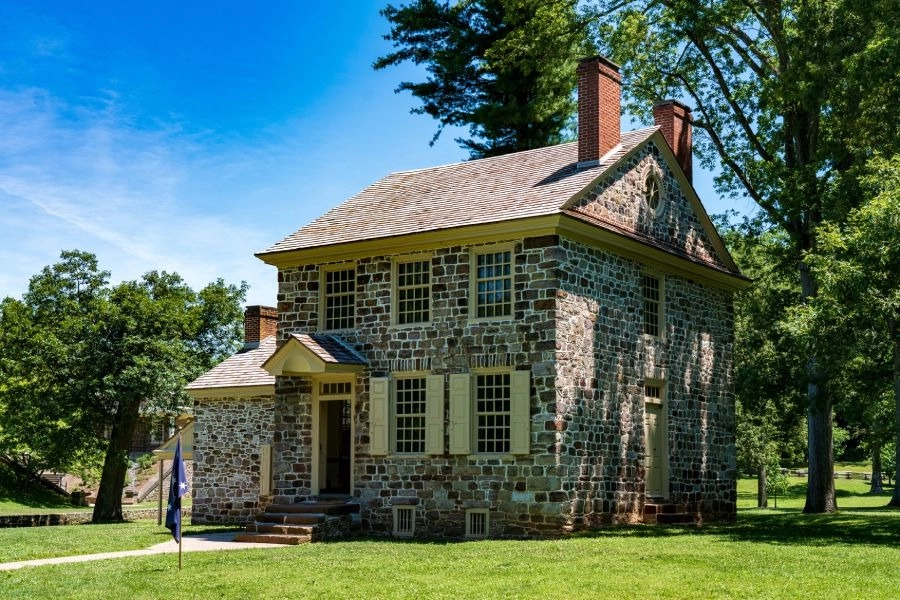
Flipping a historic property in Denver works when the exterior scope clears the Landmark Preservation Commission before you close, and the budget carries the four things every pre-1940 Front Range house hides: knob-and-tube wiring, a clay sewer line, a rubble foundation on expansive clay and a roof that has taken twenty hail seasons. The city reviews exterior work on a designated landmark or on any house inside a Denver historic district; it does not review interiors.
This guide covers the Denver rules, the Colorado and federal tax credits, the lead and asbestos requirements, the real repair costs and the resale rules. The Denver fix and flip guide is the companion to this post.
Yes, on the outside. Denver's landmark ordinance (Chapter 30 of the Denver Revised Municipal Code) gives the Landmark Preservation Commission design review over exterior changes to an individually designated landmark and to every structure inside a Denver historic district, contributing or non-contributing. Windows, doors, roofs, porches, siding, additions and demolition all go through review before Community Planning and Development issues the building permit.
Interiors are not reviewed. Kitchens, bathrooms, floor plans, plaster and basements are yours to change under the normal building code. The profitable historic flip in Denver keeps the street-facing facade intact and spends the money inside and at the back.
Denver's Landmark Preservation office publishes a landmark and historic district map; a parcel inside a shaded district is under review no matter what the listing says. History Colorado keeps the State Register and the Colorado entries on the National Register. A National Register listing alone does not trigger Denver design review; only Denver designation does. The assessor record does not show landmark status.
The Denver ADU, zoning and historic district guide covers the zone lot check that goes with the landmark check.
A Certificate of Appropriateness is the commission's written approval of the exterior scope; the building permit does not issue without it. Landmark staff approve routine, in-kind work: matching roof shingles, a porch repaired to the same profile, repainting, rear-yard work not visible from the street. Work that changes the street-facing facade, adds square footage or replaces original windows goes to the full commission, which meets in public twice a month.
Submit the design review application the day you go under contract and use the inspection period to get staff comments. Do not close on a deal whose profit depends on a facade change the commission has not seen. Two months of hard-money holding costs on a $500,000 purchase is $8,000 to $12,000 spent waiting.
Windows are where historic flips lose money and where Certificates of Appropriateness get denied. The Denver design guidelines expect original wood windows on street-facing walls to be repaired, not replaced. A replacement is approved when the original is documented as beyond repair and the new unit matches it in size, operation, profile, material and divided-light pattern. Vinyl replacement windows on a front facade are the most common denial.
The honest summary for a flipper: the credits reward the buyer who holds the building. Market them to that buyer and price the flip without them. The tax strategies for Colorado real estate investors post covers the hold-versus-sell math.
Every Denver house built before 1978 is presumed to have lead paint. The EPA Renovation, Repair and Painting rule requires the renovation firm to hold EPA certification and follow the containment and cleanup practices when it disturbs painted surfaces above the rule's minimums. Put the certificate number in the contract and keep the post-work documentation for the buyer's file.
Asbestos is a Colorado state program. The Colorado Department of Public Health and Environment requires a state-certified asbestos building inspection before renovation of a single-family home that disturbs more than 32 square feet of surface material, 50 linear feet of pipe insulation or the volume of a 55-gallon drum. Plaster, floor tile, duct wrap, popcorn ceilings and boiler pipe paper are the common positives in Denver bungalows. An inspection runs $400 to $900; abating a basement of pipe wrap runs $3,000 to $8,000. Hauling debris without the inspection is the violation that stops a project with a state order.
The purchase price on a Curtis Park or Baker Victorian is the cheapest number in the deal. These are the items that show up after closing, with the ranges the Kenna Real Estate Group sees on investor budgets.
| Item | Why it shows up in Denver | Front Range cost range |
|---|---|---|
| Knob-and-tube wiring, fused panel | Insurers decline coverage; Colorado-licensed electrician and a Denver permit required | $12,000 to $30,000 for a rewire and 200-amp panel |
| Clay sewer line | Pre-1950 lines crack and root under freeze-thaw; a sewer scope is $150 to $300 | $8,000 to $20,000, more under a street cut |
| Rubble foundation on expansive clay | Bentonite soils heave and settle; piers and drainage fix most of it | $10,000 to $40,000 |
| Roof after twenty hail seasons | Hail season is May to September; Class 4 shingles lower the premium | $15,000 to $30,000 on 1,500 sq ft, more for a historic profile |
| Radon | Every Colorado county is EPA Zone 1; buyers test during inspection | $1,200 to $2,500 for mitigation |
| Basement egress | A basement bedroom needs a code egress window and well | $4,000 to $9,000 per window, more in stone |
| Plaster and lath | Settlement cracks; interior only, no review | $3 to $6 per square foot to skim |
Two Kenna posts go deeper on the largest lines: foundation cracks and structural fixes in the Denver area and radon testing and mitigation in Denver homes.
A basement bedroom is interior work: an egress window, a permit, a licensed electrician, no landmark review. A pop-top or rear addition on a district home is reviewed; the commission approves additions that sit behind the original roofline and stay subordinate in height and mass, and denies ones that change the street view. Denver expanded accessory dwelling unit zoning to most residential lots in 2024; in a historic district the ADU's exterior still goes through landmark review and the zone lot still has to meet the size and setback rules.
Not quickly. Denver reviews every demolition permit on a structure 30 years old or older for landmark potential before the permit issues, and posts candidates for a public notice period during which a designation application is allowed. Inside a historic district, demolition of a contributing structure goes to the full commission and is approved in narrow cases. A scrape-and-build plan in Baker, Potter Highlands or Wyman is not a flip plan.
The districts with the deepest buyer pool for restored houses sit close to downtown and light rail: Curtis Park in the Five Points area, Baker south of downtown, Potter Highlands in the northwest, and Humboldt Street, Quality Hill and Morgan's Addition around Capitol Hill and Cheesman Park. Outside Denver, historic downtown Littleton, Golden's 12th Street district, Boulder's Mapleton Hill and the Old North End in Colorado Springs run their own review boards with their own guidelines. Read the local guideline before the local offer.
Yes, and it sets your listing date. FHA does not insure a purchase loan when the seller has owned the property fewer than 91 days, measured from the seller's recording date to the new contract date. Between 91 and 180 days, a resale price more than double the seller's purchase price requires a second appraisal and documented rehab costs. On a $450,000 restored bungalow, FHA and VA buyers are a large share of the pool, so hold the listing to day 91 or price for conventional buyers only.
Investors fund the purchase and rehab with hard money or a private lender, with terms set by the after-repair value; the hard money in Colorado post covers current structures. The resale buyer has two renovation mortgages when the flipper leaves work undone: the FHA 203(k) and the conventional HomeStyle loan, both funding the remaining rehab at closing. Mike Oswald, VP of Mortgage Lending at Rate, NMLS 261003, Equal Housing Lender, pre-approves those buyers and prices renovation loans against the after-repair appraisal. You are free to use any lender. The Colorado home financing guide explains each program.
The Colorado Seller's Property Disclosure asks about the foundation, roof, sewer, electrical, water intrusion, radon results and permits, and a flipper answers from actual knowledge. Federal law adds a lead-based paint disclosure and the EPA pamphlet on every pre-1978 sale. Attach the permits, the Certificate of Appropriateness, the asbestos report, the sewer scope video and the radon test; a complete file removes the inspection objection that costs a flipper a second contract. The Smart Pricing Report sets the resale number against restored comparables, not the neighborhood average.
The Kenna Real Estate Group at Keller Williams DTC finds historic houses in Denver's districts before they hit the open market, checks the landmark map and zoning on every candidate, runs the after-repair value on restored comparables and lists the finished house to the buyers who pay for original detail. Call or text 303-955-4220. A live person answers. Not a robot, not a phone tree. Or search every home for sale in Colorado and flag the pre-1940 ones.
Questions about any home in Colorado? Call or text 303-955-4220. A live person answers.
No. Denver landmark review covers exterior changes only. Kitchens, baths, floor plans and basements on a historic Denver house are permitted under the normal building code with no design review.
Open Denver's landmark and historic district map on denvergov.org and enter the address. A shaded parcel is under exterior design review whether or not the listing mentions it. A National Register listing alone does not trigger Denver review.
Not on the street-facing facade. The guidelines expect original wood windows there to be repaired; approved replacements match the original in size, material, profile and light pattern. Interior storm windows need no review.
Rarely. The Colorado residential credit rewards owner-occupants who hold the house, and the federal 20% credit applies to income-producing buildings over five years. Price the flip without them and market them to the buyer.
When the work disturbs more than 32 square feet of material, 50 linear feet of pipe insulation or a 55-gallon drum's volume in a single-family home. A state-certified asbestos building inspector does the survey before demolition starts.
On day 91 after your deed records. Between days 91 and 180, a resale at more than double your purchase price requires a second appraisal and documented rehab costs.
Denver reviews every demolition on a structure 30 years or older for landmark potential, and inside a historic district demolition of a contributing house is approved only in narrow cases. Plan on restoring, not scraping.