.jpg)


Kitchen cabinets in a Front Range home need to be chosen for Colorado's dry, low-humidity climate as much as for style, since the wrong construction shrinks and gaps within a single heating season. Here is what to check on construction, cost, and code before ordering.
What Cabinet Construction Holds Up Best to Colorado's Dry Air?
Denver's humidity sits in the 30s most of the year and drops further once the furnace runs. Solid wood raised-panel doors move the most, since the panel expands and contracts inside its frame across the seasons and can show a hairline gap by the second winter. Frameless, slab-door cabinets built from an engineered core with a wood veneer move less and hold their reveal lines more consistently through a Front Range year. A cabinet line finished on both sides of the door, not just the front, resists warping better too.
Slab or Shaker: What Do Front Range Buyers Expect?
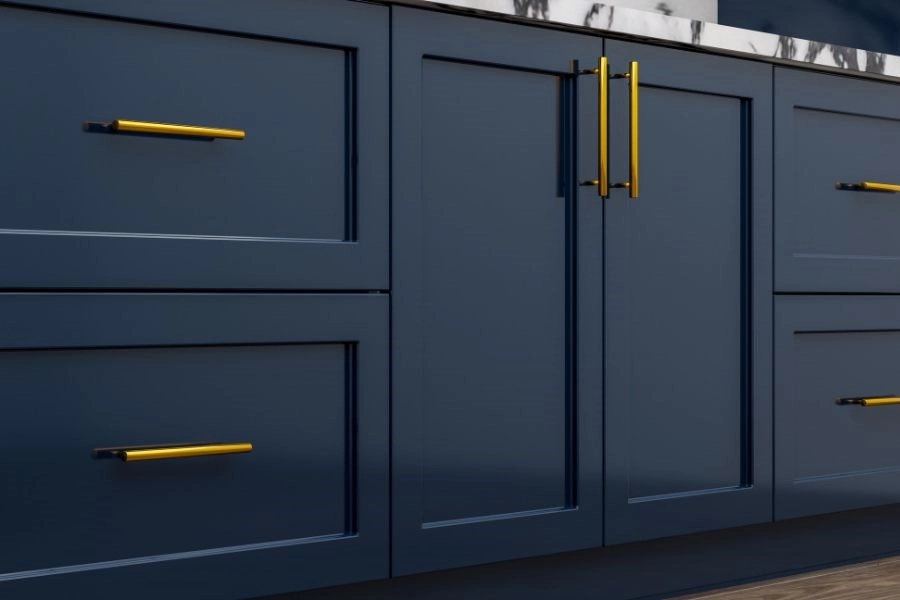
Shaker-style doors remain the better resale choice across most Denver-metro price bands because they read current without dating quickly and hide small seasonal movement better than a flat slab door does. A Shaker cabinets for Colorado homes guide is worth reading for material and cost comparisons before you order. Slab doors read more strongly in mid-century and modern-style homes, where buyers specifically expect that look.
Do I Need a Permit to Replace Kitchen Cabinets in Denver?
No, for a straight cabinet swap that keeps plumbing and electrical in the same locations. A permit becomes necessary once the project moves a sink, relocates outlets, or adds circuits for new under-cabinet lighting or appliances — common additions when cabinets are replaced anyway, so plan the electrical scope before ordering.
How Does Altitude Affect Finishes and Adhesives?
Lower air pressure and lower humidity at 5,280 feet and above change how some paints, stains, and adhesives cure — finishes can dry faster than the manufacturer's instructions assume at sea level. A cabinet maker or painter with Front Range experience adjusts application time accordingly; ask about this directly if the project includes site-finished cabinets or a custom paint color.
What Do Buyers at Different Price Bands Expect?
Entry-level buyers, roughly $400,000 to $550,000, want cabinets that are clean, level, and free of visible gaps — not a specific style. Mid-market buyers, $550,000 to $850,000, expect soft-close hinges and drawers and a finish that matches the counters. Above $850,000, buyers compare against fully custom cabinetry and notice stock cabinet fillers and mismatched grain immediately.
Do HOA Rules Affect a Cabinet Replacement?
Interior cabinet work rarely needs HOA approval. In an attached home or condo, check the covenants if the project also moves plumbing behind the cabinets or adds weight the building was not designed for, such as a full stone-clad island.
How Much Do New Kitchen Cabinets Cost on the Front Range?
Stock cabinets keep the project at the lower end of the budget; semi-custom and full-custom cabinetry each step up from there, mainly through material choice, finish, and hardware. Get bids from at least three Front Range cabinet shops or installers, and confirm whether the quote includes delivery and installation or materials only.
Does Cabinet Quality Affect Resale Value?
Cabinets are one of the first things a buyer's eye lands on when they walk into a kitchen, and visible gaps, misaligned doors, or a dated finish can make an otherwise solid home feel like it needs work. Our guide to adding value before selling covers which cabinet-level changes pay off, and a Smart Pricing Report compares your kitchen's finish level to recent closed sales.
Should I Reface or Replace?
Refacing keeps the existing boxes and swaps doors, drawer fronts, and hardware, which costs less and avoids most permit questions since plumbing and electrical stay untouched. It works well when the boxes are still square and level; if the layout itself needs to change, a full replacement is the better long-term choice.
Framed or Frameless Cabinet Boxes?
A framed cabinet box has a face frame across the front opening, which is the traditional American construction and hides small gaps well as the wood moves with the season. A frameless, full-access box, sometimes called European-style, gives slightly more interior storage per cabinet and pairs naturally with a slab-door, modern look. Neither construction style is wrong for the Front Range, but frameless boxes built with an engineered core hold their reveal lines more consistently through a dry Colorado winter than framed boxes built entirely from solid wood.
Hardware and Pull Choices
Cabinet hardware sees more daily contact than almost any other surface in the kitchen, so it needs a finish that resists fingerprints and hard-water residue from wet hands as much as it needs to match the faucet. Matte black and brushed brass both hide daily wear better than polished chrome, and both pair well with the same finishes recommended for Front Range faucets, which keeps the whole kitchen's hardware consistent.
What Warranty Should I Expect From a Cabinet Manufacturer?
A limited lifetime warranty on the box and door construction is standard from most mid-range and custom cabinet makers, though finish and hardware carry a shorter, separate term in many cases. Ask specifically whether the warranty covers wood movement from seasonal humidity changes, since that is the failure mode most relevant to a Front Range home, and keep the paperwork with the home's other permit and renovation records.
How Do Stock, Semi-Custom, and Custom Cabinets Compare?
Stock cabinets ship pre-built in fixed sizes and keep the project moving fastest, but the fixed sizing sometimes leaves an awkward filler panel in a layout that does not divide evenly. Semi-custom cabinets adjust standard sizes and finishes to the room's exact dimensions and cover the sizing most Front Range remodels land on. Full custom cabinetry is built to the exact layout with no fillers and the widest choice of wood species and finish, at the highest price point of the three.
How Long Does a Cabinet Replacement Take on the Front Range?
Stock cabinets can arrive and go in within a few weeks of ordering. Semi-custom cabinets run six to ten weeks from order to delivery in most cases, and full custom cabinetry can run several months depending on the shop's backlog. Order early if the project is tied to a listing date, since the cabinet lead time is, in most cases, the single longest item on a kitchen remodel schedule, longer than the installation itself. Ask each shop for their current lead time in writing before signing, since backlogs shift by season and a verbal estimate given in a showroom can run weeks behind the shop's actual production schedule once the order is placed.
Where to go next
- Search every home for sale in Colorado
- Preparing and adding value before selling
- Smart Pricing Report: pricing your Colorado home to sell
- Shaker cabinets for Colorado homes
- Kitchen remodel ideas for Front Range rental properties
- Talk to a Kenna Real Estate Group agent
Talk to the Kenna Real Estate Group
If you are choosing between refacing and replacing cabinets before you list, we can tell you which one buyers on your street have paid more for. Call or text 303-955-4220. A live person answers. Not a robot, not a phone tree. Ready to look while the work is underway or before you list? search every home for sale in colorado.
Homes for sale that match this post
- Homes with Gourmet Kitchen in Denver
- Mid-Century Modern Style Homes in Denver
- Condo: guide
- HOA Rules and Fees Guide in Denver
- All homes for sale in Denver
Guides
Questions about any home in Colorado? Call or text 303-955-4220. A live person answers.