.jpg)


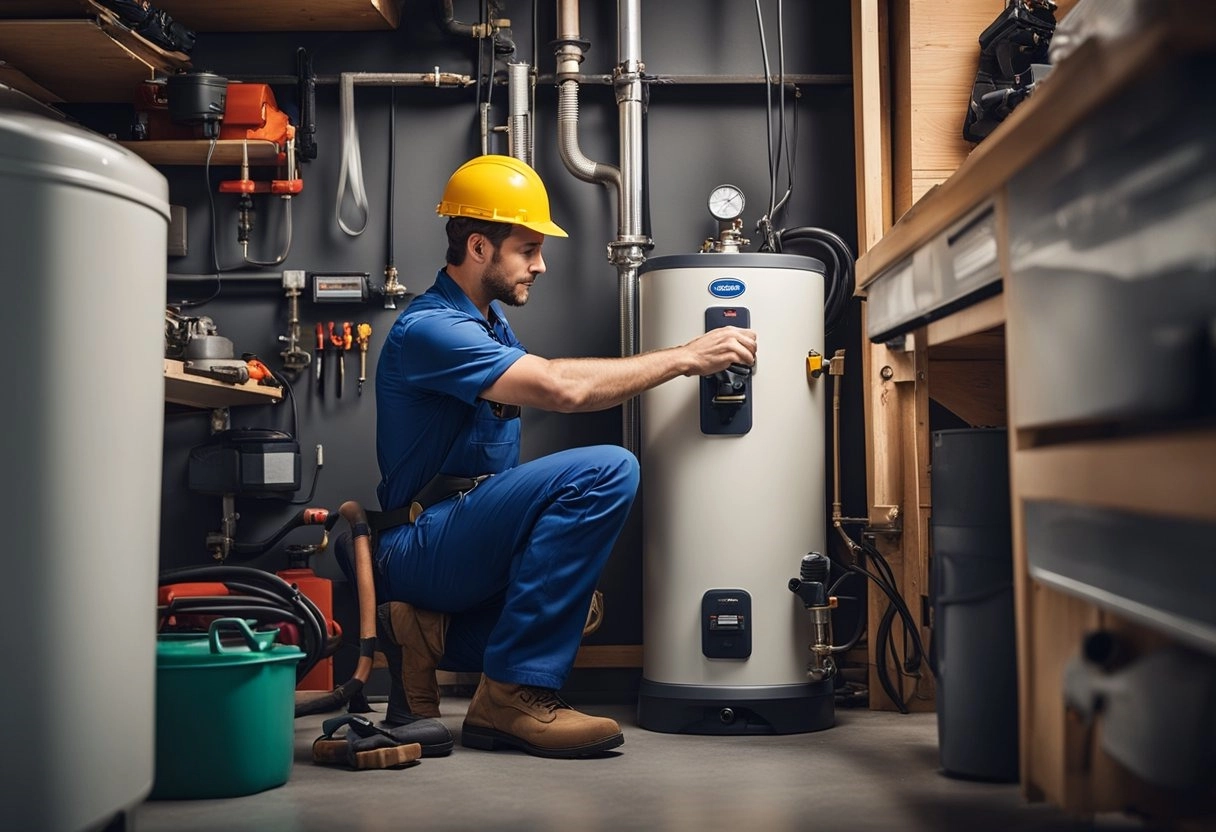
Hard water is the single biggest factor shortening a water heater's life on the Front Range, since mineral scale builds up on the heating element and tank bottom faster here than in most parts of the country. Flush the tank annually, watch for the warning signs below, and budget $1,200 to $3,500 for a full replacement when repair no longer makes sense.
Why Colorado water heaters wear out faster
Denver metro water runs moderately to very hard depending on the utility district, and dissolved calcium and magnesium settle out as scale once water is heated. That scale insulates the heating element from the water it's supposed to heat, forcing a gas or electric water heater to run longer and hotter to reach the same set temperature, which shortens the tank's working life and raises the energy bill at the same time.
Gas vs. electric: which fails faster in Colorado
Gas water heaters commonly recover hot water faster and handle a larger household's demand better, while electric units cost less upfront and don't need the altitude-rated burner adjustment a gas unit requires. Neither fuel type is immune to hard-water scale, since the mineral buildup happens inside the tank regardless of how the water is heated.
Warning signs a water heater needs repair
- Rumbling or popping sounds from the tank, caused by water boiling under a layer of sediment.
- Lukewarm water or a shorter hot-water window than the tank used to deliver.
- Rusty or discolored water from the hot tap only, a sign the tank's interior lining has failed.
- Water pooling at the base of the tank, which almost always means the tank itself is cracked and needs replacement, not repair.
- A pilot light that won't stay lit on a gas unit, commonly a thermocouple issue that's repairable.
- Age past 10-12 years on a standard tank unit, when the odds of a sudden failure rise sharply.
Repair costs in Denver metro
Common repairs run: a thermocouple or igniter replacement $150-$350, a heating element swap on an electric unit $200-$450, and sediment flushing to restore lost capacity $100-$200. A leaking tank itself is not repairable; that's a replacement job, not a repair.
Replacement costs: tank vs. tankless
| Type | Typical installed cost | Lifespan |
|---|---|---|
| Standard tank (40-50 gal) | $1,200-$2,500 | 10-12 years, less in hard water without maintenance |
| High-efficiency tank | $1,800-$3,000 | 10-13 years |
| Tankless | $3,000-$5,500 | 15-20 years with annual descaling |
A tankless unit costs more upfront but needs annual descaling in Front Range hard water to hit its full lifespan; skip that maintenance and a tankless heater scales up and loses capacity just as fast as a neglected tank unit.
Altitude and gas water heaters
Like a furnace, a gas water heater installed above 2,000 feet needs the correct altitude-rated burner orifice from the manufacturer; Denver's elevation always applies. An improperly set unit burns inefficiently and can produce excess carbon monoxide, which is one more reason to use a licensed plumber for installation rather than a DIY swap.
How frequently to flush a water heater in hard-water areas
Flush the tank annually in most Front Range service areas, and consider every six months in the hardest-water zones. Flushing clears settled sediment before it insulates the element and shortens tank life; a tank that's never been flushed after five-plus years commonly has enough buildup that flushing alone won't fully restore capacity.
A homeowner can flush a standard tank with a garden hose and basic tools in under an hour, but a unit that's never been flushed can release enough loosened sediment to clog the drain valve partway through; a plumber has the tools to clear that without damage without damaging the valve.
Should you install a water softener?
A whole-house water softener, commonly $1,500 to $3,500 installed, measurably extends the life of a water heater, dishwasher and washing machine in hard-water areas by preventing scale buildup before it starts. It's an upfront cost worth weighing against the accelerated replacement cycle hard water otherwise forces on a home's appliances.
Water hardness varies by utility district across the Front Range, so check your specific water provider's published hardness numbers before deciding whether a softener makes sense; a home on a well or in a harder-water service area sees a faster payback than one already on moderately soft municipal water.
Permits for water heater replacement in Denver metro
Denver, Aurora, Lakewood and most Front Range cities require a plumbing permit for water heater replacement, particularly when converting between fuel types or moving the unit's location. A licensed plumber commonly pulls the permit as part of the installation; confirm that before work begins, since an unpermitted water heater can surface as an issue during a future home sale.
Water heater condition and a Colorado home sale
A water heater near or past its expected lifespan is a common item flagged in a Front Range inspection report, and it routinely becomes part of the buyer's objection under Colorado's inspection objection deadline. A tank that's visibly rusted or leaking at the base can stall a closing entirely until it's replaced. Sellers with an aging unit commonly replace it proactively rather than negotiate a credit under time pressure.
A water heater installed without an expansion tank on a closed municipal water system is another common Front Range inspection flag, since most local codes have required one for years on any tank replacement or new installation. Confirm one is present before listing; adding one alongside a full replacement adds only a small amount to the total job.
Insurance and sudden water heater failures
Most Colorado homeowners policies cover sudden water damage from a failed tank, but not the cost of the water heater itself unless it failed due to a covered peril. A slow, undetected leak that causes mold or rot over time faces far more coverage disputes than a sudden rupture, which is one more reason to catch the warning signs above before a full failure happens.
Frozen pipes and a water heater in an unheated space
A water heater installed in a garage, crawl space or unheated basement corner is exposed to the same freeze risk as any Front Range pipe during a hard winter cold snap, since a supply line running to it can freeze and split even if the tank itself is insulated. Insulate exposed supply and discharge lines, and keep the space above 40°F during extended cold stretches, since a burst line at the water heater floods the same area the tank sits in.
City-by-city permit differences
Denver, Aurora, Lakewood, Colorado Springs and Jefferson, Arapahoe and Douglas counties each issue their own plumbing permits and sometimes require different inspection timing for a water heater swap, especially when converting from atmospheric venting to power venting on a high-efficiency unit. A licensed plumber working regularly in your specific city or county already knows the local inspector's requirements, which is worth confirming before hiring an out-of-area contractor for a same-day job.
Where to go next
- Preparing and adding value before selling
- 60-gallon water heater guide and tank sizing
- Tankless vs. tank water heater guide
- The Colorado home buyer's guide
- Homes for sale in Denver, CO
- Search every home for sale in Colorado
Talk to the Kenna Real Estate Group
The Kenna Real Estate Group helps Front Range sellers decide whether to replace an aging water heater before listing, and helps buyers weigh a water heater's age and condition during the inspection window. Call or text 303-955-4220. A live person answers. Not a robot, not a phone tree. Ready to look at homes now? Search every home for sale in Colorado.
Homes for sale that match this post
Guides
Questions about any home in Colorado? Call or text 303-955-4220. A live person answers.