New - 17 Hours Ago

.jpg)


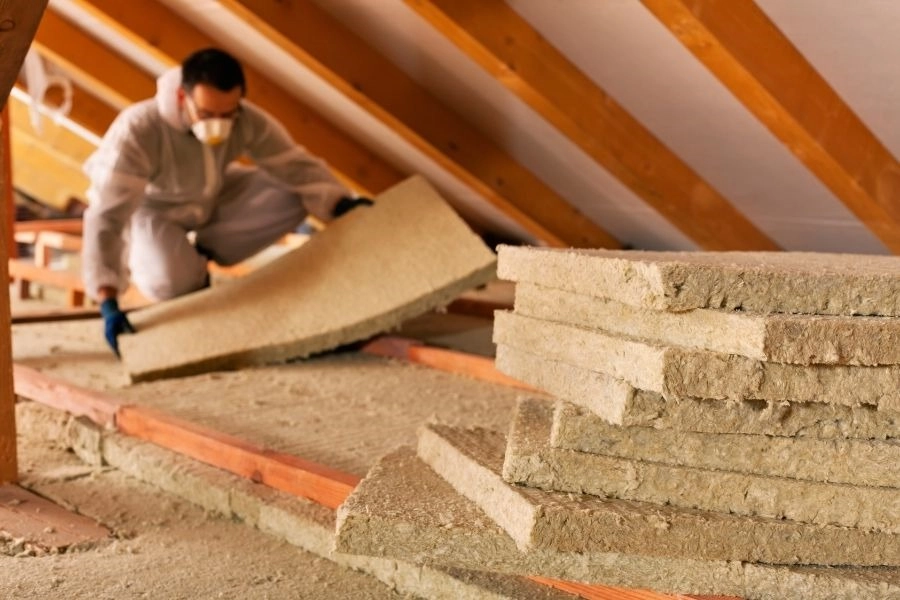
Colorado spans three building climate zones depending on elevation, from Denver's Zone 5B up through Zone 6 and Zone 7 in the mountains, and the target R-value for attic, wall, and crawlspace insulation changes with the zone. A Denver metro home wants R-49 to R-60 in the attic and R-13 to R-21 in exterior walls; a mountain-adjacent home in a colder zone wants the higher end of both ranges.
Getting the R-value and the insulation type right pays back twice on the Front Range: through a lower gas bill across a six-month heating season, and through a stronger condition rating when the home eventually sells.
Attic insulation in the Denver metro should hit R-49 to R-60; exterior walls should hit R-13 to R-21 depending on framing depth; and a heated or semi-conditioned crawlspace should hit at least R-19. Homes in Colorado Springs and Fort Collins follow the same Zone 5B to Zone 6 range as Denver; mountain towns above 7,500 feet fall into Zone 7 and push toward the top of every range.
Yes. The International Energy Conservation Code, adopted with local amendments by Denver and most Front Range municipalities, sets minimum R-values by climate zone, and a colder zone requires a higher minimum. A contractor pulling a permit confirms the exact code-required value for the project address before ordering material.
Closed-cell spray foam, fiberglass batts, and blown cellulose all perform well in Colorado's dry climate, since low humidity is not the main variable insulation has to manage here; altitude-driven temperature swings and wind-driven heat loss matter more. Closed-cell spray foam carries the highest R-value per inch at roughly R-6.5, which helps in tight attic or rim-joist spaces where depth is limited.
The attic loses the most heat in a typical Front Range home because heat rises and escapes through the roof deck, so it is the first place to upgrade. Rim joists, crawlspaces, and the band between a garage and living space come next; these are common gaps in homes built before 2000 across the Denver metro.
Blown fiberglass or cellulose attic top-up runs $1.50 to $3.50 per square foot, or roughly $1,200 to $2,800 for a 1,500-square-foot Denver metro attic. Closed-cell spray foam runs $3 to $7 per square foot for the same space, priced higher because of the material and equipment cost.
Spray foam can seal small cracks that would otherwise let soil gas escape passively, which in some basements changes how radon moves through the structure. Colorado has high radon potential in many counties; test for radon before and after a basement insulation project, and pair insulation work with a radon mitigation system if the test comes back above the EPA action level.
Xcel Energy offers rebates for qualifying attic, wall, and crawlspace insulation upgrades as part of its home efficiency programs, and Colorado's state-level weatherization assistance covers additional costs for income-qualified households. Rebate amounts and eligibility change year to year, so confirm the current program directly with Xcel Energy before budgeting a project.
Insulation added to an existing attic or wall cavity is permit-exempt in most Front Range jurisdictions. Insulation tied to new construction, an addition, or a basement finish that adds living space requires a building permit as part of that larger project; confirm the specific requirement with the city or county.
Insulation does not show up as its own line item on an appraisal, but it supports the overall condition and energy-efficiency notes an appraiser can factor into the value opinion, and it shows up directly in a buyer's utility-cost math during a showing. A documented insulation upgrade is worth mentioning in the listing description and the Smart Pricing Report comparison.
Insulation returns more heat savings per dollar than window replacement does in most Front Range homes, so a homeowner working with a fixed budget gets more value tightening the attic and rim joists first. Both projects together perform best; an insulated home with old, leaky windows still loses heat through the glass.
Yes. The Front Range regularly swings 40 degrees between a winter afternoon and the overnight low, and a well-insulated attic and wall cavity slow how fast that outdoor swing reaches the living space. A poorly insulated home heats and cools faster with the outdoor air, which forces the furnace and air conditioner to cycle more frequently and shortens their working life.
A blower-door test is not required by code for a simple attic top-up, but it identifies air leaks around can lights, plumbing chases, and the attic hatch that insulation alone will not fix. Several Front Range utilities, including Xcel Energy, offer a discounted or free home energy audit that includes this test as part of a broader efficiency program.
| Insulation type | R-value per inch | Best use in a Colorado home |
|---|---|---|
| Fiberglass batt or blown | R-2.2 to R-2.7 | Attics and open wall cavities; lowest material cost |
| Blown cellulose | R-3.2 to R-3.8 | Attics and existing wall cavities; good fire and pest resistance |
| Closed-cell spray foam | R-6.0 to R-6.5 | Rim joists, crawlspaces, and tight spaces where depth is limited |
The Kenna Real Estate Group helps Front Range buyers and sellers weigh which efficiency upgrades, including insulation, matter most for value and comfort. Call or text 303-955-4220. A live person answers. Not a robot, not a phone tree. Or search every home for sale in Colorado.
Questions about any home in Colorado? Call or text 303-955-4220. A live person answers.
R-49 to R-60; homes higher in the foothills or mountains push toward the top of that range under Colorado's colder climate zones.
Closed-cell spray foam, at roughly R-6.5 per inch, which helps in tight spaces like rim joists and crawlspaces.
Adding insulation to an existing attic or wall is permit-exempt in most Front Range cities; insulation tied to new construction or an addition needs a permit.
It can, by sealing cracks that once let soil gas escape passively; test for radon before and after the project.
Blown fiberglass or cellulose runs $1,200 to $2,800 for a 1,500-square-foot attic; closed-cell spray foam runs higher, around $3 to $7 per square foot.
Insulation returns more heat savings per dollar in most Front Range homes, so tighten the attic and rim joists before tackling windows.


