New - 6 Hours Ago
.jpg)


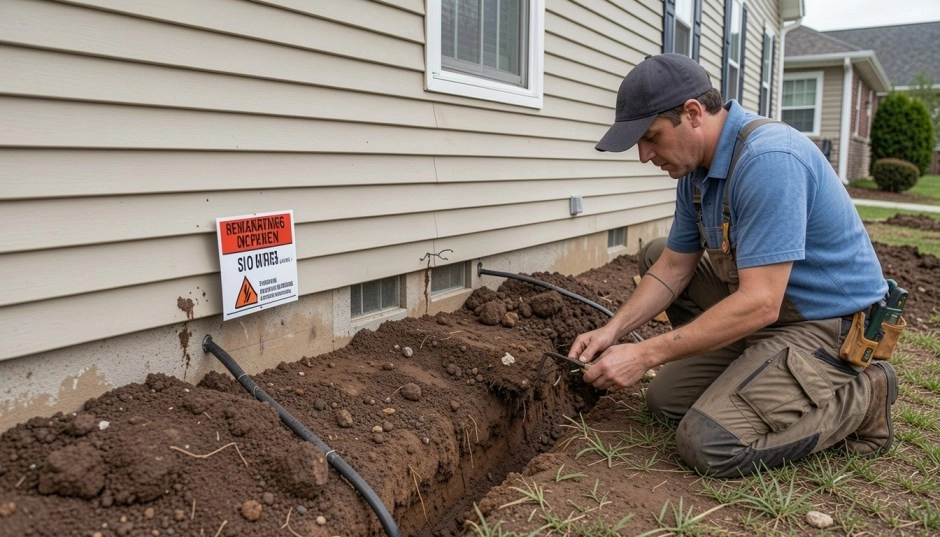
A damp basement corner, a hairline foundation crack, or a musty smell that comes and goes is easy to explain away in a Colorado home: it must be humidity, or normal settling, or last week's rain. Those explanations are frequently wrong, and the real cause, water moving through soil, along a foundation, or through a failing pipe, keeps working while the wrong fix gets applied.
Water rarely shows up exactly where the problem starts. It travels through Colorado's expansive clay soil, along foundation footings, or inside wall cavities before it becomes visible as a stain, a smell, or a crack. A recurring musty smell gets dismissed as normal basement air. A crack near a window well gets called settling. Both assumptions delay the inspection that would catch the actual source before it grows into a structural repair.
Denver metro sits on bentonite-rich clay that swells when it absorbs water and shrinks as it dries. That cycle pushes against foundation walls, heaves concrete flatwork, and opens gaps around plumbing penetrations where water then finds a path inside. A foundation crack that widens every spring during snowmelt and closes back up by August is a soil-movement signature, not ordinary settling, and it point back to how water is or is not being carried away from the foundation.
Colorado building code calls for the ground to slope away from the foundation at roughly 6 inches of drop over the first 10 feet. In practice, older Denver, Lakewood, and Aurora lots regrade themselves over decades as soil settles, landscaping gets added, and mulch beds build up against the siding. Combine flat or reverse-sloped grading with a clogged or disconnected downspout and water pools exactly where it should not, right against the foundation, for hours after every storm.
Extending downspouts 4 to 6 feet from the foundation and regrading the first several feet of soil resolve a large share of Front Range basement moisture complaints without ever touching the plumbing.
Rain drains fast. Snowpack against a foundation melts slowly over days, and that slow release is exactly the condition that finds every gap in grading, window well drainage, and foundation waterproofing. A basement that stays dry all summer and gets damp every March or April during the freeze-thaw melt cycle has a snow-management problem, not a leak, and the fix is clearing snow away from foundation walls and window wells rather than a plumbing repair.
| Signal | Points to Grading or Soil | Points to a Plumbing Leak |
|---|---|---|
| Timing | Worse after rain or snowmelt | Present regardless of weather |
| Location | Near an exterior wall or window well | Near a bathroom, kitchen, or laundry supply line |
| Water bill | No change | Rises with the leak |
| Pattern | Seasonal, tied to snowmelt or storms | Constant or slowly worsening |
Persistent dampness that does not clear up after a dry week means water is entering faster than it can evaporate, whether from grading, a cracked foundation, or a slow plumbing leak. At that point the fix needs a real diagnosis rather than another coat of waterproof paint, since paint traps moisture behind the wall instead of stopping it from entering.
A sump pump manages water that has already entered the foundation drain system; it does not stop water from reaching the foundation in the first place. Interior French drains paired with a sump pump are a common fix for homes with a high water table or persistent seasonal seepage, while exterior grading and downspout work address water before it ever gets close to the wall. Most Front Range basements need both: better surface drainage plus a sump system as backup during heavy snowmelt.
Exterior French drains, window well drain tie-ins, and sump pump discharge lines need a permit through the City and County of Denver in nearly every case or the relevant county building department, since discharge has to route to an approved location and not onto a neighbor's lot or into the sanitary sewer. HOA and metro district rules can add another layer, particularly in Highlands Ranch and Castle Rock communities where common-area drainage easements run behind individual lots.
Grading and gutter fixes are landscaping work. A sewer lateral that has settled, bellied, or cracked from clay soil movement is a plumbing problem, and pulling in a plumbing support team with a camera scope is the only way to rule that out before spending money on surface fixes that will not solve an underground break.
Not every crack is a red flag. A hairline vertical crack under 1/8 inch that has not moved in years is common in poured concrete and block foundations as they cure and settle over the first several years. A horizontal crack, a stair-step crack in block foundation, or a crack wide enough to slide a nickel into is a different category and worth a structural engineer's evaluation before any drainage work starts, since fixing the water without addressing an active structural shift only masks the bigger issue.
Below-grade window wells collect snowmelt and rain directly against the foundation, and a well without a functioning drain, gravel base, or cover fills like a small basin every storm. Clearing debris out of the well, confirming the drain ties into the foundation drain system rather than a dead end, and adding a clear cover cuts a large share of basement window leaks without any excavation. Homeowners in Arvada, Golden, and Wheat Ridge with mid-century ranch homes see this most: original window wells built for 1960s drainage standards rarely match today's heavier spring runoff.
A buyer's inspector who finds an active moisture issue during the objection period will ask for either a credit or a completed repair, and an unresolved cause almost always costs more at the negotiating table than it would have cost to fix ahead of listing. Sellers who document a grading fix, a French drain installation, or a sewer scope showing a clean line going into a sale keep more control over price than sellers who let a buyer's inspector find the issue first.
The Kenna Real Estate Group helps Front Range sellers get a drainage issue diagnosed and priced correctly before it becomes a buyer's negotiating point, and helps buyers read a soggy basement corner accurately before they write an offer. Call or text 303-955-4220. A live person answers. Not a robot, not a phone tree. Ready to look at homes instead? Search every home for sale in Colorado.
Questions about any home in Colorado? Call or text 303-955-4220. A live person answers.
Slow snowmelt against the foundation finds gaps in grading and window well drainage that summer rain never reveals. A basement damp every March or April but dry the rest of the year points to a snow-management issue, not a leak.
A crack that widens during snowmelt and closes in late summer is a soil-movement signature. A crack with a constant, weather-independent leak nearby points instead to a plumbing line.
Roughly 6 inches of drop over the first 10 feet from the foundation wall. Many older Front Range lots have settled flatter than that over the decades and need regrading.
A sump pump manages water that has already reached the foundation drain system. It does not stop water from getting there in the first place, so most homes still need grading and downspout fixes too.
In nearly every case, yes, since the discharge point has to be routed to an approved location. Check with the City and County of Denver or the relevant county building department before starting the work.
Yes. Many Front Range communities run common-area drainage easements behind individual lots, and any grading or drain work near one should be checked against the HOA or metro district's rules first.
Simple downspout extensions and spot regrading can run a few hundred dollars. Full perimeter regrading with new landscaping runs $2,000 to $8,000 on average, depending on lot size and existing hardscape.
It can, especially if a buyer's inspector finds active moisture during the objection period. Diagnosing and documenting the fix before listing preserves more negotiating room than letting a buyer find it first.