New - 14 Hours Ago

$550,000
Coming Soon
3
Beds
1
Baths
1158
Sqft
0.15
Acres
3060 N Garfield St, Denver, CO 80205
MLS#: 8081401
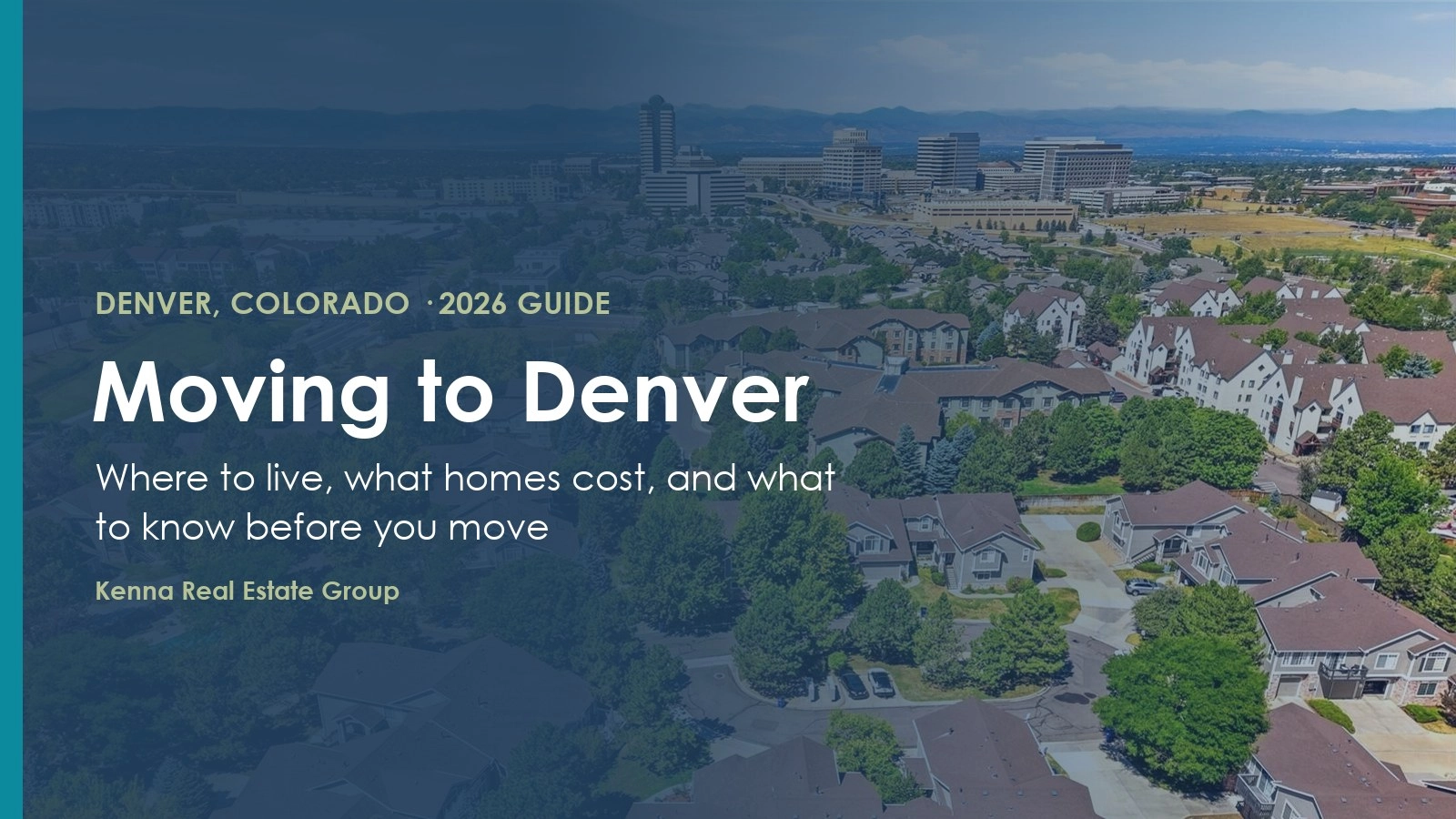
Moving to Denver in 2026? Here is what to know before you move to Colorado: what homes cost in Denver and every major suburb, where to live for the commute and the lifestyle you want, the weather and altitude, taxes, getting around, and how to buy a home from out of state. The home prices on this page come from 13,069 closed sales in the Denver metro from April to September 2026, pulled from the MLS by the Kenna Real Estate Group.
Call or text 303-955-4220. A live person answers. Not a robot, not a phone tree.
$600,000 Denver median sale price April to September 2026 | 5,280 ft Elevation The Mile High City |
4.4% Colorado income tax One flat rate | 1 hour To the mountains I-70 to the foothills and beyond |
The Denver metro is a ring of cities, and each one trades price for commute, age of homes and lifestyle. Here is what a home sold for in each, from our MLS data.
| Area | Median sale price | Per sq ft | Sales (6 months) | What it is like |
|---|---|---|---|---|
| Denver homes for sale | $600,000 | $360 | 1,704 | The city itself: historic bungalows, lofts and high-rises, light rail, the most walkable blocks in the metro |
| Aurora homes for sale | $475,000 | $247 | 2,105 | The metro's biggest suburb east of Denver: the most homes for the money, close to the airport |
| Lakewood homes for sale | $575,000 | $302 | 880 | West of Denver against the foothills: Red Rocks, Bear Creek, the W Line light rail |
| Arvada homes for sale | $635,000 | $301 | 1,091 | Northwest: Olde Town Arvada, the G Line, quick access to Golden and I-70 |
| Littleton homes for sale | $650,000 | $303 | 1,766 | Southwest: historic downtown Littleton, the C Line, the Platte River trail |
| Centennial homes for sale | $660,000 | $283 | 729 | South: the Tech Center, Cherry Creek State Park, established neighborhoods |
| Highlands Ranch homes for sale | $730,000 | $294 | 685 | South: master-planned, four rec centers, 70+ miles of trails |
| Parker homes for sale | $685,000 | $269 | 1,024 | Southeast: Mainstreet, the Cherry Creek trail, newer homes |
| Castle Rock homes for sale | $697,000 | $265 | 970 | Douglas County halfway to Colorado Springs: the Rock, newer communities |
| Thornton homes for sale | $525,000 | $266 | 900 | North: newer subdivisions, the N Line, E-470 to the airport |
| Westminster homes for sale | $535,000 | $284 | 502 | Northwest: Standley Lake, Boulder Turnpike access |
| Broomfield homes for sale | $635,000 | $305 | 713 | Between Denver and Boulder: the Flatiron corridor employers |
Median sale price by area, April to September 2026
Want a closer look at one area? Every city page above has live listings and its own guide. Prefer a home near transit or trails? See homes near light rail, homes near trails and walkable neighborhoods.
What people love
What takes getting used to
Most of our relocation buyers start from out of state. We tour homes live on video, send the HOA documents, inspection and appraisal electronically, and close with remote signing. Start with relocating to the Colorado Front Range, run your payment in the Colorado mortgage calculator, compare the cost of living in Denver, and check this week's Colorado mortgage rates. A $600,000 home with 10% down runs about $4,383 a month at this week's rate, taxes, insurance and PMI included.
Still deciding where? Read Denver's coolest neighborhoods, downtown Denver homes, Denver high-rise condos, new construction homes, 55+ communities and the city market reports.


Housing is the big cost. The Denver median sale price was $600,000 from April to September 2026, and one-bedroom apartments rent for $1,400 to $1,900 a month. Property tax and energy costs are low, so the gap closes the further you get from housing. See the cost of living in Denver breakdown.
It depends on the trade-off you want: Aurora and Thornton for the most home for the money, Lakewood and Arvada for the foothills, Littleton and Centennial for established neighborhoods close to the Tech Center, Highlands Ranch and Parker for newer master-planned communities with trails and rec centers.
Shorter than most people expect. Denver averages about 57 inches of snow a year, but storms melt off in a few days because of the sun and the dry air. The mountains get the deep snow; the city gets cold snaps, then 50-degree afternoons.
Most newcomers feel it for a few days to a couple of weeks: shortness of breath on stairs, dry skin, and alcohol hitting harder. Drink more water than you think you need and use sunscreen year-round.
Colorado gives new residents 30 days to get a Colorado driver's license and 90 days to register a vehicle. Many metro counties also require an emissions test before registration.
Yes. We tour homes on video, send the inspection and HOA documents electronically, and close by remote signing for buyers still living out of state. Most relocation buyers fly in once, after they have narrowed the list.
Closer to balanced than it has been in years. More homes are for sale, sellers are offering closing costs and rate buydowns, and 43% of sellers in some suburbs cut their price this year. Buyers have room to negotiate.
Rent first if you do not know which side of town your job or life will center on; commutes across the metro change everything. Buy right away if you know the area, because rent here runs close to a mortgage payment on a condo or townhome.