New - 11 Hours Ago

How much do buying a home with a black hawk address cost in Black Hawk? The grid below lists every match live from the MLS, and the market stats under it show today's median price and price per square foot. ZIP 80422 carries the most Black Hawk buying a home with a black hawk address (108). Call or text 303-955-4220. A live person answers.
Buying a Home with a Black Hawk Address Prices, home styles, HOA rules and what to check before you write an offer in Black Hawk.
Outside the city — where many of these homes are — Gilpin County handles building permits, land use, and septic. The county's Department of Public Health regulates onsite wastewater treatment systems under Colorado's Regulation 43. County business happens in Central City, the next town over, so that is where those permits and records live.
Wells are the exception to all of this. The well permit, and the construction records that go with it, come from the Colorado Division of Water Resources at the state level, wherever the home sits — not from whichever local office handles the building permits. What the state will not tell you is how the well is producing now or what the water tests like today. That comes from the seller's records or from testing you arrange yourself.
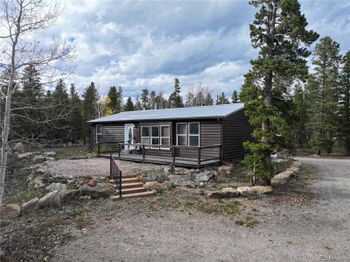
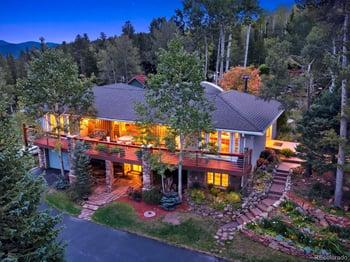
These are mostly detached homes on land rather than neighborhoods of similar houses. Construction runs from mining-era buildings that have been added onto for generations to newer homes built for the views. With an older or visibly altered home, the permit history tells you more than the age does — ask what work was done and whether it was permitted, rather than assuming it either way. Lot size, road access, exposure, and water situation vary substantially from one property to the next. Two homes a mile apart can be genuinely different purchases.
Subdivisions of the kind a metro buyer expects are uncommon, so many of these homes carry no association and no dues. That does not automatically make the road yours alone to keep clear. Some properties fall under a road association or a recorded maintenance agreement, some share the cost informally, and some do leave the work and the bill with the owner. Find out which applies to the home you are considering, because in a snow season it decides both what you pay and how reliably you get out.
Most homes in unincorporated parts of the county rely on a private well and a septic system. Both are equipment you own, repair, and eventually replace. When either one fails, no municipal utility is coming to restore it — you are the one calling a contractor and paying the bill.
Highway 119 follows Clear Creek through the area, and the Central City Parkway connects toward I-70. These are mountain roads, which is a different proposition in February than in September — weather, closures, and slow going are ordinary parts of the trip, not exceptions.
There is no single honest drive time to Denver from here. It changes with the roads you use, where in the county the home sits, and the season. If a regular commute is part of your plan, drive it once — at the hour you would really be driving it, in the month you would least enjoy it. That one trip will tell you more than any estimate.
The grid at the top of this page is the live MLS list: it updates the moment a home lists or closes, and the market stats under it show today's median price.
It changes as homes list and sell. Switch the grid to map view to see where today's listings cluster, or open the ZIP code pages linked on this page for each ZIP's live count.
Yes. Colorado down-payment assistance works at a 620 credit score, FHA takes 3.5 percent down, VA zero where the buyer qualifies, and a seller credit covers closing costs. On the median $499K buying a home with a black hawk address that is $17,465 down at 3.5 percent. More: Can I afford a home now?.
It depends on the price, your down payment and today's rate. Put the price of the home you like into the Colorado mortgage calculator at kennarealestate.com/colorado-mortgage-calculator for the full monthly cost. More: Can I afford a home now?.
The market stats under the grid show today's median list price and price per square foot, and they update with every new listing. More: Can I afford a home now?.
Some do. Each listing card shows the HOA fee, and the grid filters can narrow the list to homes with no HOA. More: HOA fees in Colorado, explained.
Text BLACK HAWK and what you are looking for to 303-955-4220. A live person answers, sets up the saved search and sends the disclosures on any buying a home with a black hawk address you want to see.




Kenna Real Estate Group can help identify and review the available property, permit, septic, well, and road-maintenance information for a specific home — and, just as useful, sort out which questions the records actually answer and which ones need the seller, the title work, an inspection, or the agency itself.
Those records also will not tell you what to offer, how to compete if a home draws interest, or whether the winter drive is one you want. Call, text, or email and we can talk through those.