.jpg)


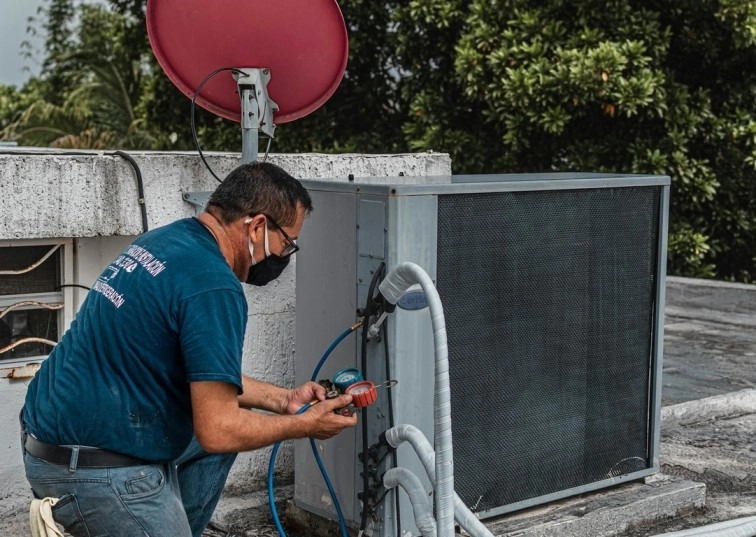
An HVAC system's condition is one of the more expensive things a Front Range buyer can misjudge from a walkthrough alone, since a furnace and AC can look clean and run quietly right up until a major component fails. Five checks, most of which take a few minutes during a showing, tell a buyer far more than turning the thermostat down and listening for airflow.
1. Check the Equipment Nameplate for Manufacture Date
Every furnace and AC condenser carries a metal nameplate, inside a removable panel on the furnace and on the side of the outdoor condenser, listing the model and serial number. The first four digits of most serial numbers encode the manufacture week and year. A furnace past 15 to 20 years old or an AC past 12 to 17 years old is approaching the end of its typical Front Range lifespan regardless of how it looks or sounds during a showing.
2. Ask Whether the System Was Sized and Adjusted for Altitude
Every Front Range home sits well above the elevation where gas furnaces need an altitude derate to their input rate, from Denver at 5,280 feet to Colorado Springs above 6,000 feet. A furnace installed without that adjustment runs inefficiently and can trip its high-limit switch on the coldest nights. A buyer can ask the seller's agent or the listing history whether the HVAC was professionally installed by a Colorado-licensed contractor, which confirms altitude-correct setup in nearly every case.
3. Look at Ductwork, Not Just the Furnace
| What to Check | Why It Matters |
|---|---|
| Visible duct condition in the basement or attic | Crushed, disconnected, or poorly sealed ducts waste conditioned air regardless of furnace quality |
| Registers in every room | Additions or finished basements sometimes lack proper duct runs |
| Duct insulation in unconditioned spaces | Uninsulated ducts in an attic or crawl space lose significant heating and cooling capacity |
A brand-new, correctly sized furnace connected to old, leaky, or undersized ductwork still delivers uneven heating and cooling, and duct repair or replacement is a separate cost from the furnace itself.
4. Ask for Service Records and Permit History
A well-maintained system has an annual service record, a sticker or tag from the servicing company showing the most recent visit. A recent furnace or AC replacement should also have a permit on file with the city or county, since a mechanical permit is required in Denver, Aurora, Lakewood, and most Front Range jurisdictions; unpermitted HVAC work is a common finding that can require retroactive permitting before or during a sale.
5. Confirm the Furnace and AC Are Actually Matched
An AC condenser added after the original furnace installation sometimes doesn't match the furnace's blower capacity or coil size, which shows up as weak airflow, higher humidity indoors, or a system that runs longer than it should to reach the set temperature. A mismatched system isn't always obvious from a showing, but a home inspector or HVAC contractor can confirm matched capacity as part of a pre-offer or inspection-period review.
Builder-Grade vs. Upgraded HVAC in New Construction
New construction across the Front Range, in communities like Highlands Ranch, Castle Rock, and Commerce City, ships with a builder-grade furnace and AC sized to code minimums by default rather than upgraded high-efficiency equipment. A buyer touring new construction can ask the builder directly about the installed AFUE and SEER2 ratings and whether an upgrade option was available, since that difference affects Xcel Energy bills for as long as the system runs.
Requesting an HVAC-Specific Inspection
A standard Colorado home inspection covers HVAC condition as part of the general inspection, but a buyer with specific concerns, an older system, visible ductwork issues, or a recent DIY-looking installation, can request a specialized HVAC contractor's evaluation separately, timed to fall within the Inspection Objection Deadline the purchase contract sets. This costs more than relying on the general inspector alone but gives a much more detailed picture before the objection period closes.
Colorado's Carbon Monoxide Alarm Law and HVAC
Colorado Revised Statutes 38-45-101 requires a working carbon monoxide alarm in any residential property with a fuel-fired appliance, fireplace, or attached garage before a sale or new lease closes, and a gas furnace triggers this requirement in nearly every Front Range home. A buyer touring a home can confirm a working detector is already installed near sleeping areas, and its absence is a quick, low-cost item to flag for the seller ahead of closing.
What a Smart Thermostat Does and Doesn't Tell You
A smart thermostat suggests an owner who paid attention to the home's systems, and its usage history can sometimes show run-time patterns worth asking about, but it says nothing about the furnace or AC's actual mechanical condition underneath. It's a helpful signal, not a substitute for checking the equipment itself.
Questions Worth Asking the Seller Directly
- When was the furnace and AC installed, and by whom?
- Is there a service contract or annual maintenance history?
- Was a permit pulled for any HVAC replacement work?
- Have there been any recent repairs, and what were they for?
How the Inspection Objection Deadline Fits Into HVAC Findings
Colorado's Contract to Buy and Sell Real Estate sets an Inspection Objection Deadline, a negotiated number of days after acceptance by which a buyer must raise property-condition objections in writing. An HVAC issue found during that window, whether from the general inspection or a separate HVAC-specific evaluation, has to be raised before the deadline passes or it can't be renegotiated later, which is why timing an HVAC contractor's visit early in the inspection period matters as much as the finding itself.
Xcel Energy Rebates and Equipment Choice
A newer furnace or AC that qualifies for an Xcel Energy rebate is a point worth asking about directly: some rebates apply at the time of purchase and reduce the installed cost, while others process after installation and aren't always documented or passed along when a home changes hands. A buyer touring a home with recently installed equipment can ask whether any rebate paperwork exists, which also serves as informal confirmation of when the system was installed and by whom.
Why This Matters More on the Front Range
Between altitude-driven combustion adjustments, a heating season that runs longer than in milder climates, and Colorado's carbon monoxide alarm requirement under C.R.S. 38-45-101 for any home with a fuel-fired appliance, HVAC quality carries more weight in a Front Range purchase decision than in many other markets. A buyer who checks these five things before writing an offer avoids discovering a costly replacement during the first winter in a new Colorado home.
Where to Go Next
- Does a New HVAC System Increase Your Home Value?
- 7 HVAC Issues That Can Delay a Home Sale During the Inspection Process
- How HVAC System Age Impacts Home Value and Buyer Negotiations
- Colorado Home Buyer's Guide
- Mortgage Pre-Approval Guide
- Search every home for sale in Colorado
Talk to the Kenna Real Estate Group
The Kenna Real Estate Group helps Front Range buyers evaluate HVAC condition and age during a showing and coordinates HVAC-specific inspections within the Inspection Objection Deadline when a system needs a closer look. Call or text 303-955-4220. A live person answers. Not a robot, not a phone tree. Ready to look at homes instead? Search every home for sale in Colorado.
Homes for sale that match this post
- Basement: guide
- New construction: guide
- Homes with Fireplace in Colorado Springs
- All homes for sale in Colorado Springs
Guides
Questions about any home in Colorado? Call or text 303-955-4220. A live person answers.