Open: Sat 11:00 AM - 1:00 PM

.jpg)


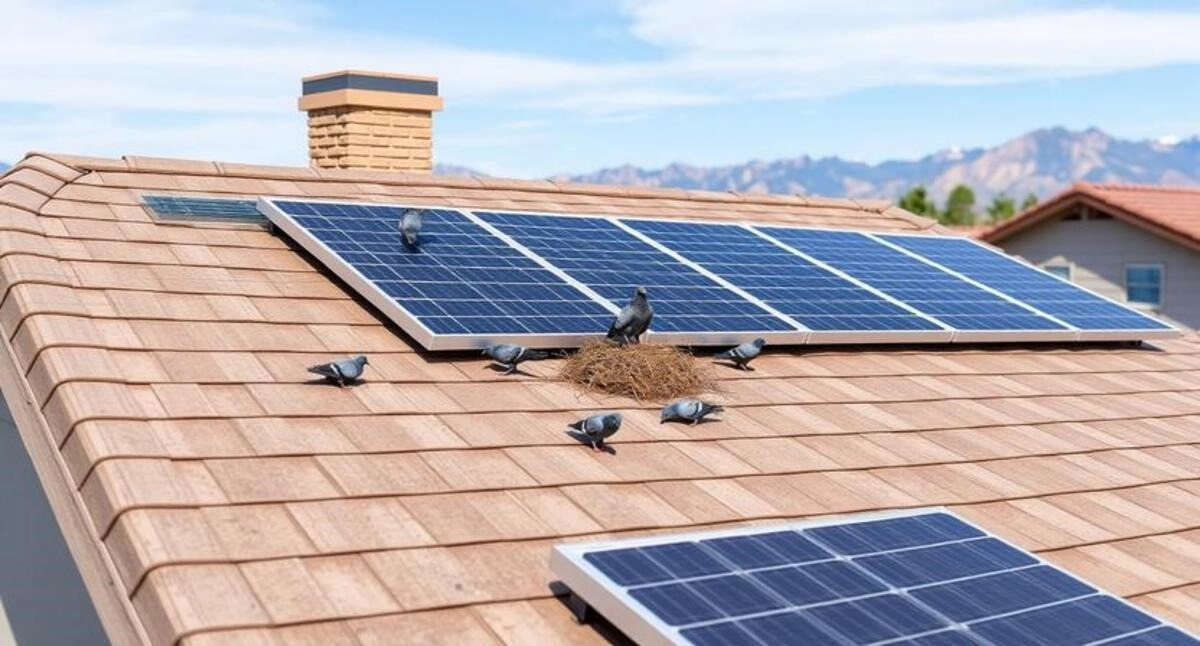
Pigeons nesting under a solar array is one of the most common service calls for Front Range solar owners, and the fix is straightforward once you know what Colorado's climate, HOA rules, and permitting process actually require. The short answer: install a mesh exclusion barrier around the full perimeter of the array before nesting season starts, and Colorado's solar-access law protects your right to do it.
A roof-mounted array creates a dry, shaded, predator-free gap between the panel and the shingles, commonly measuring 4 to 8 inches. On the Front Range, that gap also blocks wind and holds heat radiating off the roof deck, which makes it an attractive spot through the coldest months of the year. Denver, Aurora, and Colorado Springs all report the same pattern: pigeons move in during nest-building season and the colony grows each year the gap stays open.
Nesting material blocks the airflow channel underneath the panels, which raises operating temperature and cuts output. Droppings are acidic and corrode mounting rails and junction boxes over a few seasons. The most expensive damage is chewed wiring: pigeons and the mites that follow them will strip wire insulation, which can trip a breaker or, in rare cases, start an arc fault. A Denver metro solar installer will quote $400 to $1,200 to clean an infested array and repair chewed connectors, on top of the exclusion work itself.
Galvanized or powder-coated steel mesh, sized between half an inch and one inch, run around the full perimeter of the array and clipped to the panel frame without penetrating the roof, is the standard fix. Skip the roof penetrations entirely; every hole is a future leak point on a freeze-thaw roof. A licensed installer can complete a typical residential perimeter in half a day, and the mesh should sit flush enough to block pigeons but leave the airflow gap solar panels need to stay cool at altitude.
Colorado Revised Statutes limit how much an HOA can restrict a solar installation, and that protection extends to the equipment that keeps the system working, including reasonable pest-exclusion hardware mounted flush to the array. An HOA can require the mesh color to blend with the roofline and can ask for advance notice, but it cannot force you to remove functioning bird guards or deny the installation outright. Get the HOA's design-review approval in writing before the work starts so there is no dispute at resale.
No. Hail rating is about impact resistance on the glass, not the gap underneath. Front Range homeowners who upgraded to hail-rated panels after a hailstorm still need a separate exclusion barrier; the two problems are unrelated, and skipping the mesh because the panels themselves are hail-rated is the most common mistake we see.
Heavy Front Range snow can pile against roof-mounted mesh and pull it loose if it is not clipped at both the top and bottom edge of the panel frame. Installers who work in Colorado know to leave a small snow-shed gap at the lower edge so meltwater and sliding snow do not tear the barrier out by March.
Exclusion mesh clipped to an existing, already-permitted array is routine maintenance in Denver and most Front Range jurisdictions and does not trigger a new building permit on its own. If the work is bundled with a panel replacement, rewiring, or a new mounting system, it falls under the original solar permit and inspection process, which varies by city and county. Check with your city's building department before work begins if the project goes beyond a simple mesh install.
Expect $300 to $900 for a straightforward residential perimeter install, more if the array is large, steep, or already damaged and needs wiring repair first. Get two or three quotes; pricing varies more by labor access (roof pitch, height) than by material cost, since the mesh itself is inexpensive.
Yes, if it is visible or shows up in an inspection. A buyer's inspector checking a solar array will note droppings staining, loose mounting hardware, or exposed wiring, and an appraiser or buyer's agent will ask for proof of repair. Clean exclusion work with a receipt from a licensed installer removes the issue from negotiation. Sellers preparing a Front Range listing can review our guide to adding value before selling for what buyers and inspectors flag first.
Colorado's seller disclosure form asks about known defects in major systems, and a solar array with wiring damage or an unresolved pest problem qualifies. Disclose it, note the repair if you have made one, and keep the invoice. Buyers and their inspectors will find undisclosed damage during due diligence, and it becomes a much larger issue during the inspection objection period than it would have been upfront.
Colorado's standard contract gives buyers an inspection objection deadline within the first one to two weeks under contract, to request repairs or a price adjustment. A solar array with an active pigeon colony is a common objection item on Front Range resales. Sellers who exclude the birds and document the fix before listing rarely see it come up again once the home is under contract.
Most Colorado homeowners policies treat pest damage as a maintenance exclusion, not a covered peril, the same way they treat rodent damage. Wiring damage caused by chewing is the homeowner's cost to fix, which is another reason exclusion mesh pays for itself quickly compared with a wiring repair bill.
Thinner air at altitude means solar equipment already runs warmer for a given output, and exposed, chewed wiring insulation fails faster under that heat and the Front Range's intense UV exposure. Sealing the perimeter before wiring damage starts protects the system's efficiency as much as it protects against a wiring failure.
Mesh is the only method that physically excludes birds and is the standard for solar arrays. Spikes work on flat ledges but do not fit the angled gap under a panel. Sonic and visual deterrents (reflective tape, decoys) reduce nesting attempts but do not stop a determined pair once they have already found the gap, and most Front Range installers do not recommend them as a standalone fix. For active infestations, a service that specializes in getting rid of pigeons can clear an existing colony before the mesh goes on.
Check twice a year: once in early spring before nest-building activity picks up, and again in early fall before birds look for a warm spot ahead of winter. A quick look with a flashlight along the panel edges catches a problem before it grows into a multi-nest colony.
Net metering credits are based on the energy your system exports to the grid, so anything that reduces output, including blocked airflow and dirty panels from droppings, reduces the credit you earn under Xcel Energy's Solar*Rewards program. Keeping the array clean and excluded protects the return on the system, not just the equipment itself.
Exclusion mesh is a maintenance item, not a system modification, so it does not affect Solar*Rewards enrollment or existing incentive agreements. If a repair does require replacing panels or the inverter, check with your installer on whether that work needs to be reported to Xcel Energy under your interconnection agreement.
Buyers touring a Front Range home with an existing solar array should ask to see the maintenance history, including any pest exclusion work, before closing. A well-maintained system is a real selling point; an array with visible staining or an open gap under the panels is a repair to negotiate. Search current homes for sale in Colorado and filter for solar to compare listings side by side.
Whether you are selling a Front Range home with an existing solar array or buying one and want to know what to check before closing, the Kenna Real Estate Group can walk the property with you and flag what an inspector will flag first. Call or text 303-955-4220. A live person answers. Not a robot, not a phone tree. Or search every home for sale in Colorado to see current solar-equipped listings across the Front Range.
Questions about any home in Colorado? Call or text 303-955-4220. A live person answers.
Install galvanized or powder-coated mesh around the full perimeter of the array, clipped to the panel frame rather than the roof. It blocks entry without adding roof penetrations, which are common leak points on a freeze-thaw roof.
No. Colorado's solar-access law limits how much an HOA can restrict a solar installation, including reasonable exclusion hardware. An HOA can ask for a color that blends with the roofline but cannot deny the work outright.
A straightforward residential perimeter install runs $300 to $900. Cleanup and wiring repair for an existing infestation adds $400 to $1,200 depending on the extent of the damage.
Routine mesh added to an already-permitted array does not trigger a new permit in Denver or most Front Range cities. Work bundled with panel replacement or rewiring falls under the original solar permit process, so check with your city's building department first.
Most Colorado policies treat pest damage as a maintenance exclusion, similar to rodent damage, so wiring repairs are the homeowner's cost. Exclusion mesh installed early is cheaper than a wiring repair bill.
Yes. Colorado's seller disclosure form covers known defects in major systems, and unresolved solar wiring or pest damage qualifies. Disclose the issue and keep any repair invoice.
Yes. Net metering credits are based on the energy your system exports, so blocked airflow and dirty panels from droppings reduce output and the credit you earn under Solar*Rewards.
A homeowner can install mesh on a single-story roof with the right ladder setup and materials, working from a stable, tied-off position. Steep or multi-story Front Range roofs, or arrays with an existing infestation, are worth hiring a licensed installer for.