New - 10 Hours Ago
$410,000
Active
3
Beds
3
Baths
1651
Sqft
0.04
Acres
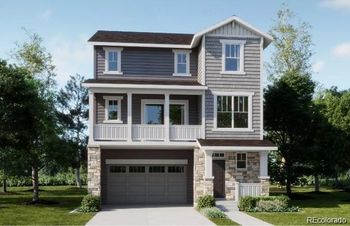
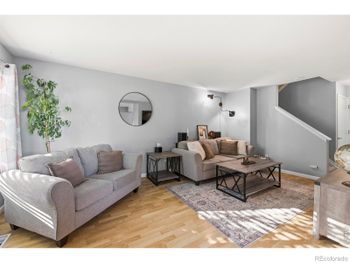
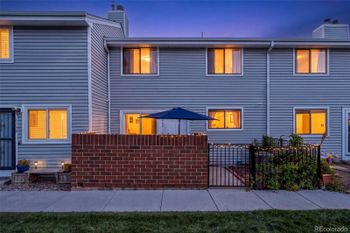
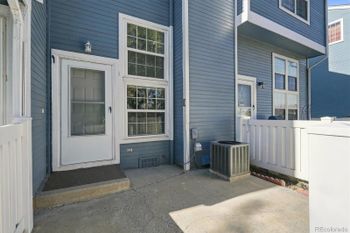
857 E 98th Ave #1704, Thornton, CO 80229
MLS#: IR1070527
.jpg)


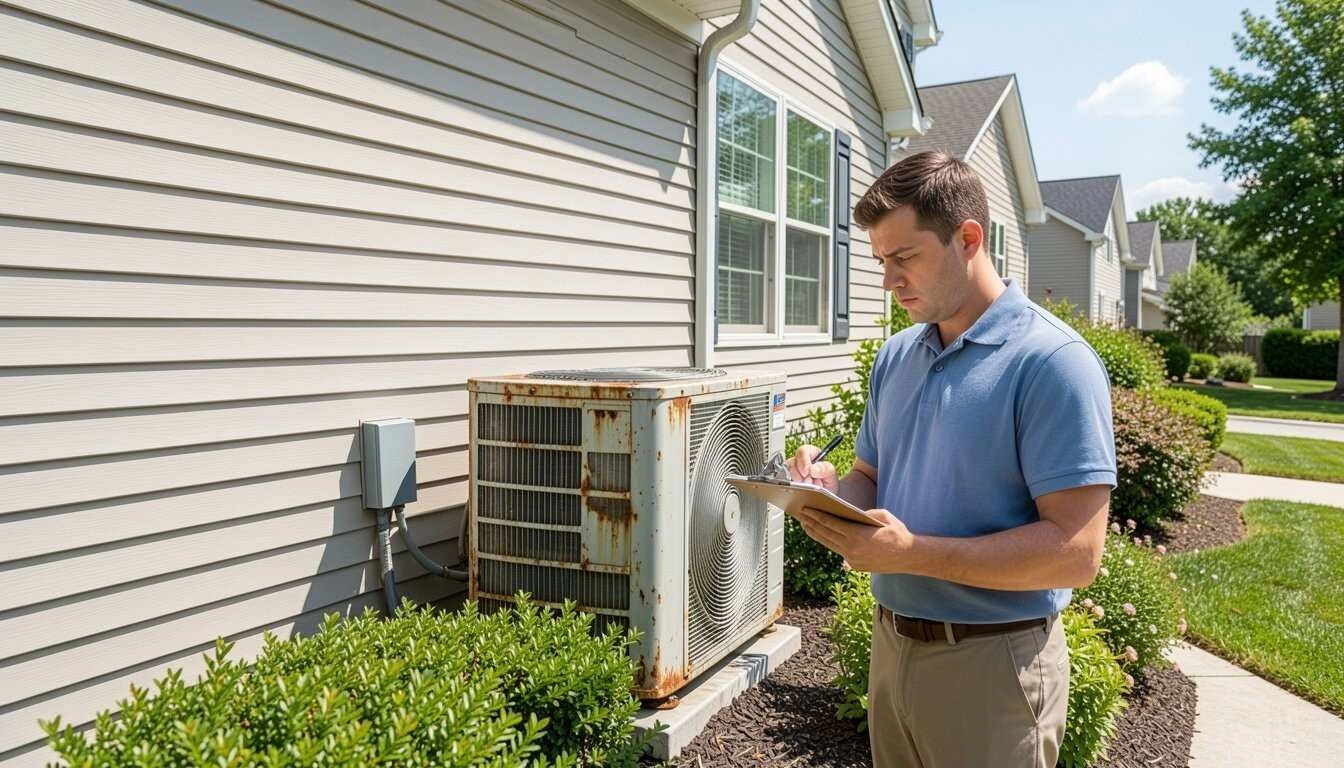
An air conditioner fails a Colorado home inspection when it shows any of six findings: weak airflow, warm air at the vents, grinding or buzzing at the condenser, hail-crushed fins or corrosion, short cycling, or a data plate older than 15 years or marked R-22. Front Range inspectors test the AC only when the outdoor temperature has been above 60 degrees for the previous 24 hours, so a seller listing between October and April answers the AC question with paperwork, and a seller listing in cooling season answers it by running the system before the inspector does.
The cooling season on the Front Range runs from late spring to mid-September. Denver averages more than 30 days a year at 90 degrees or hotter, and July afternoons in Aurora, Thornton and Greeley hit 95 to 100. Inspections during those months include a full AC run. Inspections in the other 7 months do not: running a compressor when the outdoor air has been under 60 degrees pushes liquid refrigerant into it and damages it, so inspectors write "not tested due to outdoor temperature" and buyers ask the seller for proof instead.
The proof is a service receipt from a licensed contractor dated within 90 days, showing the temperature split, refrigerant pressures and capacitor readings. It costs $100 to $200 on the Front Range and it ends the question.
Colorado does not license home inspectors, so most follow the ASHI or InterNACHI standard, which treats the AC as a "normal operating controls" test: the inspector turns it on at the thermostat and observes. On the Front Range the checklist is:
Weak air at the registers is the first thing an inspector feels. On the Front Range the causes, in order of frequency, are a filter that has not been changed since spring (a 1-inch filter in a Denver home with two dogs and summer dust lasts 60 days), a blower motor losing speed, and duct leaks in the crawl space or above a finished basement ceiling. Split-levels and 1970s two-stories in Lakewood, Littleton and Aurora show the same pattern every summer: the upstairs runs 8 degrees warmer than the main floor because the returns are all downstairs.
Fix before listing: a new filter ($10 to $40), duct sealing if the floors differ by more than 5 degrees ($1,000 to $3,000), and a blower motor if the technician measures low amperage ($600 to $1,200).
Warm air with the compressor running is a refrigerant problem, a compressor problem, or a thermostat wired wrong. A refrigerant leak is the most common in Colorado systems over 8 years old, and it is the finding that costs the most in a negotiation because the buyer cannot tell whether it is a $600 recharge or a $9,000 replacement. The technician finds the leak with a detector or dye, repairs it and recharges: $600 to $1,500 with R-410A. A failed compressor costs $2,000 to $3,500 to replace, and on a unit over 10 years old that money goes toward a new condenser instead.
Altitude matters here. At 5,280 feet the air is about 17 percent less dense than at sea level, so an AC moves less heat per hour than its rated tonnage. A properly charged, properly sized Front Range system still holds a 15 degree split on a 95 degree afternoon. One that shows 10 degrees at 3 p.m. in July is low on charge or short on capacity, and the inspector writes it up either way.
A healthy condenser hums. Grinding means the fan motor bearings are gone ($400 to $800). A loud buzz that stops when the fan starts is a weak capacitor ($200 to $400), the most common summer repair in the metro and one that fails first in the 100 degree stretch of late July. A hard-start click followed by silence is a compressor trying and failing, which is the sound that ends the inspection early.
Every one of these is a same-week repair, and every one reads as "the AC is dying" in a buyer's report. Run the system for an hour the day before the inspection and stand next to the condenser.
Colorado's hail season runs from mid-April through September, and the condenser sits outside in it. Hail flattens the aluminum fins on the coil; when more than a third of the fin area is crushed, airflow through the coil drops and the compressor runs hot. Inspectors photograph crushed fins and write "reduced efficiency, recommend evaluation." A fin comb repair costs $100 to $250; a hail-destroyed coil is a $1,500 to $3,000 replacement, and Colorado homeowners policies cover hail damage to the condenser after the wind and hail deductible.
Cottonwood is the other Front Range coil killer. In June the seed fluff from cottonwoods along the South Platte, Cherry Creek, Clear Creek and the Poudre coats every condenser within a mile. A coil packed with fluff and dirt reads as neglect in the report and raises the head pressure until the compressor trips. Shut the power off, hose the coil from the inside out, and do it again a week before the inspection.
An AC that starts, runs 3 to 5 minutes, and stops is short cycling. In Colorado homes the causes are an oversized unit (common in 1990s Highlands Ranch and Parker builds where the contractor rounded up), a clogged filter, a frozen evaporator coil from low charge, or a thermostat in a sunny hallway. An AC that runs all afternoon without reaching the set point is the opposite problem: undersized after a basement finish added 1,000 square feet of conditioned space, or low on refrigerant.
Inspectors note both because both shorten compressor life. If the unit is the wrong size for the house, the answer is disclosure and pricing, not a $9,000 replacement before listing.
The inspector reads the manufacture date and the refrigerant off the condenser plate. Central air conditioners last 15 to 20 years on the Front Range; UV at altitude and 40-degree daily temperature swings age the outdoor unit faster than in a mild climate. A condenser built before 2010 uses R-22, which stopped being produced in 2020 and now costs $150 to $250 per pound for what is left.
Age alone is not a defect, and inspectors say so. Buyers do not. An "R-22, 2007" line in a report becomes a $3,000 to $6,000 credit request in the Denver metro whether or not the unit blows cold. The replace or repair the HVAC before selling post walks through the decision with numbers.
| Finding | Repair cost (Denver metro) | Replace when |
|---|---|---|
| Weak airflow, dirty filter or coil | $10 to $400 | Never for this alone |
| Capacitor or fan motor | $200 to $800 | Unit over 15 years and a second part has failed |
| Refrigerant leak, R-410A | $600 to $1,500 | Leak is in the evaporator coil on a unit over 10 years |
| Refrigerant leak, R-22 | $900 to $2,500 | Any leak: recharge money goes to the new unit |
| Compressor | $2,000 to $3,500 | Unit over 10 years |
| Hail-crushed coil | $1,500 to $3,000 (insurance claim) | Unit over 12 years, claim pays toward replacement |
| New condenser and coil, 3 ton | $5,500 to $9,500 | Repair exceeds 40 percent of this number |
The rule the Kenna Real Estate Group uses with sellers: repair when the fix is under 40 percent of a new system and the unit is under 15 years; replace when the unit is over 15 years and any repair over $1,000 comes up. A new system with a transferable 10-year parts warranty goes on the feature sheet and removes the objection. The preparing and adding value before selling page puts the AC next to the roof, the water heater and the furnace so you spend where the return is.
Sellers in other states face the same week-before-inspection scramble; a Massachusetts homeowner books emergency AC repair to get ahead of it, and a Front Range seller books a contractor licensed in their city or county. You are free to use any provider. Keep the invoice and the readings for the disclosure packet.
The buyer lists the finding in the Inspection Objection under the Colorado contract, and the seller has until the Inspection Resolution Deadline (3 to 5 days in most Denver metro contracts) to agree to a repair, a credit, a home warranty, or nothing. The buyer's other choice is to terminate and keep the earnest money. The companion post on the HVAC problems that stall Colorado closings covers the furnace, the carbon monoxide alarm law and the deadlines in detail.
No. No Colorado law, lender or city code requires cooling in a home sale. Tens of thousands of Denver, Arvada, Lakewood and Wheat Ridge homes built before 1990 cool with an evaporative cooler, which works because Front Range summer humidity stays under 30 percent. Inspectors run a swamp cooler if it is de-winterized, note "not tested" if it is not, and flag dry pads, a dead pump or a split water line. Replacing a rooftop cooler costs $1,500 to $4,000; adding central AC to an existing furnace costs $5,500 to $9,500 and widens the buyer pool more than any other mechanical upgrade under $10,000. The homeowner's guide to AC repair in Denver covers the swamp-cooler-to-central-air conversion.
The Kenna Real Estate Group at Keller Williams DTC checks the AC before the photographer arrives, books the pre-listing service, and negotiates the Inspection Resolution so an old condenser does not cost you the closing date. Call or text 303-955-4220. A live person answers. Not a robot, not a phone tree. Buyers can search every home for sale in Colorado and ask us for the HVAC age on any listing.
Questions about any home in Colorado? Call or text 303-955-4220. A live person answers.
No. Inspectors on the Front Range do not run an air conditioner when the outdoor temperature has been below 60 degrees in the previous 24 hours. The report says 'not tested,' and the seller answers it with a licensed contractor's service receipt dated within 90 days.
A 15 to 22 degree difference between the return air and the supply register. In Denver's dry air a split under 12 degrees is written up as low refrigerant, restricted airflow or a failing compressor.
A 3-ton condenser and matched evaporator coil cost $5,500 to $9,500 installed in 2026. Adding AC to a furnace that never had it falls in the same range plus $300 to $800 for the electrical circuit.
Yes. Inspectors photograph crushed condenser fins and recommend evaluation. A fin comb repair costs $100 to $250; a destroyed coil is $1,500 to $3,000 and is covered by most Colorado homeowners policies after the wind and hail deductible.
It is not a defect and it is not a lender issue, but buyers treat 'R-22' as 'replace within 3 years' and ask for a $3,000 to $6,000 credit. R-22 production ended in 2020 and a recharge costs $150 to $250 per pound.
Replace it if any repair over $1,000 comes up; service it and disclose the age if it runs with a 15 degree split and needs nothing. A new system with a transferable 10-year parts warranty removes the objection and goes on the feature sheet.
Cottonwood seed along the South Platte, Cherry Creek, Clear Creek and the Poudre coats condensers in June. Shut off power, rinse the coil from the inside out with a hose, and repeat the week before the inspection.