New - 30 Mins Ago

$625,000
Active
4
Beds
3
Baths
2506
Sqft
1
Acres
1069 Berglind Rd, Colorado Springs, CO 80920
MLS#: 7787932
.jpg)


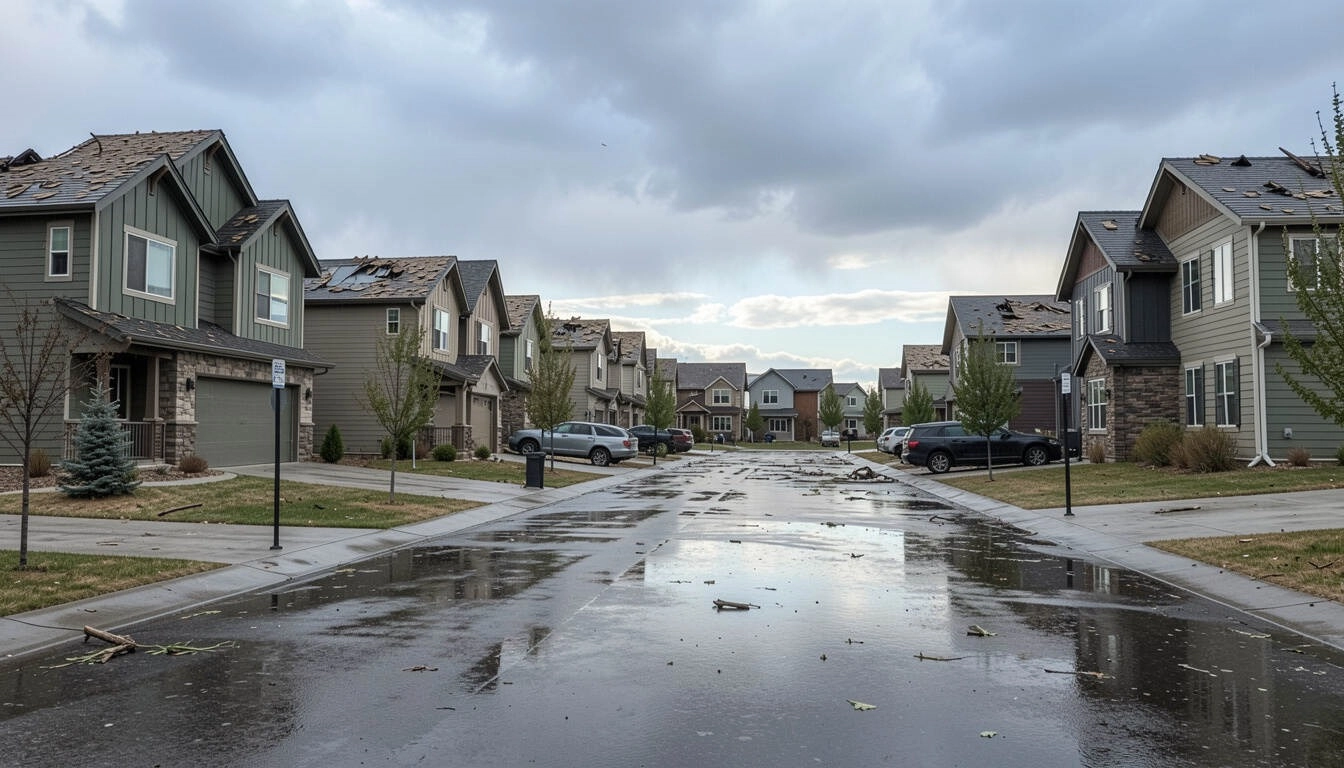
Colorado's hail season runs from spring through September, and the Front Range sits inside one of the most hail-prone corridors in the country. A storm can hit a home in six distinct ways — wind, hail, lightning, flooding, hidden water intrusion, and debris impact — and each one leaves different signs. Knowing what to look for after a storm keeps a small repair from turning into a structural problem.
Storm damage is any harm to a home caused by severe weather: wind, hail, heavy rain, lightning, or flying debris. It can show up on the roof, siding, windows, foundation, or electrical system. Some damage is obvious the day it happens; other damage builds quietly for months before a homeowner notices a stain, a soft spot, or a spike in the utility bill.
Strong Front Range wind gusts, which regularly exceed 60 mph during spring storms, lift and crack roof shingles, pull siding loose, and snap tree limbs onto a roof or fence. Wind-driven rain pushes water under shingles that look intact from the ground, which is why a wind event calls for a close roof inspection rather than a quick visual check from the yard. Fences and detached structures without proper anchoring take the brunt of a straight-line wind event.
Hail is the signature Front Range storm risk, with Denver, Colorado Springs, and the eastern suburbs sitting inside "hail alley," one of the most active hail corridors in North America. Hail bruises and cracks asphalt shingles, dents metal roofing, gutters, and siding, and shatters or stress-cracks windows and skylights. Even hail that looks small on the ground can compress shingle granules enough to shorten a roof's remaining life by years. A roofer checks for granule loss, soft spots, and bruising that is not visible from the ground.
A direct or nearby lightning strike sends a power surge through a home's wiring, which can damage outlets, appliances, HVAC control boards, and networking equipment even without a visible fire. Lightning also splits trees and can ignite a roof or attic fire. After a close lightning strike, test major appliances and have an electrician check the panel and any surge protection before assuming the home came through undamaged.
Flash flooding after an intense Front Range downpour affects basements, crawl spaces, and low-lying yards fastest, especially in neighborhoods near drainage channels or built on expansive clay soil that sheds water instead of absorbing it. Water finds gaps around window wells, foundation cracks, and sump pump failures. A basement that floods once has a higher chance of flooding again unless grading, gutters, and a sump pump backup are addressed together.
Not every leak announces itself right away. Water can enter through a cracked flashing, a damaged vent boot, or hail-cracked shingles and travel along a rafter before showing up as a ceiling stain rooms away from the actual entry point. Left alone, hidden water intrusion leads to mold, rotted framing, and insulation that no longer performs. A ceiling stain, a musty smell, or peeling paint after a storm are all reasons to schedule a roof and attic inspection even if nothing looks wrong from the street.
Wind and hail both turn loose objects into projectiles: tree limbs, fence panels, patio furniture, and even hail itself moving at high wind speeds. Debris impact cracks windows, dents siding and vehicles, and punctures roofing in a way that is easy to miss until the next rain finds the hole. Walk the property after any severe storm and check for punctures in screens, dented gutters, and debris caught on the roof.
| Repair | Typical Denver-Metro Cost |
|---|---|
| Hail-damaged asphalt shingle roof replacement (2,000 sq ft) | $12,000 to $22,000 |
| Gutter replacement after hail or wind | $1,500 to $4,000 |
| Window replacement, per window | $400 to $1,200 |
| Electrical panel and surge repair after lightning | $500 to $3,500 |
| Basement water intrusion cleanup and sump pump | $1,500 to $8,000 |
Get a written estimate from a licensed, local contractor before signing a repair contract; prices shift with material availability and how many homes in the area are filing claims after the same storm.
A Front Range home takes damage from more than a single storm event. Freeze-thaw cycles push moisture that seeped into a hail-cracked shingle or a foundation hairline crack, expand it as ice, and widen the crack over the winter. Mag chloride, spread on Colorado roads and driveways to melt ice, splashes onto lower siding and vehicle undercarriages and accelerates corrosion on metal trim and gutters. A home already carrying storm damage into winter sees that damage grow faster than a home repaired before the first freeze.
Class 4 impact-resistant shingles hold up better against hail than standard asphalt shingles and qualify for a homeowners insurance discount with many Colorado carriers. Metal roofing and impact-rated skylights add upfront cost but reduce the frequency of storm-related claims over a roof's life. Ask a roofer for the shingle's impact rating before a re-roof, especially on a home in a heavier hail-history area like Colorado Springs or the eastern Denver suburbs.
Standard Colorado homeowners policies cover wind, hail, and lightning damage, but many carriers apply a separate, higher deductible specifically for wind and hail claims, calculated as a percentage of the dwelling coverage rather than a flat dollar amount. Flood damage from rising water is a separate policy through the National Flood Insurance Program in most cases. Read the declarations page for the wind/hail deductible before a storm hits, not after.
Photograph the roof, siding, gutters, and any interior stains as soon as it is possible to do so from the ground or a ladder, and keep dated photos even before a contractor arrives. Get your home back with an experienced, licensed storm damage restoration crew, such as expert storm damage restoration, that documents the damage for the insurance adjuster as part of the repair process. File the claim promptly and keep every estimate and receipt tied to the storm date.
Colorado's seller disclosure form asks directly about known roof leaks, prior insurance claims, and repair history. Disclose past storm damage and any repairs made, including the contractor and date, since an inspector or appraiser will find evidence of roof replacement or patch work either way. A documented, properly permitted repair reassures a buyer more than an undisclosed one does. Review the how to sell a house in Colorado guide and the preparing and adding value before selling guide for how storm repairs factor into pricing and disclosure.
Whether a storm just hit a home you own or you're evaluating one before an offer, the Kenna Real Estate Group can point out what a roof, siding, or foundation repair means for value and disclosure on the Front Range. Call or text 303-955-4220. A live person answers. Not a robot, not a phone tree. Ready to look? Search every home for sale in Colorado.
Questions about any home in Colorado? Call or text 303-955-4220. A live person answers.
Colorado's hail season runs from spring through September, with the Front Range sitting inside one of the most active hail corridors in North America.
Yes, but most Colorado policies apply a separate, higher wind/hail deductible, calculated as a percentage of the dwelling coverage instead of a flat dollar amount. Check the declarations page before a storm hits.
A full asphalt shingle replacement on a 2,000-square-foot Denver-metro home runs $12,000 to $22,000, depending on pitch, material, and how many homes nearby are filing claims after the same storm.
Yes. Colorado's seller disclosure form asks about known roof leaks and prior insurance claims, and a documented, permitted repair reassures a buyer more than an undisclosed one.
Granule loss in the gutters, soft spots underfoot, and bruised shingles are signs a licensed roofer checks for; hail that looks minor from the ground can still shorten a roof's remaining life.
Test major appliances and have an electrician check the panel and any surge protection, since a power surge can damage wiring and HVAC control boards without a visible fire.
Expansive clay soil common on the Front Range sheds water instead of absorbing it, so grading, gutters, and window wells all need to work together to keep water away from the foundation.
Photograph the roof, siding, gutters, and any interior stains as soon as the storm has passed and the area is secure to enter, keep dated photos, and get a written contractor estimate tied to the storm date before filing.


