.jpg)


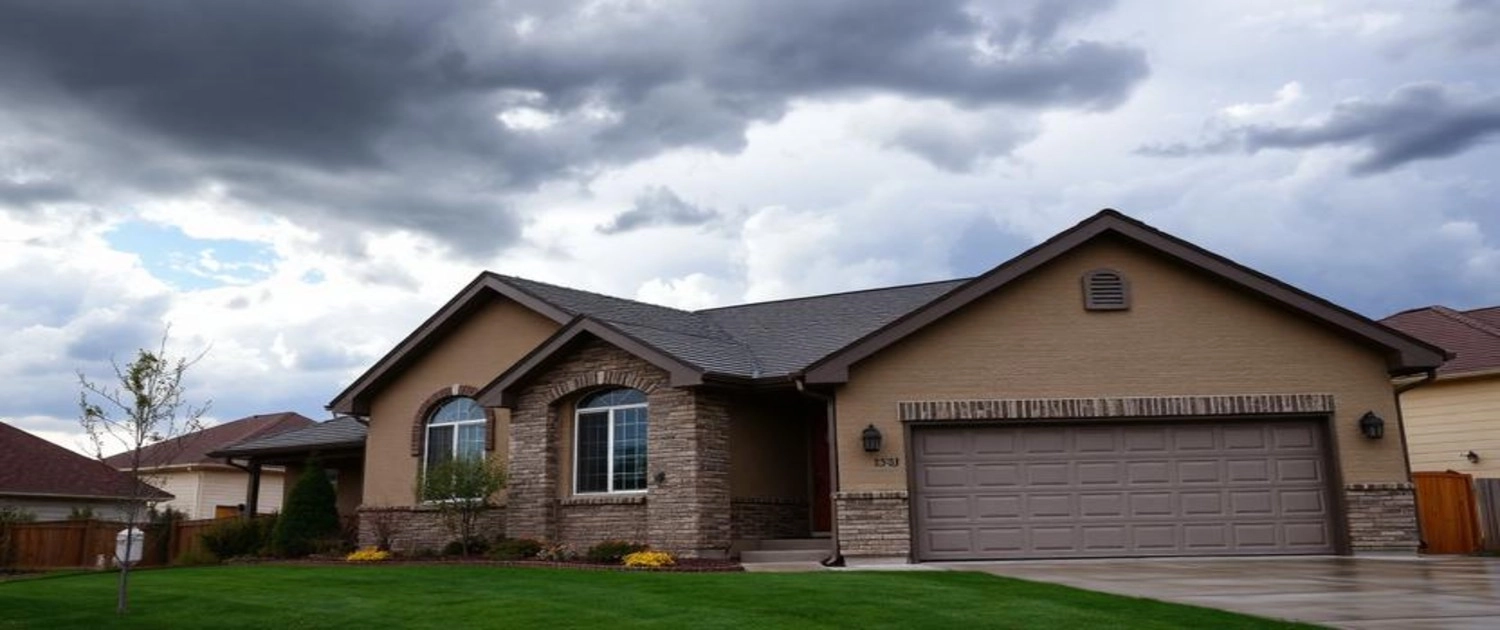
Colorado sits in one of the most active hail corridors in the country, and the Front Range from Colorado Springs through Denver to Fort Collins sees damaging hail and high wind somewhere in the metro almost every year during hail season, which runs from spring through September. A storm can pass through in twenty minutes and leave damage that is not obvious from the driveway. Here is what to check, in order, once it is over.
1. Check the roof from the ground first
Do not climb onto a wet roof. Wind and hail loosen and crack roofing material, and walking on a compromised roof is one of the fastest ways to turn a repair into an injury. Scan from the ground or a second-story window with binoculars for missing, lifted, or cracked shingles, and check the yard and driveway for pieces of roofing material the wind carried down.
2. Look closely for hail bruising, not just missing shingles
Hail damage on asphalt shingles shows up as small round bruises where the impact knocked away the protective granules, exposing the black asphalt mat underneath. A guide to how hail damages a roof from Lakeland Exteriors & Roofing walks through what that looks like across asphalt, metal, and flat roofing. Granule loss and hairline cracking are easy to miss from the ground, which is why an insurance adjuster or licensed roofer, not a homeowner on a ladder, should do the close-up inspection.
3. Inspect gutters and downspouts
Dented gutters are one of the clearest outdoor signs that hail was large enough to matter structurally. Check for dents, sections pulling away from the fascia, and downspouts that have separated. A damaged or blocked gutter also stops water from draining away from the roofline and foundation, which turns a cosmetic storm mark into a water problem within a season.
4. Walk the exterior for siding, window, and screen damage
Hail dents vinyl and aluminum siding, cracks window screens, and can chip paint or stucco. Wind throws branches and yard debris into windows and walls. Walk the full perimeter once conditions are calm, and treat any cracked window glass as a hazard rather than something to clean up right away.
5. Check ceilings and attic spaces for new water stains
Heavy rain following hail can expose a roof weakness that was not visible before the storm. Walk every upstairs ceiling and the attic, looking for new water spots, dampness, or a musty smell. A small brown ring on drywall is worth documenting even if nothing is actively dripping, since water can travel along framing before it shows up inside the house.
6. Check trees, fences, and outdoor structures
The National Weather Service classifies a thunderstorm as severe at wind gusts of 58 mph or hail one inch in diameter, either of which can snap branches and rack fence panels. Look for split trunks, hanging limbs near the house, and fence or shed damage. Leave large limb removal to a tree service rather than doing it yourself.
7. Photograph everything before you touch anything
Photograph wide shots showing where the damage sits on the property and close-up shots of each specific problem, and write down the storm date. This record matters twice: once for your insurance claim, and again years later if a buyer's inspector finds an old repair and asks when it happened.
What size hail actually causes roof damage
Hail under half an inch rarely damages asphalt shingles. Quarter-size hail (about one inch) starts to matter, and golf ball to baseball size hail, which the Front Range sees in a meaningful storm most years, routinely causes roof and siding damage across an entire neighborhood at once.
Does homeowners insurance cover hail damage in Colorado
Most standard Colorado homeowners policies cover wind and hail damage to the roof and exterior, but many carriers now write a separate, higher wind and hail deductible for Front Range properties, sometimes a percentage of the dwelling coverage rather than a flat dollar amount. Check your declarations page for that separate deductible before you assume a claim is worth filing.
How long do you have to file a claim
Colorado law requires insurers to act on claims within specific timelines once filed, but the practical deadline is set by your own policy, commonly one year from the date of loss. File sooner rather than later: adjusters get backed up for weeks after a widespread regional hailstorm, and documentation fades as roofers replace shingles across the neighborhood.
Finding a roofer after a Front Range storm
Large hailstorms bring traveling storm-chasing crews that go door to door offering repairs, then leave town before warranty work is needed. Verify a Colorado contractor's license and local address, ask for references from work done in your own county, and get more than one estimate before signing an insurance-assignment contract.
Storm damage and selling a Colorado home
Colorado seller disclosure requires you to tell a buyer about known material defects, and a roof with unresolved hail damage or an open insurance claim is exactly that kind of issue. Address storm damage and settle the claim before you list, or disclose it clearly and price accordingly; either approach beats a buyer's inspector finding it first during the inspection objection period.
How wind damage differs from hail damage
Wind damage is concentrated and obvious: lifted or torn-off shingles, a section of ridge cap peeled back, a fence panel knocked flat, or a tree limb through a section of roof. Hail damage is the opposite — spread evenly across every exposed surface but rarely dramatic on its own, which is exactly why it gets missed. A roof can take a full hailstorm and look completely normal from the street while every shingle has lost a portion of its granule coating.
Should you get an annual roof check in Colorado
Given how frequently the Front Range sees damaging storms, an annual roof check each spring before hail season starts is worth the cost of a service call. Catching wear from the prior winter, loose flashing, or the tail end of an old hail event before the next storm season starts is far cheaper than discovering two or three seasons of stacked damage at once when you finally call someone out for a leak.
What this means for a home you are about to buy
If you are under contract on a Front Range home, ask directly whether the roof has been replaced or repaired for storm damage, and pull the permit history from the city or county if one is available. A roof that was replaced after a specific regional hailstorm has a documented age and a fresh warranty, which is worth more to a buyer than a roof of unknown history, even if both look the same from the curb.
Where to go next
- Colorado hail and roof costs: what to compare
- 6 types of storm damage and how each affects your home
- Roof repair vs. replacement: how to decide
- How to sell a house in Colorado
- Colorado market reports
- Search every home for sale in Colorado
Talk to the Kenna Real Estate Group
If a storm just moved through your neighborhood and you are wondering how repairs, disclosure, or timing affect a sale, the Kenna Real Estate Group can walk you through it before you talk to a contractor or an adjuster. Call or text 303-955-4220. A live person answers. Not a robot, not a phone tree. Or search every home for sale in Colorado to see how properties are priced and marketed after storm season.