.jpg)


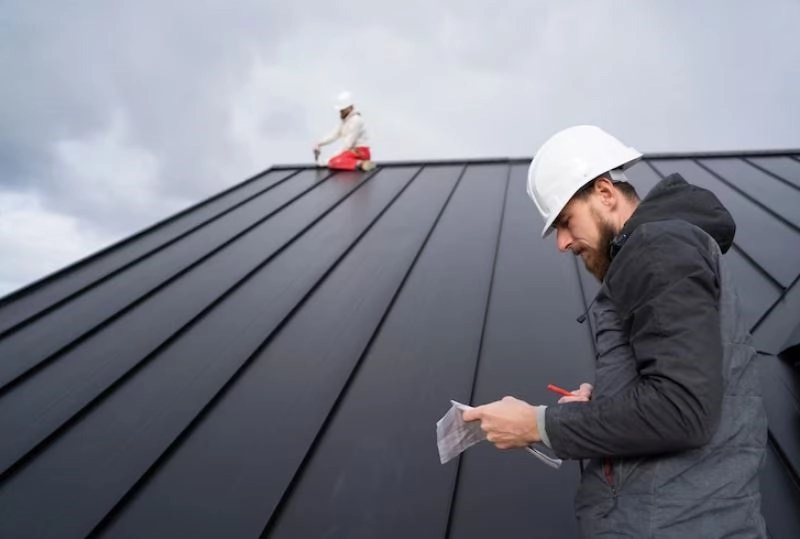
Granule loss showing bare black asphalt, curling or cupped shingle edges, cracked or missing shingles after a storm, daylight visible through the attic deck, sagging rooflines, dark streaks from moisture, and a roof past 20 to 25 years old are the seven clearest signs a Colorado roof needs full replacement rather than another patch repair.
1. Granule loss and bald spots
Asphalt shingles are coated with mineral granules that block UV rays and protect the asphalt layer underneath. At Colorado's altitude, UV exposure is measurably stronger than at sea level, and granules wear off faster as a result. Check gutters and downspouts after a rainstorm; a heavy buildup of granules there, along with visible bald patches on the shingles, means the roof's UV protection is failing.
2. Hail bruising and impact marks
Hail season on the Front Range runs roughly mid-April through mid-September, and even hail that doesn't puncture a shingle can leave a soft bruise that breaks the seal between the granules and the asphalt mat underneath. Bruised shingles look like small dark circles or dimples and frequently aren't visible from the ground; a roof that's taken a direct hit from a significant hailstorm should be inspected even if there's no obvious leak yet.
3. Curling or cupping shingle edges
Shingles that curl up at the corners or cup in the middle have in most cases lost most of their flexibility from age and UV exposure, and they no longer seal tightly against wind-driven rain. This is one of the clearest signs a roof is at the end of its service life rather than in need of a spot repair.
4. Cracked, torn or missing shingles
Individual cracked or missing shingles after a wind or hail event can sometimes be spot-repaired if the rest of the roof is in good condition. If cracking shows up across multiple areas of the roof rather than in one isolated spot, it in most cases points to the whole roof reaching the end of its lifespan at the same time, since shingles installed together age together.
5. Daylight or water stains in the attic
Climb into the attic on a sunny day and look for pinpoints of daylight coming through the roof deck, and check for water stains, dark streaks or a musty smell along the rafters and decking. Any of these means water is already getting past the shingles, even if there's no visible leak inside the living space yet.
6. Sagging rooflines
A roofline that sags or dips, rather than running straight, in most cases means the decking underneath has taken on moisture damage over time, most frequently from repeated freeze-thaw cycles pushing water into small gaps. This is a structural issue, not a cosmetic one, and it needs a contractor's evaluation before anything else on the roof is addressed.
7. Roof age past 20 to 25 years
Most standard asphalt shingle roofs are rated for 20 to 30 years by the manufacturer, but Colorado's UV exposure, hail frequency and freeze-thaw cycles commonly shorten real-world performance toward the lower end of that range. Many Colorado insurers also move roofs over 15 to 20 years old from replacement-cost coverage to actual-cash-value settlement, or decline to renew the policy at all, which is worth checking with your carrier well before the roof shows visible damage.
How long you have to file a hail claim
Most Colorado homeowners insurance policies set a window, commonly one year from the date of the storm, to file a hail or wind damage claim; check your specific policy's stated deadline rather than assuming a standard length. Document the storm date and get a roof inspection as soon as possible after any significant hail event so the claim is filed with time to spare.
What a buyer's inspector looks for
A home inspector evaluating a Colorado roof checks for all seven signs above, plus flashing condition around chimneys and vents, gutter attachment, and any signs of a prior repair that wasn't done to code. A roof flagged during a buyer's inspection becomes a repair-credit negotiation, which commonly costs a seller more in a rushed pre-closing timeline than a planned reroof does on the seller's own schedule.
Repair versus full replacement
A repair makes sense when the damage is isolated to a small area and the rest of the roof is under about 10 years old with no widespread granule loss or curling. Once three or more of the seven signs above show up across the roof at the same time, a full replacement is commonly the more cost-effective choice over a series of repeat repairs.
What to do the moment you spot one of these signs
- Photograph the damage with a date stamp from the ground, and from a ladder only with proper fall-protection gear.
- Check the attic for daylight, staining or a musty smell that confirms water is already getting through.
- Call your insurance carrier if the damage traces to a specific storm date, and ask about your policy's claim filing window.
- Get two or three roofer quotes, not just one, especially right after a major hailstorm when pricing and scheduling both tighten up.
- Ask each roofer for their license, insurance certificate and local references before agreeing to anything.
If a roof is sound and the home is going on the market soon, put the inspection findings to use in your listing strategy with the Pricing Your Colorado Home to Sell guide.
Cost of ignoring these signs
A roof left past these warning signs commonly fails in the place least convenient for a homeowner: during the next hailstorm or heavy snow load, when a small leak becomes interior water damage to drywall, insulation and flooring. Interior water damage repair commonly runs several times the cost of the roof repair that would have prevented it, on top of the roof work itself.
How Colorado insurers treat an aging roof at renewal
Beyond declining to renew a policy on an old roof, many Colorado carriers reassess roof condition at every renewal using aerial imagery and can request an inspection or drop replacement-cost coverage on a roof showing visible wear, even mid-policy-term in some cases. Getting ahead of a carrier-requested inspection by scheduling your own roofer's evaluation first gives you time to make repairs before a non-renewal notice arrives.
What buyers should know before waiving a roof inspection
In a competitive Front Range market, some buyers consider waiving the inspection contingency to strengthen an offer. Given how much of a roof's condition is invisible from the ground, hail bruising and granule loss especially, a roof-only inspection add-on is worth keeping even when the rest of the inspection contingency is waived; it commonly costs a few hundred dollars against a repair bill that can run into five figures if missed.
Where to go next
- Preparing and adding value before selling
- What every Colorado home buyer should inspect on the roof
- What affects the lifespan of your roof in Colorado
- Weatherproofing your home for the Colorado climate
- Colorado hail and roof costs compared
- The Colorado Home Seller's Guide
Talk to the Kenna Real Estate Group
If you're weighing whether a roof needs a repair or a full replacement before you list a Colorado home, or you're evaluating a roof's condition on a home you're about to make an offer on, the Kenna Real Estate Group can walk through what buyers and inspectors in your area actually flag. Call or text 303-955-4220. A live person answers. Not a robot, not a phone tree. Search every home for sale in Colorado.