New - 1 Hour Ago

.jpg)


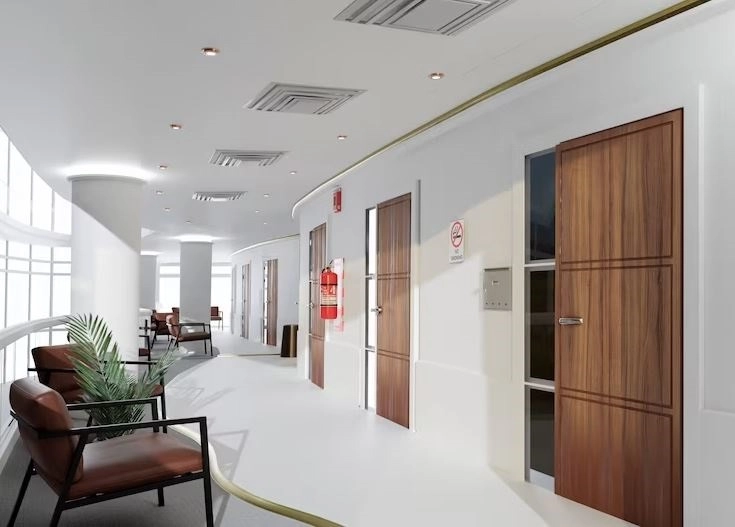
Colorado's building code requires a fire-rated door anywhere a garage opens directly into living space, and most Front Range duplexes and townhomes have at least one more fire-rated door where units share a wall. It is a small detail that shows up on almost every Denver metro home inspection, and it is worth understanding before you buy, sell, or swap out an old door yourself.
A garage stores fuel, a hot water heater, and frequently a car, all potential fire sources, and the door into the house is the one barrier standing between that risk and the rest of the home. The International Residential Code, adopted with local amendments across Denver, Aurora, Lakewood, and Colorado Springs, requires that separation as a minimum-rated door, not a standard interior door.
A 20-minute fire-rated door, solid wood at least 1-3/8 inches thick, 20-minute-rated steel, or an approved fire door assembly. A standard hollow-core interior door does not meet this and is one of the most common items flagged on a Front Range resale inspection. Replacing it costs $250 to $600 installed depending on the door type and hardware.
Many Front Range jurisdictions also require the garage door to close and latch on its own, using a spring hinge or door closer, so it cannot be propped open and defeat the fire rating. This detail gets missed on older Denver-area homes where a closer has failed or been removed; it is a $30 to $80 hardware fix once the door itself is rated correctly.
Yes, when a shared wall separates two dwelling units, any door or access panel in that wall needs a fire rating that matches the wall assembly, commonly one hour. This shows up most in older duplex conversions and rowhomes in neighborhoods like Baker and Sunnyside, where a mechanical closet or storage access sits directly on the shared wall line.
Yes. Multifamily and condo buildings under the commercial building code require fire-rated doors at unit entries opening onto shared corridors, along with fire-rated access panels for shared mechanical, electrical, and utility rooms. This is managed at the building level, not by an individual unit owner, but it matters when you are evaluating a Denver condo, townhome, or loft purchase, since building-wide fire-code compliance affects insurance and HOA reserves.
Access panels into a furnace closet, water heater closet, or an attic space adjacent to a garage frequently need the same fire rating as the wall or ceiling they sit in. This is a detail worth asking a contractor about specifically if you are finishing a garage-adjacent room or converting a utility closet, since an uninsulated but fire-rated access door is a specific product category, not a standard hardware-store panel.
Yes, a standard Front Range home inspection notes a missing or improperly rated garage-to-house door, a missing self-closer, and visibly non-compliant party wall openings, though the inspector is checking for code compliance, not certifying every technical detail of the rating. It shows up as a line item a buyer can raise during the inspection period, before the contract's inspection objection deadline, most Front Range contracts set at 10 days from acceptance, though buyers and sellers can negotiate a different number.
A missing or non-rated garage door is a routine, low-cost repair request, not a deal-breaker, and most sellers fix it or credit the $250 to $600 cost rather than let it slow a closing. It is worth checking before you list rather than finding out from a buyer's inspector, since a fast, documented fix before listing avoids a mid-contract negotiation.
Denver, Aurora, and most Front Range cities do not require a permit for a like-for-like fire door swap in a single-family home, since it is a repair, not a structural change. A party wall or shared-corridor door replacement in a multifamily building goes through the building's management or a licensed contractor who pulls the permit in most cases, since it affects the shared fire-rated assembly.
A door with no visible fire rating label at the hinge edge is the fastest way to tell it does not meet code; a rated door will have a stamped label from the manufacturer.
Yes, for a single-family garage-to-house swap, as long as you buy a labeled, rated door and hardware and follow the manufacturer's installation instructions for the frame gap and hinge type. A homeowner who is not confident about squaring a door frame or matching the self-closing hardware correctly is better off paying the $250 to $600 installed price than risking a door that looks right but does not actually seal to spec.
The base requirement, a rated door at the garage-to-house opening, is consistent across Denver, Aurora, Lakewood, Colorado Springs, and unincorporated county areas, since it comes from the International Residential Code adopted statewide with local amendments. Local amendments more commonly affect things like additional smoke detector placement or specific hardware brands approved for a jurisdiction, not the core fire-rating requirement itself, but a licensed contractor pulling any related permit will know the current local amendment.
Older Front Range homes built before local adoption of these code requirements are grandfathered in most cases and not forced into a retrofit, though a seller replacing the door anyway, or a buyer negotiating repairs, should bring it up to the current standard while the door is already being touched. It is one of the least expensive line items on a repair list and one buyers' agents ask about routinely.
If an inspection on a Front Range home or townhome flagged a garage or party wall door, the Kenna Real Estate Group can walk you through what is a routine fix and what is worth negotiating before your inspection objection deadline. Call or text 303-955-4220. A live person answers. Not a robot, not a phone tree. Or search every home for sale in Colorado to see homes with the repairs already handled.
Questions about any home in Colorado? Call or text 303-955-4220. A live person answers.
Yes. The code adopted across Denver, Aurora, Lakewood, and Colorado Springs requires a minimum 20-minute fire-rated door between an attached garage and living space.
$250 to $600 depending on door type, solid wood or steel-clad, and hardware, including a self-closing hinge if one is missing.
Yes, when a door or access panel sits in a wall shared between two units. The rating has to match the wall assembly, commonly one hour.
Yes, a standard Front Range inspection notes a missing rating label or a missing self-closer as a line item, which a buyer can raise before the inspection objection deadline.
No, for a like-for-like swap in a single-family home. A shared-wall or corridor door in a multifamily building goes through the building's management or a licensed contractor in most cases.
Look for a stamped label on the hinge edge of the door. A standard hollow-core interior door with no label does not meet code for a garage-to-house opening.