.jpg)


Indoor air quality in a Colorado home has three problems most states do not deal with together: winter air so dry it cracks skin and wood floors, a radon zone that covers most of the Front Range, and a wildfire smoke season that can push outdoor air unhealthy for weeks. Fixing it takes a different combination of steps than a national air-quality guide gives you.
Denver's elevation of 5,280 feet means thinner air outside and drier air inside, since furnace heat pulls what little moisture exists in Front Range winter air even lower. Add a state radon average nearly triple the national number and a wildfire season that runs into September, and Colorado homes need an air-quality plan built around the local calendar, not a generic checklist.
30% to 50%. Front Range indoor humidity falls to 10% to 25% from November through March without help, which dries sinuses, cracks hardwood and trim, and lets static charge build in carpet and clothing. A whole-home humidifier tied to the furnace is the most effective fix; portable units in bedrooms are the budget option.
Most of the Front Range sits in EPA Zone 1, the highest radon-potential category, and Colorado's statewide average radon level runs well above the national average. A test kit costs $15 to $30, and a mitigation system that vents radon from under the slab runs $800 to $1,500 installed. Colorado's standard real estate contract lets a buyer test for radon during the inspection period, and a reading of 4.0 pCi/L or higher is the action level the EPA recommends fixing.
Front Range wildfire smoke season runs from late summer into fall, and outdoor particulate can spike into unhealthy ranges even when the nearest fire is a hundred miles away. Closing windows, running the HVAC fan on recirculate, and adding a portable HEPA unit rated for the room's square footage keeps indoor particulate well below outdoor levels during a smoke event.
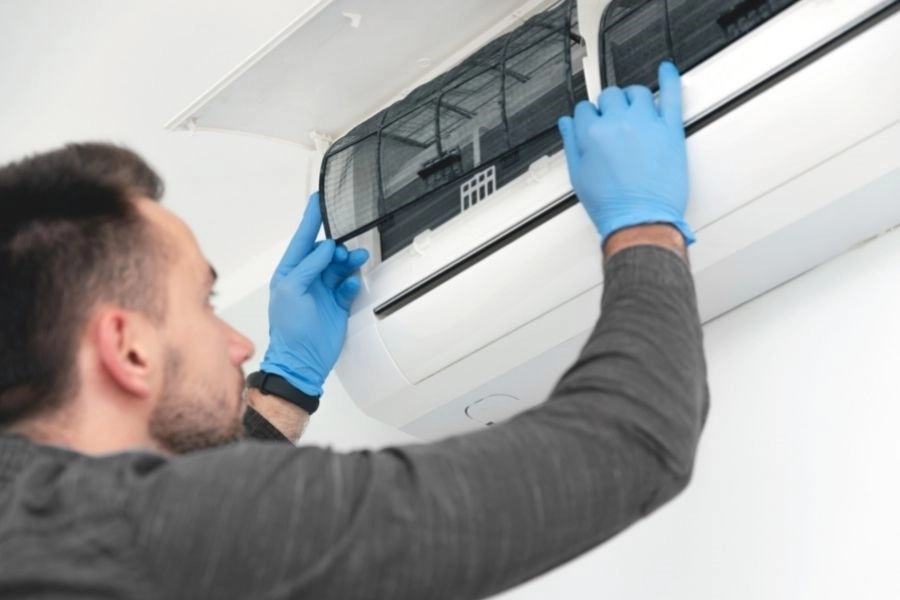
Change the filter every 60 to 90 days year-round, and every 30 days during wildfire smoke season or a high-pollen stretch.
Colorado's dry soil and near-constant spring wind carry more dust indoors than a humid region ever sees, and juniper and grass pollen season stacks on top of it from spring through early summer. Vacuuming with a HEPA-filter vacuum, wiping hard surfaces weekly, and keeping windows closed on high-wind and high-pollen days cut the load noticeably.
Yes. A heat-recovery or energy-recovery ventilator brings in fresh outdoor air while keeping most of the indoor heat and moisture, which is more efficient at altitude than simply cracking a window. New-construction Front Range homes increasingly include one; retrofitting an older home runs $2,500 to $5,000 installed.
An annual furnace and duct inspection before heating season, plus duct cleaning every 3 to 5 years given Colorado's dust load. A dirty duct system recirculates the same dust, pollen, and wildfire particulate a good filter is supposed to catch.
Buyers test during the inspection period set by the contract's inspection objection deadline, and a result at or above 4.0 pCi/L is grounds to ask the seller for a mitigation system or a credit. Sellers who test and mitigate ahead of listing avoid a late-stage negotiation and can disclose a clean result on the seller's property disclosure.
Indirectly, yes. Thinner air at 5,280 feet holds less oxygen per breath, so a stuffy, under-ventilated Front Range home feels the effect of poor air quality faster than the same room would at sea level. Cracking a window for a few minutes each day, even in winter, exchanges stale indoor air for fresh outdoor air and offsets some of that altitude effect. A tightly sealed, energy-efficient newer home holds indoor pollutants longer without mechanical ventilation than an older, drafty home does, which is why new-construction Front Range homes increasingly build in an HRV or ERV rather than relying on natural air leakage the way older housing stock does.
Yes, a portable HEPA purifier sized for the room's square footage measurably drops indoor particulate during a smoke event, and running it continuously through a bad smoke week matters more than running it only when you notice the smell. Look for a purifier rated with a clean-air delivery rate that matches or exceeds the room size; an undersized unit in a large room will not keep pace with a heavy smoke event.
Spring snowmelt pushes moisture against foundations and into window wells across the Front Range, and a musty smell after the melt points to moisture intrusion rather than dust. Grading soil away from the foundation, keeping gutters clear before the melt, and running a dehumidifier in a damp basement or crawlspace stops most of it before mold has a chance to start. A basement or crawlspace that smells musty every spring is worth a moisture inspection, not just an air freshener; a Colorado water, fire, and mold restoration overview covers what to expect if the inspection finds active moisture damage.
Yes. The same 10% to 25% winter humidity that dries out carpet and hardwood also dries sinuses and skin and makes airborne dust and pollen easier to inhale, since dry mucous membranes trap fewer particles than properly humidified ones do. A whole-home humidifier tied to the furnace, kept in the 30% to 50% range, addresses comfort, static, and indoor air quality with one piece of equipment rather than three separate fixes.
If a radon test or an air-quality question came up during your Front Range home search or sale, the Kenna Real Estate Group can walk you through what the contract's inspection objection deadline lets you ask for. Call or text 303-955-4220. A live person answers. Not a robot, not a phone tree. Or search every home for sale in Colorado to start your own search.
Questions about any home in Colorado? Call or text 303-955-4220. A live person answers.
Yes. Most of the Front Range sits in the EPA's highest radon-potential zone, and the statewide average runs well above the national number. A test costs $15 to $30.
4.0 pCi/L or higher, the EPA's recommended action level. A mitigation system that vents radon from under the slab runs $800 to $1,500 installed.
30% to 50%. Without a humidifier, Front Range indoor air falls to 10% to 25% from November through March.
Yes, through door and window gaps and the HVAC intake. Closing windows, running the fan on recirculate, and adding a HEPA purifier keeps indoor particulate far below outdoor levels.
MERV 11 for most homes; MERV 13 during wildfire smoke season if the furnace can handle the added static pressure. Check the manufacturer rating before upgrading.
Yes, during the inspection period set by the contract's inspection objection deadline. A result at or above 4.0 pCi/L is grounds to negotiate a credit or a mitigation system.
Every 3 to 5 years. Colorado's dust and pollen load fills ducts faster than in most climates, and a dirty duct system recirculates what the filter is supposed to catch.