New - Just Now

.jpg)


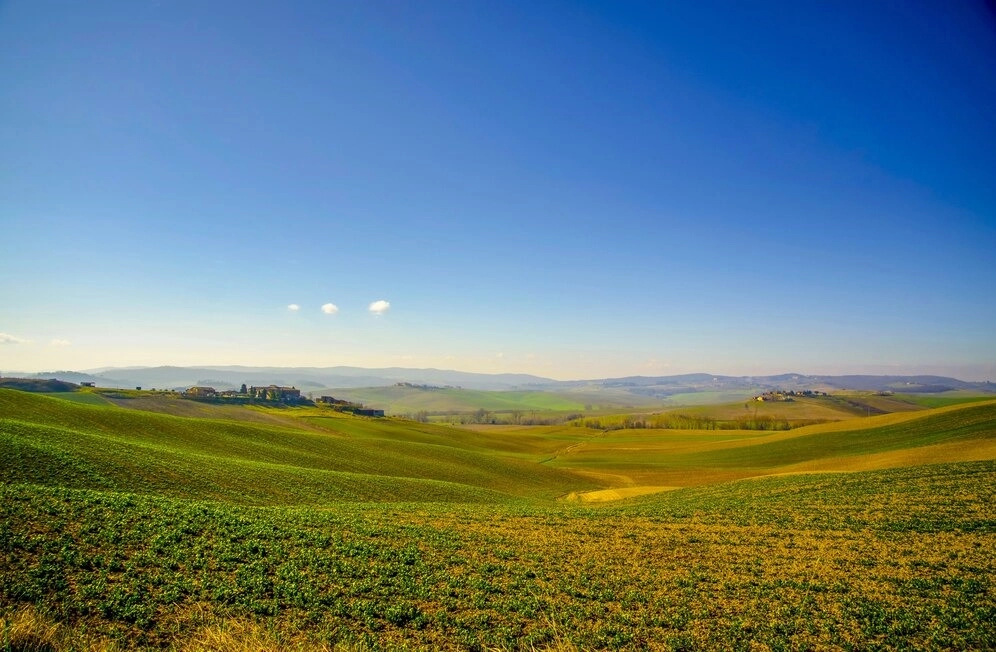
Buying farmland in Colorado is a water purchase first and a land purchase second. Water rights are separate property under Colorado law, they transfer only when the contract and deed name them, and a 160-acre field in Weld County without its ditch shares is dryland pasture worth a fraction of the irrigated price. The second check is the county assessor's agricultural classification, which is the reason the tax bill on 80 acres of Elbert County grass is a few hundred dollars instead of a few thousand.
This guide covers water rights, well permits, agricultural taxes, conservation easements, mineral rights, soils, climate, fencing law and the four counties where Front Range buyers look: Weld, Morgan, Elbert and El Paso. The Colorado horse property buying guide covers the equestrian version of the same checklist.
Not automatically. Colorado runs on prior appropriation: the first person to divert water and put it to beneficial use holds the senior right, and in a dry year the senior rights get water while the junior rights get nothing. Every right has a priority date, a decreed amount and a decreed use, and the Colorado Division of Water Resources, under the State Engineer, administers them by that priority. A 1880s priority on the South Platte delivers most years; a 1970s priority on the same river delivers in wet years only.
The right is conveyed by deed, separately from the land unless the deed says the land includes it. Before the offer, get the water right's decree, its priority date, its historical use records and the diversion records from the Division of Water Resources, and write every right into the Colorado contract by name. A listing that says "water rights" without a decree number is describing nothing.
Most irrigated farmland on the Front Range is watered through a mutual ditch company, and the farmer owns shares of stock in that company rather than a direct river right. Each share delivers a portion of the ditch's decreed water in proportion to the total shares, and the company sets an annual assessment per share for maintenance. Shares transfer by stock certificate through the ditch company's secretary, not by the deed, so the contract lists the company name, the number of shares and the certificate numbers, and closing includes the company's transfer paperwork. Ask for three years of assessments and the delivery record per share.
The Division of Water Resources issues every well permit, and the parcel size decides the permit. On a parcel of 35 acres or more outside a water-short area, a domestic well permit allows household use in up to three homes, irrigation of up to one acre of lawn and garden, and watering of domestic livestock. On a parcel under 35 acres, the permit is household use only, no outside irrigation and no stock watering, unless the parcel sits in a designated groundwater basin or the buyer files an augmentation plan. The 35-acre line is also why Colorado counties do not treat a 35-acre split as a subdivision.
Elbert County and eastern El Paso County sit over the Denver Basin aquifers, where the water is allocated by the acre and does not recharge; a well there is a bank account that is drawn down, and the permit states the allowed annual pumping. Eastern El Paso County around Calhan, Peyton and Falcon sits in the Upper Black Squirrel designated basin with its own permit rules. Get the existing well's permit number, its pump test and a water quality test during the inspection period.
Colorado county assessors value agricultural land on its earning capacity as a farm or ranch, capitalized, rather than on its market value, and the difference is the largest tax break in Colorado real estate. To qualify, the land has to be in bona fide agricultural use, grazing or cropping for profit, over the assessor's look-back period, and the assessor asks for leases, receipts or a grazing plan. The house and the acre or two under it are classified residential at the residential rate; the pasture is agricultural.
Losing the classification is the trap. A buyer who takes 40 acres out of grazing, puts up a house and mows the rest converts the land to vacant land in the assessor's eyes, and the bill multiplies. Keep the grazing lease with the neighbor, keep the hay cut and sold, keep the receipts, and confirm the county's requirements with the assessor before closing. The selling vacant land in Colorado post shows the same rule from the seller's side.
A conservation easement is a recorded, permanent agreement that gives up development rights on the land, held by a land trust or a government body, and it runs with the land through every future sale. Colorado offers a transferable state income tax credit for donating one, administered through the Division of Conservation, which is why so many Weld, Morgan and Elbert parcels carry them. An easement on the land you are buying fixes the number of building envelopes, limits subdivision and sets what agricultural uses continue. Read the easement in the title commitment, map the building envelope, and price the land as it is restricted, not as the acreage suggests. Confirm the tax treatment of an existing or a new easement with a Colorado CPA.
Not in most of Weld County, where the Wattenberg field made the county the most drilled in the state and most surface parcels sit over severed minerals owned by someone else. The mineral owner and its operator have the right to reasonable use of the surface, and drilling is regulated by the Colorado Energy and Carbon Management Commission. Ask the title company for a mineral ownership report, look for existing surface use agreements and well pads on the parcel, and check the commission's map for permitted wells within a mile.
Check the soil before the contract with the Natural Resources Conservation Service Web Soil Survey, which maps every Colorado parcel by soil series, and read the capability class: Class I and II soils in the South Platte bottoms near Greeley and Fort Morgan grow irrigated corn, sugar beets and alfalfa; the Class VI sandy loams and clays of Elbert County grow grass. Then pull samples and send them to the Colorado State University soil testing lab for nutrients, pH and salts, because the eastern plains run alkaline and irrigated ground builds salt. The USDA explains how to improve a soil's health after the purchase, but no cover crop fixes a saline field or a rocky ridge.
The Front Range plains sit at 4,500 to 6,500 feet and get 12 to 16 inches of precipitation in most years, with a growing season that runs from the last frost in mid May to the first frost in late September or early October, 300 days of sun, wind, and hail from May to September. Dryland ground grows winter wheat, millet and grass; irrigated ground grows corn, alfalfa, hay, sugar beets and onions. Match the crop or the herd to the elevation before matching it to the acreage.
| County | What the farmland is | Water | What to check first |
|---|---|---|---|
| Weld (Greeley, Kersey, Fort Lupton) | Irrigated row crops, dairies, feedlots, hay; the state's top agricultural county | Ditch shares on the South Platte and Cache la Poudre systems | Severed minerals and well pads, ditch share delivery record |
| Morgan (Fort Morgan, Brush, Wiggins) | Irrigated corn, sugar beets, alfalfa along the South Platte; dryland wheat north and south | Ditch shares and the Fort Morgan Reservoir and Irrigation systems | Priority dates and augmentation, center-pivot condition |
| Elbert (Kiowa, Elizabeth, Simla) | Grazing, dryland, 35-acre and 80-acre horse and ranchette parcels | Denver Basin aquifer wells, no major surface water | Well permit allocation, conservation easements, county road access |
| El Paso (Calhan, Peyton, Falcon, Ellicott) | Grazing and horse properties east of Colorado Springs | Upper Black Squirrel designated basin wells | Designated basin permit, wildfire zone, drive time to Colorado Springs |
Browse homes and land for sale in Greeley and homes and land for sale in Colorado Springs, and read the farms for sale in northern Colorado post for the Weld and Morgan listings.
A conventional or FHA loan finances acreage when most of the value sits in the house and the land is not a commercial operation; lenders cap the acreage and want comparable sales of similar properties. Working farmland with income is financed by agricultural lenders such as the Farm Credit system, on the land's productive value. Mike Oswald, VP of Mortgage Lending at Rate, NMLS 261003, Equal Housing Lender, handles the residential side, including acreage homes in Elbert and El Paso counties. You are free to use any lender. The Colorado home financing guide covers the programs.
The Kenna Real Estate Group at Keller Williams DTC finds farmland, acreage and horse property across Weld, Morgan, Elbert and El Paso counties, pulls the water decrees, well permits, easements and mineral reports before the showing, and writes the water into the contract. Call or text 303-955-4220. A live person answers. Not a robot, not a phone tree. Or search every home for sale in Colorado and filter by acreage.
Questions about any home in Colorado? Call or text 303-955-4220. A live person answers.
Only when the contract and deed name them. Get the decree number, priority date and diversion records from the Colorado Division of Water Resources, and list every right and every ditch share by certificate number in the contract.
A proportional part of the ditch company's decreed water, set by the company's total shares, with an annual assessment per share. Ask for three years of delivery records and assessments.
Not on a standard permit. Under 35 acres the Division of Water Resources issues a household-use-only permit, unless the parcel is in a designated basin or you file an augmentation plan. At 35 acres or more, the domestic permit covers a home, one acre of irrigation and domestic livestock.
The county assessor values agricultural land on its earning capacity as a farm or ranch, not its market value. The land has to stay in bona fide agricultural use, with leases or receipts to show it, or it reclassifies as vacant land and the bill multiplies.
No. It is permanent, recorded and runs with the land through every sale. It fixes the building envelopes and limits subdivision, so read it in the title commitment and price the parcel as restricted.
In most of Weld County the minerals were severed decades ago and belong to someone else, and the operator holds a right to reasonable surface use. Order a mineral ownership report and look for surface use agreements and permitted wells on the Energy and Carbon Management Commission map.
Fence-out. Colorado's fence law puts the burden on the landowner to keep livestock out with a lawful fence, so unfenced crops or pasture next to a rancher's herd are the buyer's cost to fence.
12 to 16 inches a year in most years, with a growing season from mid May to late September. Dryland ground grows wheat, millet and grass; irrigated ground with ditch water grows corn, alfalfa, hay and sugar beets.
Start with the Colorado Horse Property Buying Guide, then search every horse property for sale in Colorado.
Buying or selling horse property in Colorado? Call or text 303-955-4220. A live person answers. Not a robot, not a phone tree.