.jpg)


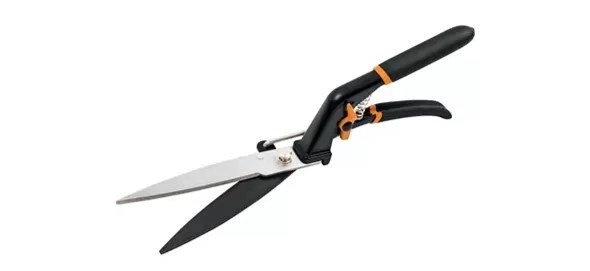
The right lawn tool in Colorado is not the one sold on a landscaping show set in a humid climate. Denver metro sits at 5,280 feet with 300-plus days of sun, expansive clay soil that shrinks and swells with moisture, and watering rules that limit a sprinkler to specific days. A grass shear, a manual edger and a few clay-ready hand tools solve problems that power equipment cannot fix by itself.
What lawn tools work best in Colorado's clay soil?
Front Range soil is heavy in bentonite clay. It compacts between waterings and cracks when it dries out, which dulls cheap blades fast. A forged steel grass shear keeps its edge on clay-hardened turf longer than a stamped aluminum one, and it gives the control that a string trimmer cannot match around drip-irrigation lines, rock borders and raised beds.
- Forged steel blades: hold an edge through a full season of clay and grit without daily sharpening.
- Long-handled shears: cut standing up, which matters on the uneven grade common in Highlands Ranch, Castle Rock and Parker lots.
- A hand cultivator with a short, wide tine: breaks up compacted clay around new plantings faster than a narrow spade.
- A soil knife: cuts through clay and root mass together when edging a bed line.
How does altitude change lawn care in Denver and Colorado Springs?
At 5,280 feet, UV exposure runs stronger than at sea level, which bleaches plastic tool handles and dries out wood ones within a couple of seasons. Store tools out of direct sun between uses and oil wooden handles once a year. The dry air also pulls moisture out of turf faster, so a lawn here needs about 1 to 1.5 inches of water a week during the growing season, delivered on the days each city allows.
What are Colorado's watering restriction days?
Denver Water, Aurora Water, Colorado Springs Utilities and most Front Range providers assign watering days by address, two or three days a week with no watering between 10 a.m. and 6 p.m. Hand tools are not restricted; grass shears and manual edgers work any day, which is exactly why they matter here. A homeowner who edges and trims on the off days keeps a lawn looking kept without breaking a watering schedule.
Should a Front Range lawn switch to xeriscape?
Xeriscaping replaces thirsty turf with drought-tolerant grasses, native plants, mulch and rock. Denver Water and Colorado Springs Utilities both run turf-replacement rebate programs that pay a set amount per square foot of grass converted; check the current rate with the provider before starting, since the number changes by budget year. A partial conversion, keeping a small turf area for a patio or a play space and converting the rest, keeps the yard usable while cutting the water bill.
What grass types handle drought and hail the best?
Buffalo grass and blue grama are native to the Front Range, need less water than Kentucky bluegrass, and recover faster after a hail event because the blade is shorter and denser. Kentucky bluegrass still dominates older Denver metro lawns and looks greener through summer, but it needs more water and shows hail bruising on the blade longer.
How does hail season affect lawn tools and turf?
Colorado's hail season runs spring through September, with the Front Range corridor from Denver to Colorado Springs seeing some of the highest hail frequency in the country. A lawn trimmed and edged before a storm sheds debris faster than an overgrown one, and clearing hail-stripped leaves and branches right after a storm keeps the turf from matting down and yellowing underneath.
What does an HOA require for turf height and edging?
Most Front Range HOAs, including those governing large master-planned communities, set a maximum grass height (commonly 6 inches), require edging along sidewalks and driveways, and review any change from turf to rock or xeriscape before it starts. Read the Denver HOA rules and fees guide before a bigger lawn project, and check the specific community's design-review form if a full conversion is planned.
Does a xeriscape conversion need a permit?
A basic swap from turf to rock, mulch and drought-tolerant plants inside a private yard does not need a city building permit in most Front Range jurisdictions. A project that changes drainage, adds a retaining wall over a set height, or reroutes irrigation lines to the street can trigger a permit; check with the city or county before digging.
What does mag chloride do to lawn edges near sidewalks?
Colorado cities apply magnesium chloride to roads and walkways before winter storms to keep ice from bonding to the surface. The runoff collects along sidewalk-adjacent turf and can brown a strip of grass by late winter. Rinsing that edge with water in early spring, once watering restrictions lift for the season, helps the grass recover faster than leaving the residue in place.
Do lawn upgrades add home value when selling in Colorado?
A clean, edged lawn with defined bed lines is one of the least expensive fixes before listing photos, and it is the first thing a buyer sees pulling up to a showing. A full xeriscape conversion costs more upfront but lowers the water bill a buyer will ask about, which the preparing and adding value before selling guide covers alongside other low-cost improvements that move a Front Range listing.
Who is responsible for lawn care in a Colorado rental?
Colorado does not set a statewide rule on lawn care in a lease; the written agreement controls it. Many Front Range landlords keep lawn maintenance as a tenant duty in the lease because an HOA violation notice for overgrown turf gets mailed to the property owner, not the tenant, regardless of who agreed to mow.
What is the real difference between manual and electric grass shears?
| Feature | Manual shears | Electric shears |
|---|---|---|
| Best for | Detail edging, rock beds, small yards | Larger lawns, faster overall trimming |
| Cold-weather use | Works the same in any temperature | Battery life drops in cold, common on Front Range mornings |
| Noise | Silent | Low hum, still quieter than a gas trimmer |
| Maintenance | Clean and oil the blade after use | Charge the battery, check the blade for nicks |
How do turf-replacement rebates work along the Front Range?
Denver Water, Aurora Water, Colorado Springs Utilities and several suburban districts pay homeowners to remove thirsty turf and replace it with xeriscape planting. Programs require the old grass to come out (not just get covered), a minimum square footage, and an approved plant list. Applying before the work starts, not after, is required by nearly every program on the Front Range.
Ask for the printable lawn-tool and turf-conversion checklist in the form below and the Kenna Real Estate Group emails it the same day.
Where to go next
- Preparing and adding value before selling
- Denver HOA rules and fees guide
- Xeriscaping your Colorado home: a Front Range guide
- Effective lawn care and maintenance tips for springtime in Colorado
- How low-maintenance gardens appeal to buyers
- Search every home for sale in Colorado
Talk to the Kenna Real Estate Group
Whether a yard needs a quick cleanup before a listing goes live or a full water-wise redesign before a sale, the Kenna Real Estate Group can point to what buyers in a specific Front Range neighborhood actually respond to. Call or text 303-955-4220. A live person answers. Not a robot, not a phone tree. Or search every home for sale in Colorado to see what a well-kept yard looks like in the current market.
Homes for sale that match this post
Guides
Questions about any home in Colorado? Call or text 303-955-4220. A live person answers.