New - Just Now

.jpg)


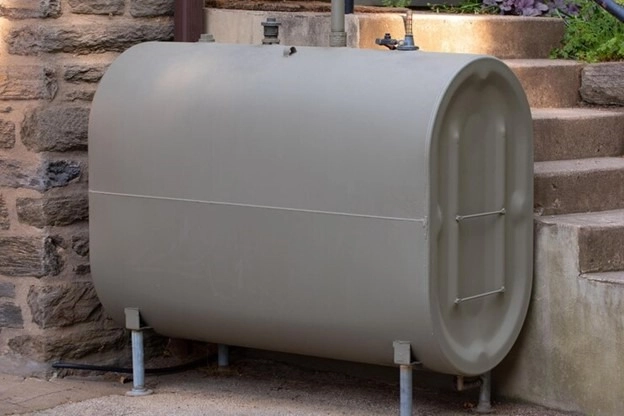
Most Front Range homes heat with natural gas, but a meaningful share of Colorado's mountain and rural properties, from Conifer to the Western Slope foothills, sit beyond a gas line and rely on delivered propane or heating oil instead. If your Colorado home uses a fuel-oil furnace or boiler, proper tank placement, regular inspection, and a plan for leaks matter as much as the heating system itself.
Heating oil, also called fuel oil, is a liquid petroleum product burned in a furnace or boiler to heat a home. It's stored in a tank on the property, either indoors in a basement or utility room or outdoors on a concrete pad, and topped off by a local delivery provider rather than piped in like natural gas. Compared with gasoline or propane, heating oil has a relatively high flashpoint, so it doesn't ignite as easily at room temperature, but it still needs sound handling and storage.
Yes, mostly older mountain cabins, ranch properties, and homes in unincorporated Colorado counties built before propane delivery expanded into the area. If you're buying a home with an oil tank, ask the seller for the tank's age, the last inspection date, and whether it's above ground or buried, since older buried tanks carry a higher risk of undetected corrosion.
Place the tank on a stable, level pad, away from a home's defensible-space zone if you're in a wildfire-prone area, and away from where snowplow drifts or mag-chloride road spray from winter maintenance can reach it. Keep several feet of clearance from siding and any ignition source. Indoor tanks belong in a ventilated, low-traffic utility space where a technician can inspect fittings and valves without moving stored items around them first.
Denver metro and Front Range winters swing through repeated freeze-thaw cycles, which stresses tank legs, piping, and outdoor concrete pads over time. Check the pad for cracking or settling each fall before the heating season starts, and have a technician confirm the tank still sits level. A tank that has shifted is more prone to strained fittings and slow leaks at the seams.
Walk the tank monthly during heating season, checking for rust, dents, wet spots, or fuel odor around the base and fittings. Schedule a full professional inspection once a year, ideally before the first hard freeze, so a technician can check for corrosion, confirm the tank is stable, and service the filter before winter demand starts.
Heating oil has a distinctive smell that is the first noticeable sign of a problem in most cases. Any persistent fuel odor near the tank, staining on a concrete pad, or a wet spot in the soil around an outdoor tank calls for an immediate inspection. Some homeowners install an electronic leak detector on the tank for an earlier warning, particularly useful on older or buried tanks where a slow leak isn't visible.
For an indoor spill, open windows and doors right away to ventilate the space and reduce fume buildup. Contain a small spill with absorbent material such as cat litter or a spill pad, working from the outside edge in. For anything beyond a minor spill, or any spill that reaches soil or a storm drain, call a cleanup professional and your county's environmental health department, since Colorado counties regulate contaminated-soil disposal and improper handling can bring fines.
Requirements vary by county and by whether the tank is above ground or buried. Underground storage tanks fall under stricter state and county environmental oversight than above-ground tanks. Before installing, replacing, or removing a tank, check with your county building department, since rules differ between, for example, Jefferson County and Park County.
Budget for an annual professional inspection, a yearly filter change or cleaning, and periodic nozzle or burner service on the furnace itself. Costs vary by provider and by whether the tank is above or below ground, so get a written quote from a local fuel company rather than relying on a national average.
An unused tank should be professionally decommissioned, drained, and either removed or properly closed in place, not simply abandoned. This matters at resale: an undocumented old tank, especially a buried one, is a common inspection-objection item in Colorado contracts, since buyers and lenders want proof it was removed or closed to code.
Many Colorado homeowners moving off heating oil switch to propane, which is more widely available from regional delivery companies, or to an electric heat pump paired with Xcel Energy efficiency rebates where the home already has adequate electrical service. Compare delivered-fuel contracts and equipment costs with a licensed HVAC contractor before deciding, since the right choice depends on your home's insulation, altitude, and existing ductwork.
An oil tank is a standard item on a Colorado seller's property disclosure and commonly comes up during the inspection-objection period. Sellers should have documentation of the tank's install date, last inspection, and any past leak remediation ready before listing. Buyers should ask for that documentation and budget for a tank inspection alongside the general home inspection. Resources such as romeosfuel.com and the Wisconsin Department of Health Services' emergency plan guidance outline what a household plan should cover; Colorado homeowners should pair that with guidance from a local Colorado fuel-oil or propane provider familiar with county rules.
Keep your fuel provider's number, a spill-response contractor, and your county's environmental health department posted near the tank. Review the plan with everyone in the household each fall so no one is guessing what to do if a leak or spill happens mid-winter.
Thinner air at higher elevation changes combustion efficiency, so furnaces and boilers installed at altitude sometimes need adjusted burner settings that a technician certified for high-altitude work should handle. Colorado's dry air also means less humidity to soften static buildup around fuel lines and connections, which is one more reason a technician, not a homeowner, should service the burner assembly.
Buying or selling a Colorado home with a heating oil tank raises questions a standard listing doesn't, from disclosure requirements to inspection-objection timing, and the Kenna Real Estate Group walks clients through both sides of that conversation. Call or text 303-955-4220. A live person answers. Not a robot, not a phone tree. Ready to look at homes now? Search every home for sale in Colorado.
Questions about any home in Colorado? Call or text 303-955-4220. A live person answers.
Both are delivered fuels stored in an on-site tank rather than piped in, but propane is more widely available from Colorado delivery companies today, while heating oil is mostly found in older mountain and rural properties.
Check the seller's property disclosure, look for a fill pipe and vent pipe on an exterior wall, or ask your inspector to look for signs of a buried tank such as a vent pipe with no visible above-ground tank.
Walk the tank monthly during heating season for odor, rust, or wet spots, and schedule a full professional inspection once a year, ideally before the first hard freeze.
Ventilate the area, avoid any open flame or ignition source, and call a fuel-service technician right away to inspect the tank, fittings, and surrounding soil for a leak.
Yes, requirements vary by county and by whether the tank is above ground or buried, so check with your county building department before installing, replacing, or removing a tank.
Yes, it's a common disclosure and inspection-objection item; sellers should document the tank's age and service history, and buyers should budget for a separate tank inspection.
Many homeowners do, commonly pairing the switch with Xcel Energy efficiency rebates, but the right choice depends on your home's insulation, ductwork, and electrical service, so get a licensed HVAC contractor's assessment first.