Open: Thu 4:00 PM - 6:00 PM
$600,000
Active
3
Beds
3
Baths
1594
Sqft
0.11
Acres
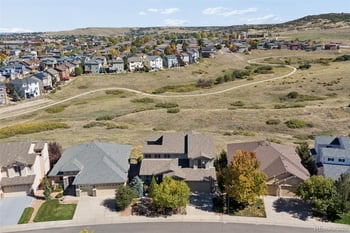
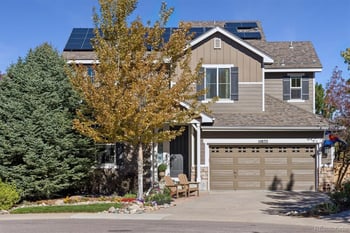
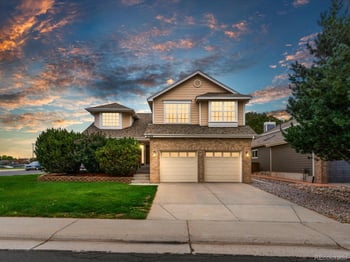
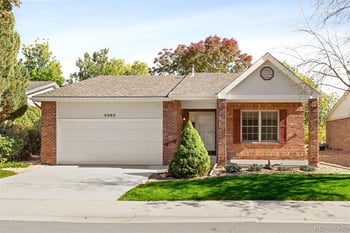
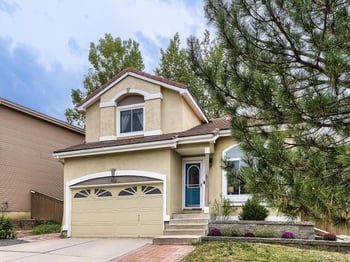
1152 W Savannah Sparrow Dr, Highlands Ranch, CO 80129
MLS#: REC4283868
.jpg)


An unincorporated community in Colorado is a place with a name and a mailing address but no city government: the county commissioners are its council, the county building division issues its permits, and the county road and bridge department plows its roads. Highlands Ranch, Ken-Caryl Ranch, Evergreen, Conifer, Roxborough Park, Franktown, Strasburg and most of Elbert and Weld counties all work this way.
Buying in unincorporated Douglas, Jefferson, Arapahoe, Adams, Weld or Elbert County changes who you pay, who you call and what you are allowed to build. This guide answers the questions Front Range buyers ask before they write an offer on a home outside city limits.
Colorado's counties came first. The territorial legislature drew 17 counties in 1861, and towns incorporated inside them one by one as mining camps and railroad stops grew. Everything outside a town's boundary stayed under the county, and Colorado law still lets any area stay that way forever. The national definition in What is an unincorporated community is the same one Colorado uses: a named place with no municipal corporation of its own. Colorado has 64 counties and about 270 municipalities; the land between the municipalities is unincorporated.
Two forces shaped the modern map. Cities annex land at their edges under Title 31 of the Colorado Revised Statutes, so a home in unincorporated Arapahoe County one year is inside Centennial the next. And large master-planned communities were built on county land on purpose: Highlands Ranch started in 1981 in unincorporated Douglas County with a metropolitan district and the Highlands Ranch Community Association instead of a city hall, and it still has more than 100,000 residents and no mayor. Centennial incorporated in 2001 and Castle Pines in 2008, both carved from unincorporated county land by residents who voted to form a city.
The mailing address does not tell you. The post office assigns city names by delivery route, so a "Littleton" address sits in unincorporated Jefferson County (Ken-Caryl, Columbine), unincorporated Arapahoe County (Columbine Knolls, the area south of Bowles Avenue), or the City of Littleton itself. "Parker" addresses cover unincorporated Douglas County east of the town. "Aurora" addresses reach into unincorporated Arapahoe and Adams counties near Watkins.
| Service | Inside a city | Unincorporated county |
|---|---|---|
| Building permits and inspections | City building department | County building division (Douglas County Building, the Jefferson County building division, Arapahoe County Public Works and Development, Adams County Community and Economic Development, Weld County Building, Elbert County Community Development) |
| Roads and snow plowing | City public works | County road and bridge on county roads; the HOA or metro district on private subdivision streets |
| Trash and recycling | City-run or city-contracted hauler | You hire a private hauler, $20 to $40 a month |
| Water and sewer | City utility | A water and sanitation district (Centennial Water in Highlands Ranch, Roxborough Water and Sanitation) or a private well and septic system |
| Fire protection | City fire department | A fire protection district with its own mill levy (South Metro Fire Rescue for Highlands Ranch and Castle Pines, Evergreen Fire Rescue, Elizabeth Fire) |
| Parks and recreation | City parks department | The HOA, metro district or county open space program (Jeffco Open Space, Douglas County Open Space) |
| Zoning and code enforcement | City planning | County planning and zoning |
Sales tax, yes. Property tax depends on the districts, not on the city line.
Sales tax. A city sales tax of 3% to 4% disappears outside city limits. Colorado's state rate is 2.9%. Add the county rate and, inside the RTD boundary, 1.0% for RTD and 0.1% for the Scientific and Cultural Facilities District. Unincorporated Jefferson County lands at 4.5%, unincorporated Arapahoe County at 4.25%, unincorporated Adams County at 4.75%, and Highlands Ranch at 5.0%. Unincorporated Weld County outside RTD pays the state 2.9% and nothing else. Compare that with 7.9% in Castle Rock or 8.81% in Denver. On a $60,000 truck the difference is $1,500 to $3,000. Confirm any address with the Colorado Department of Revenue's sales tax lookup, because special districts move the number.
Property tax. Your bill is the county assessed value times the sum of every mill levy on the parcel: county, fire district, water and sanitation district, library district, metro district and so on. A metro district in a newer unincorporated subdivision adds 30 to 60 mills to pay off the bonds that built the streets and water lines, which puts a $700,000 home in a new Douglas County metro district above a $700,000 home in an older part of Littleton. Read our Denver special district and metro district tax guide and the post on how HOAs, metro districts and taxes affect Denver suburb buyers before you compare two homes by price alone.
A metropolitan district is a special taxing district formed under Title 32 of the Colorado Revised Statutes. In a city, the city builds streets and water mains. In unincorporated county land, the developer forms a metro district, sells bonds, builds the infrastructure, and the homeowners repay the bonds through a mill levy for 20 to 40 years. The district also runs the parks, pool and landscaping in many subdivisions. Its budget, board and debt schedule are public records filed with the Colorado Department of Local Affairs; read them for any home in a district younger than 15 years.
Outside a water and sanitation district, the home runs on a private well and an onsite wastewater treatment system (OWTS). Both are permitted by the state and the county, and both come with rules that decide what you build.
Our Colorado horse property buying guide walks through well permits, septic sizing and access easements for acreage buyers.
County zoning is looser on use and stricter on lot size than city zoning. Douglas County and Jefferson County both use an A-1 agricultural zone with a 35-acre minimum and residential rural zones with 2.5- to 10-acre minimums. Elbert and Weld counties allow agricultural buildings, horses and home businesses in their rural zones that a city would prohibit. Every county still requires a building permit for a house, a detached garage, a barn over a size threshold, a deck and a finished basement.
We sell homes in unincorporated Douglas, Jefferson, Arapahoe, Adams, Weld and Elbert counties every month, and we pull the district, well and septic records before you write the offer. Call or text 303-955-4220. A live person answers. Not a robot, not a phone tree. You can also search every home for sale in Colorado and filter by county.
Questions about any home in Colorado? Call or text 303-955-4220. A live person answers.
No. Highlands Ranch is unincorporated Douglas County, governed by the county commissioners, the Highlands Ranch Metropolitan District and the Highlands Ranch Community Association. It has more than 100,000 residents and no city council.
The post office assigns city names by delivery route. Littleton addresses cover the City of Littleton plus unincorporated Jefferson County (Ken-Caryl, Columbine) and unincorporated Arapahoe County. The county assessor's tax-area code tells you which one you are in.
4.5%: the state's 2.9%, Jefferson County's 0.5%, RTD's 1.0% and the 0.1% cultural district. Denver charges 8.81% and Castle Rock 7.9%.
35 acres or more for an exempt domestic well that serves up to three homes, one acre of irrigation and livestock. Smaller parcels get a household-use-only well permit with no outdoor watering.
The county building division: Douglas County Building, the Jefferson County building division, Arapahoe County Public Works and Development, Adams County Community and Economic Development, Weld County Building or Elbert County Community Development.
30 to 60 mills in most newer unincorporated subdivisions. The bonds run 20 to 40 years and the debt schedule is on file with the Colorado Department of Local Affairs.
Yes. Jefferson County Public Health requires an OWTS inspection and use permit when title transfers. Boulder County has the same rule; the other Front Range counties each publish their own.