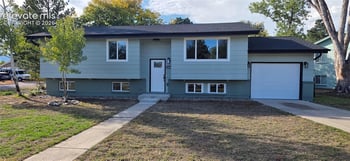
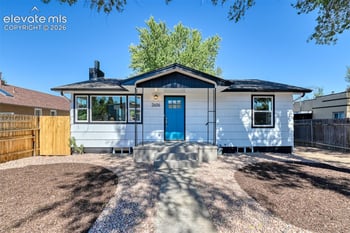
New - 15 Mins Ago
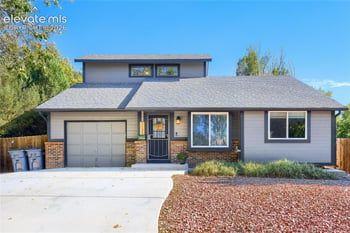
$399,900
Coming Soon
2
Beds
2
Baths
1557
Sqft
0.1689
Acres
1135 Greenbrier Dr, Colorado Springs, CO 80916
MLS#: 6943544
.jpg)


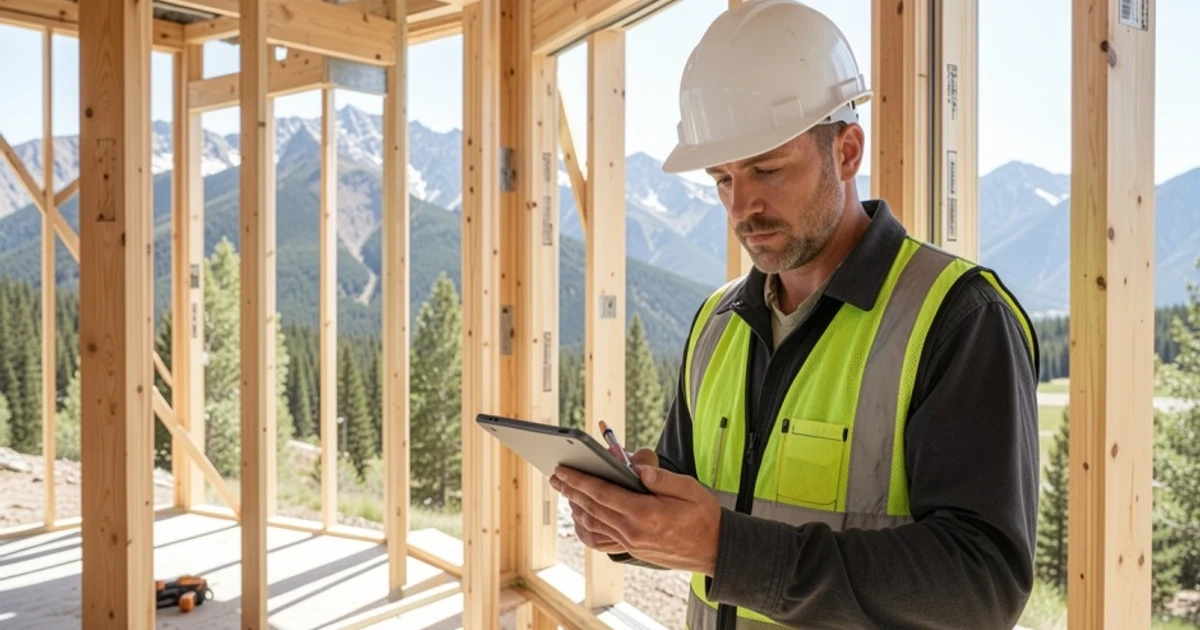
Ask any seasoned home inspector in Denver, Colorado Springs, or the mountain towns west of I-70 what the toughest part of their job is. They'll allude to the report-writing part. In this business, the inspection ends when you leave the property, but your professional reputation lives inside the document you hand over afterward. A missed shingle can be forgiven. A confusing, vague, or poorly organized report cannot — not to a first-time buyer who just spent their life savings on a 1920s Denver bungalow, and not to the real estate agent deciding whether to send you the next referral.
So if you are pondering 'how to become a home inspector in Colorado, 'make sure to take up courses that also teach report writing as an afterthought tacked onto the end of a course. They build it into the curriculum from day one, right alongside roofing, HVAC, and structural fundamentals. Here's a closer look at how that actually happens, and why it matters so much in a state with housing stock as varied as Colorado's.
Colorado isn't a one-size-fits-all housing market. You've got century-old brick residences in Denver's ancient neighborhoods, sprawling ranch-style properties on the Eastern Plains, ski-town cottages built for snow load, and new construction popping up across roaring suburbs like Aurora and Castle Rock.
A report that functions for one of these homes often requires a totally different format and level of detail for another. Courses that treat report writing as a core skill, not a bolt-on, train inspectors to adapt their documentation to whatever property they're standing in front of.
A big part of what splits an unpolished draft from a proficient report is the capacity to demonstrate a situation. Good courses spend real time on this translation skill, teaching students to describe things like moisture intrusion or foundation movement in a way that a nervous first-time buyer can actually understand and act on.
Most people don't realize report quality is decided long before anyone sits down at a laptop—it's decided during the walkthrough itself. Colorado programs increasingly train students to build a disciplined note-taking habit on-site, because a report is only as good as the observations behind it.
Ready to Find Your Dream Home in Colorado With Confidence?
Let us help you. Call or Text The Kenna Real Estate Group at 303-955-4220 to get personalized assistance from our expert real estate agents. Find out what your home is worth in today's market.
Writing a technically comprehensive report and one that's genuinely functional is totally different. Tutors in Colorado's better programs compel students to write as if the reader is worried, busy, and possibly seeing an inspection notice for the first time. That means clear synopses up front, logical section order, and conclusions that are easy to scan rather than planted in dense paragraphs.
This is where local training really earns its keep. A course built around generic, national content can teach the mechanics of writing, but it can't teach the specific risks Colorado homes face. Programs based in-state tend to weave these regional realities directly into report-writing practice:
Reading about exemplary report writing and truthfully creating one underneath a mock deadline are two very distinct occasions. Better courses have trainees frame full sample reports based on training inspections, then get immediate feedback on tone, transparency, and completeness before writing one for a paying client.
It's easy to underestimate how much liability sits inside an inspection report until you hear the numbers. Home inspectors will face a claim within their first five years in business, a statistic that underscores just how closely a report's wording can be scrutinized after the fact. Courses that take this seriously teach students to write precisely, avoid speculation, and clearly document the limits of what was and wasn't inspected — not to hedge for the sake of hedging, but because vague language is often exactly what gets picked apart later.
Nobody writes a lustrous, proficient report on their first attempt. The best programs treat this like the craft it is, giving students multiple drafts, instructor markups, and revisions before graduation. By the time learners move into supervised field assessments, writing clearly under time pressure feels far less grim.
Unlike many other professions involved in a home sale, Colorado has historically not required state licensing for home inspectors, a point the American Society of Home Inspectors has noted in its state-by-state overview of inspector regulations. With less formal oversight built into the profession itself, the quality of an inspector's work — and especially the clarity and thoroughness of their written reports — often becomes the main thing separating a trustworthy professional from someone who simply bought a flashlight and a business card. That reality puts even more weight on training programs to instill strong reporting habits early, since the report itself often has to do the work that licensing requirements might otherwise reinforce.
Report writing may not come up as an important aspect when you are understanding 'how to become a home inspector in Colorado,' and it's rarely what draws people to the profession in the first place. But it's the part that clients actually keep, reread, and sometimes hand to a contractor or an attorney months later. Colorado's home inspection courses that treat writing as a genuine skill—worth practicing, revising, and grounding in the state's unique housing conditions—are setting students up for careers built on trust rather than guesswork. For anyone considering this path, ask a training program directly how much time it spends on report writing, because that answer says a lot about how prepared you'll be on day one.
Long-distance moves are expensive, and every dollar counts. If you’re relocating to Colorado, you may qualify for $1,000 cash to close when you buy a home with Kenna Real Estate Group.
Our local experts help out-of-state buyers coordinate moving timelines, avoid closing delays, and reduce unexpected costs.
See If You Qualify for $1,000 Cash to CloseThis guide and its insights are brought to you by The Kenna Real Estate Group, Colorado real estate experts serving buyers and sellers throughout the state.
According to The Kenna Real Estate Group, understanding a property's condition is an important part of making a confident real estate decision. Buyers can benefit from working with experienced real estate professionals who understand the importance of home inspections, property condition, due diligence, and the unique characteristics of Colorado homes.
With over two decades of experience, The Kenna Real Estate Group has established a reputation as a trusted real estate group serving Highlands Ranch, Denver, and communities throughout Colorado. Their experience with residential properties, market conditions, and the buying and selling process helps clients navigate important decisions when purchasing or selling a home.
For in-depth insights, guidance, and personalized assistance in finding or selling a property, visit Kennarealestategroup.com.
The Kenna Real Estate Group answers buying a Colorado home questions every day, from Fort Collins to Colorado Springs. Call or text 303-955-4220. A live person answers. Not a robot, not a phone tree. Or search every home for sale in Colorado right now.
Questions about any home in Colorado? Call or text 303-955-4220. A live person answers.