.jpg)


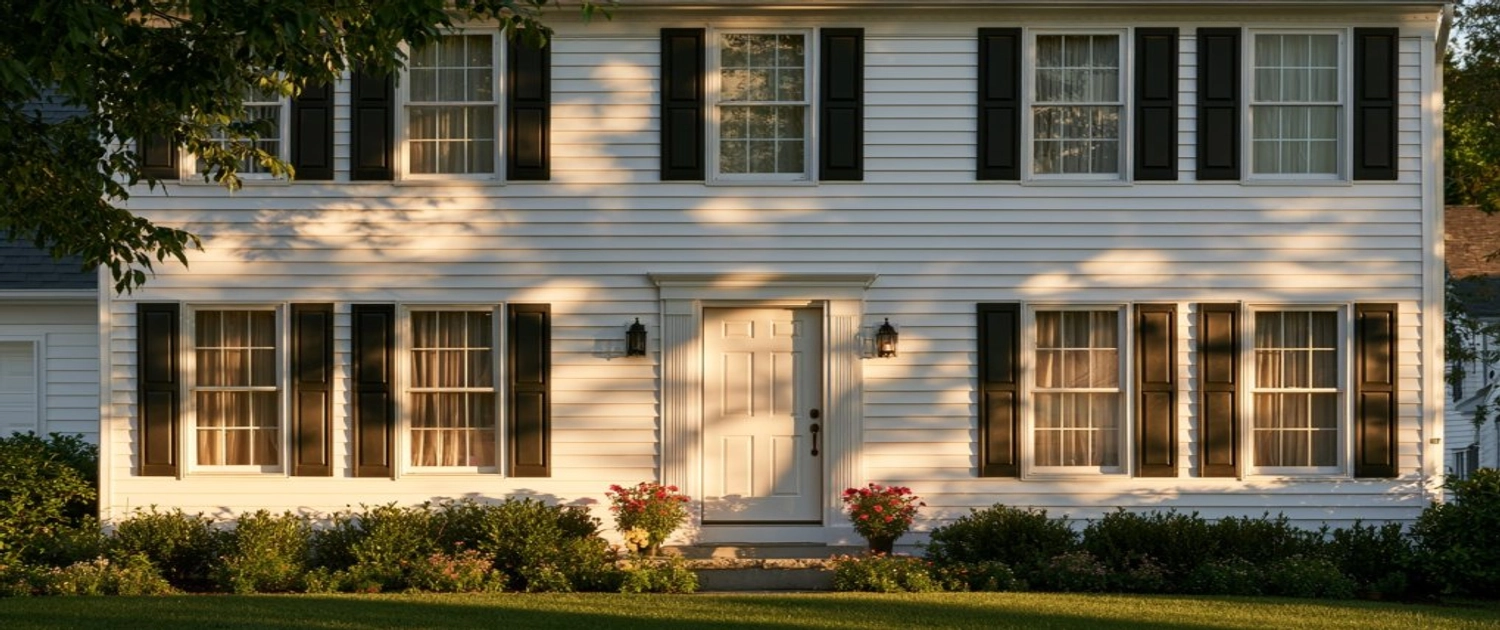
Vinyl siding on a Colorado home lasts 20 to 40 years in most cases, and well-installed premium panels on a shaded wall reach 40 to 50 years. Hail, intense UV at altitude, and south- and west-facing sun exposure push that number toward the low end on the walls that take the worst of Colorado's weather.
How Long Does Vinyl Siding Last on a Colorado Home?
Three things decide the real number: the panel quality, the installation, and what side of the house you're standing on. A national spec sheet assumes moderate weather. The Front Range does not offer moderate weather.
| Situation | Colorado lifespan |
|---|---|
| South- or west-facing wall, full sun, standard installation | 15 to 25 years |
| Typical Front Range installation, mixed exposure | 20 to 40 years |
| North-facing or shaded wall, quality panel and installation | 30 to 50 years |
| Any wall after a direct hail hit | Repair or replace on the affected elevation now |
Age alone does not decide whether siding needs to come off. A wall that still flexes, locks tight, and sheds water is doing its job at 30 years. A five-year-old wall with cracked panels from last spring's hailstorm is not.
Does Front Range Hail Damage Vinyl Siding?
Yes, and Colorado's Front Range sees more hail than almost anywhere else in the country. Hail season runs from mid-April through mid-September, with the heaviest activity clustering in the season's first ten weeks. A direct hit cracks, punctures, or knocks divots into vinyl panels, and repeated small impacts over several storms leave a wall brittle years before its expected lifespan runs out.
Impact damage concentrates on the side of the house that faces the storm track: the west or northwest elevation on most Front Range homes. Walk that side first after any hailstorm and look for cracked, dented, or missing panels near the bottom edge and around window trim.
How Does UV at 5,280 Feet Affect Siding Lifespan?
Denver sits about a mile above sea level, and ultraviolet exposure increases with elevation. Add roughly 300 days of sun a year and vinyl siding on south- and west-facing walls chalks, fades, and loses flexibility faster than the same product installed at sea level. Dark-colored panels run hotter in direct sun and show that wear first, sometimes drooping or warping in the hottest stretch of July and August.
Does Freeze-Thaw Cycling Crack Vinyl Siding?
Front Range winters swing above and below freezing in the same week, sometimes the same day. Vinyl siding that has already gone brittle from sun exposure cracks under that repeated expansion and contraction, especially at fastener points and corners. Panels that are still flexible tolerate the swing without visible damage.
Can Colorado Wind Pull Siding Off a House?
Yes. Boulder, Colorado Springs, and the foothills communities see downslope wind events that regularly exceed 60 miles per hour, and gusts that strong test every nail hem and locking joint on a wall. Panels installed with fasteners driven too tight, or too few fasteners per course, blow loose or come off entirely in a wind event that a correctly installed wall shrugs off.
What's the Difference Between Cosmetic and Functional Hail Damage on Siding?
Cosmetic damage is a dent or a scuff that does not break the panel's seal against water. Functional damage is a crack, puncture, or separated seam that lets wind-driven rain behind the cladding. Colorado insurers evaluate the two differently, and this distinction is the center of most siding hail disputes. A cracked panel with an open seam is a covered repair item. A faded but intact panel next to it is not.
Is Impact-Resistant Siding Worth It Before Hail Season?
For a wall that faces the prevailing storm track, impact-rated vinyl and fiber cement panels hold up to hail that would crack a standard-grade product. The upfront cost runs higher, and the payoff shows up the first time a hailstorm skips your house instead of adding it to the claims list.
Does a Class 4 Impact-Rated Roof or Siding Lower a Colorado Insurance Premium?
Most Colorado carriers apply a premium credit for a Class 4 impact-rated roof, and the same logic extends to impact-rated siding and windows on some policies. Ask your carrier directly which upgrades qualify and how much the credit is worth on your policy, since the discount amount and the documentation required both vary by company.
What Does a Colorado Homeowners Policy Cover for Storm-Damaged Siding?
Most Colorado homeowners policies cover wind and hail damage to siding as part of standard dwelling coverage, subject to your deductible. Read your declarations page for a separate wind and hail deductible, which on many Front Range policies runs as a percentage of the dwelling coverage rather than a flat dollar figure. That percentage deductible on a hail claim runs into the thousands on an average Denver metro home, which is why a full-elevation siding claim only makes financial sense once damage clears that threshold.
Do Denver, Aurora, and Colorado Springs Require a Permit for Siding Replacement?
Rules differ whether the home sits in Denver, Aurora, or Colorado Springs.
Permit rules differ by city and county. Denver requires a permit for siding replacement in most cases; smaller repair jobs sometimes qualify for an exemption. Aurora, Colorado Springs, and the surrounding counties each set their own thresholds. Check with your city or county building department before work starts, and ask your contractor to confirm the permit is pulled in their name or yours.
Does Your HOA Control Siding Color and Material?
Many Front Range HOAs, including large master-planned communities, restrict siding color, material, and even the specific manufacturer product line. Get architectural review committee approval before ordering panels, and check the Denver HOA rules and fees guide for what a typical review process expects. Replacing siding without sign-off is a common source of HOA violation notices that surface at the worst possible time, right before a sale.
How Much Does Vinyl Siding Replacement Cost on a Front Range Home?
Costs shift across the Denver metro area based on local labor rates, so a quote from a Highlands Ranch contractor and one from Colorado Springs can legitimately differ for the same job.
Cost tracks wall area, the number of stories, trim complexity, and how much of the old siding and sheathing needs to come off. Get a written scope that separates material, labor, and any sheathing repair as a documented allowance rather than a single bundled number, and get at least two quotes before signing.
For a wider look at how siding stacks up against a roof or window replacement on resale, see roof, siding, or windows: which exterior upgrade actually returns the most.
Vinyl Versus Fiber Cement: Which Holds Up Better in Colorado?
| Material | Colorado performance |
|---|---|
| Standard vinyl | Budget-friendly, low upkeep; softens and chalks fastest on south and west walls |
| Insulated vinyl | Stiffer panel, better hail resistance than standard vinyl |
| Fiber cement | Noncombustible, holds paint, resists hail better than vinyl, higher installed cost |
Modern Construction Group is one resource for pricing James Hardie fiber cement siding and window installation against a vinyl quote if you're weighing the two before listing or after a hail claim. Modern Construction Group
When Should Colorado Siding Be Repaired Instead of Replaced?
Run a three-layer check: is the panel still flexible and intact, is the installation still allowing normal movement, and is the wall behind it dry. If only one layer fails in one spot, repair that section. If two or three layers fail, or the damage spans multiple elevations after a hailstorm, full replacement is the more sound choice financially. When buckling or staining clusters around windows, get the siding and window flashing evaluated together, since they form one water-management detail. raises Construction and Window Installation covers both scopes, which matters when the diagnosis crosses between the two systems.
Does Siding Condition Become an Inspection Objection When Selling in Colorado?
Yes. A Colorado inspector notes cracked, missing, or storm-damaged siding on the inspection report, and buyers routinely turn that into a repair request or a price reduction during the objection period. Addressing visible siding damage before listing, or pricing it into the number from the start, keeps the negotiation from happening on the buyer's terms. A Smart Pricing Report from the Kenna Real Estate Group shows how condition items like siding actually move your number in the current Front Range market, alongside a broader look at preparing and adding value before selling.
How Do I Document a Hail Claim for a Future Buyer?
Keep the adjuster's report, the contractor's invoice, the product warranty, and dated before-and-after photos in one folder. A documented repair with a transferable warranty reads very differently to a buyer's agent than an unexplained patch of newer siding with no paperwork behind it.
Where to go next
- Preparing and adding value before selling
- Pricing your Colorado home to sell (Smart Pricing Report)
- Denver HOA rules and fees guide
- Colorado market reports
- Search every home for sale in Colorado
- Kenna Real Estate Group agents
Talk to the Kenna Real Estate Group
Whether you're pricing a hail-damaged wall into a listing or checking siding condition before you buy, the Kenna Real Estate Group walks Front Range sellers and buyers through exactly what a repair or a full replacement does to the number. Call or text 303-955-4220. A live person answers. Not a robot, not a phone tree. Search every home for sale in Colorado.
Homes for sale that match this post
Guides
Questions about any home in Colorado? Call or text 303-955-4220. A live person answers.