New - 4 Hours Ago
.jpg)


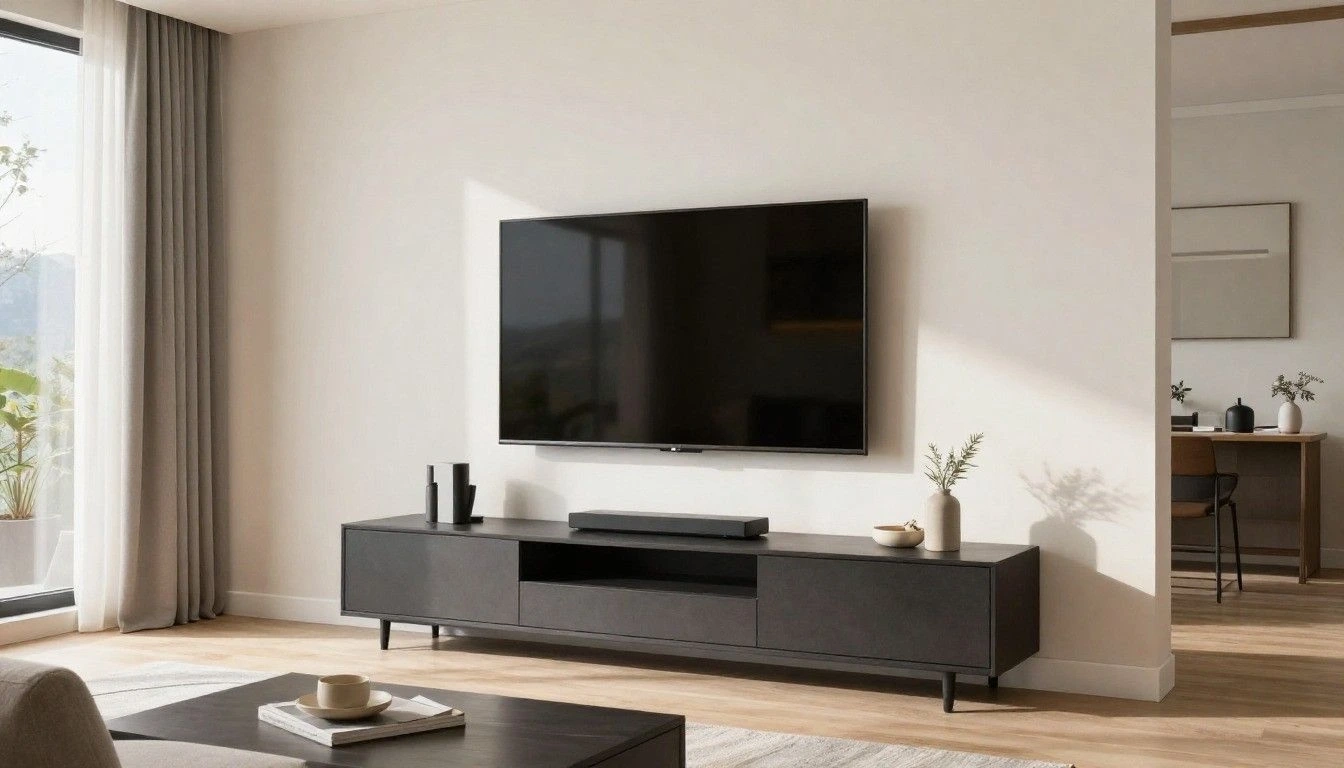
A modular entertainment center gives a Front Range living room a finished TV wall without the cost or permanence of custom built-ins, and it moves with you if you sell. The fix is proportion and clutter control, not carpentry.
Measure the television's actual width before shopping for anything around it, then check what the furniture below it will carry. Remotes, controllers, power strips and streaming boxes make a room look unsettled when they sit out in the open or spread across mismatched pieces. A modular entertainment center gives the TV a wider visual base and keeps every device in one coordinated run rather than stacked on a stand that was sized for a smaller screen.
Leave breathing room around the arrangement. A low run of storage with open wall above it reads calmer in a Denver bungalow or a Highlands Ranch two-story than tall towers pushed into both corners. Add decoration only after the proportions work: one framed piece, a larger lamp, or a plant finishes the wall once the furniture gives the screen a believable place to sit.
Custom built-ins follow an uneven wall, work around a fireplace, and match existing woodwork, which suits an owner planning to stay in a Front Range home for a decade or more. Built-ins also stay with the house at resale and cost real money to change if a future owner wants a different layout. A modular entertainment center or a set of modular cabinets gives a Denver, Aurora or Colorado Springs homeowner the same finished look with the freedom to rearrange, split pieces between rooms, or take the whole setup when they move. For a starter home or a property expected to sell within five to seven years, modular pieces are the lower-risk choice.
Colorado's low indoor humidity, commonly under 30% during heating season, dries out solid wood joints faster than a coastal climate does. Furniture built with real wood joinery and quality veneer over MDF holds up better than particleboard pieces, which can loosen at the joints and develop visible gaps within a few Front Range winters. A basic humidifier near a wood entertainment center in the driest months protects the investment the same way it protects hardwood flooring.
Walk the paths you use daily: sofa to TV, entry to hallway, the route to a patio door, and clearance near floor vents or windows. Keep furniture out of those lines. A lower, coordinated base gives the eye a quieter line from the entry than mismatched heights, and tall side units need real wall width and ceiling height or they crowd the walkway around the screen. In many newer Front Range floor plans with an open kitchen-to-living layout, the TV wall sits along the main sightline from the front door, so proportion here affects how the whole main level reads.
A television setup should show that a room has space for media equipment without looking like storage. Wires, routers, consoles and stacks of remotes catch a buyer's eye before any decorating choice does. Closed cabinet doors reduce that visual noise, provided the unit is not packed so tightly that ventilation for a receiver or router suffers. Confirm cable pass-throughs and ventilation needs against the manufacturer's specs before assuming a cabinet handles both.
For listing photos, leave enough on view to explain how the room functions: a neatly placed remote or a small stack of games reads as lived-in and cared for. A wall stripped completely bare photographs as empty rather than finished, and Front Range buyers scrolling listings respond better to a room that looks ready to use.
Open shelving shows off decor and a curated stack of books or media, but it also shows every cable, controller and dust bunny behind the TV. Closed cabinets hide that clutter completely and photograph cleaner for listing photos, which matters more in a smaller Denver condo or a starter home in Aurora where every square foot of the living room shows in wide-angle shots. A mix works well in most Front Range living rooms: closed cabinets low for equipment, one or two open shelves higher up for a plant or a framed piece.
A TV wall does not need to match every other piece of furniture in the room, but the finish and tone should relate to the flooring and trim already in place. A dark walnut modular unit reads heavy against light oak Front Range flooring common in newer construction, while a lighter oak or white oak finish sits better in that pairing. If you are also repainting or replacing flooring before a sale, choose furniture finish last so it matches whatever the rest of the room ends up being, rather than building the room around furniture bought first.
An uneven wall, a fireplace that needs flanking storage, or existing millwork elsewhere in a Highlands Ranch or Cherry Creek home can make a custom built-in the more sensible choice, especially for an owner who plans to stay put for years and wants integrated lighting or a specific architectural detail. The decision comes down to how long you expect to stay, how much you want to invest in something that does not move with you, and whether the wall itself has quirks that off-the-shelf modular furniture cannot solve as cleanly.
Buyers respond to proportion and a clutter-free wall more than to whether the storage is custom or modular. A clean modular setup photographs and shows just as well as built-ins for most Front Range price points, and it gives the next owner flexibility a built-in wall does not. If you are weighing this against other pre-listing projects, the Preparing and Adding Value Before Selling guide covers which upgrades actually move a buyer's decision and which ones are cosmetic only.
The Kenna Real Estate Group walks Front Range sellers through exactly which living room fixes matter before listing photos go live and which ones a buyer will happily change themselves. Call or text 303-955-4220. A live person answers. Not a robot, not a phone tree. Looking for your next home instead? Search every home for sale in Colorado.
Yes, commonly. Modular furniture commonly runs a few hundred to around two thousand dollars, while custom built-ins in a Front Range home commonly run several thousand dollars once carpentry and finishing are included.
They are not a proven driver of a faster sale on their own. A clean, proportional TV wall matters more to buyers than whether the storage is custom or modular.
Yes. Most modular pieces disassemble or separate into sections, which makes them easier to move than built-ins if you relocate within the Front Range or out of state.
A furniture base roughly equal to or slightly wider than the television, with clear wall space on either side, reads as proportional in most standard-sized living rooms.
Check the router manufacturer's placement guidance before closing it behind cabinet doors; some routers need open airflow or a specific orientation to maintain signal strength.
Low indoor humidity during heating season can loosen wood joints over time. Solid wood joinery and quality veneer hold up better than particleboard in a dry Colorado home.
No. A completely bare wall can photograph as empty. Leave a few neatly placed items so the room reads as functional and cared for.
Confirm delivery route width through your front door and hallways, weight capacity if the TV sits on the unit, and clearance from any floor vents or outlets.