.jpg)


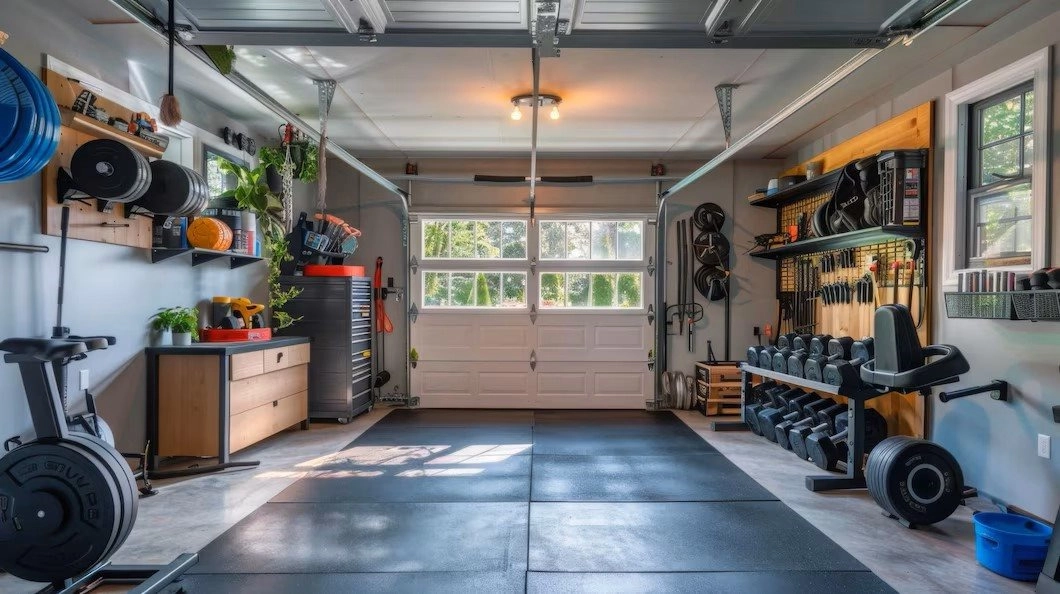
Eco-friendly garage cabinets need to survive a wider temperature range in Colorado than almost anywhere else in the country: a Front Range garage swings from single digits in a January cold snap to over 100 degrees on a July afternoon, and that range tests materials that perform fine in a milder climate. Sustainable does not have to mean fragile, but the material choice matters more here than the marketing copy on most garage cabinet websites accounts for.
Why Colorado garages are a tough environment
An attached garage on the Front Range swings 40 to 60 degrees between winter lows and summer highs in most cases, and a detached garage swings even further since it has no shared wall with a heated home to buffer the temperature. That daily and seasonal cycling stresses adhesives, laminates, and wood joints far more than a climate-controlled interior space, and it is the main reason garage cabinets fail years before comparable kitchen or closet cabinetry in the same house.
What eco-friendly garage cabinetry means
Eco-friendly garage cabinets use recycled-content polymer panels, FSC-certified plywood, or low-VOC finishes and adhesives as standard, instead of standard particleboard and high-VOC laminate. Recycled polymer, made from post-consumer plastic in most product lines, resists moisture and temperature swings better than any wood-based product and does not off-gas the way some laminate finishes do in a closed, unventilated garage.
Material choice for Colorado's climate
Powder-coated steel and recycled polymer both handle Colorado's temperature swings without warping, cracking, or delaminating, making them the two strongest choices for an unheated or minimally insulated garage. Wood cabinetry, even FSC-certified wood built with sustainability in mind, needs a heated or well-insulated garage to perform reliably, since Colorado's dry air combined with temperature swings shrinks and stresses wood joints faster than in a stable indoor environment. A garage that stays reasonably insulated and close to the home's interior temperature is the one place solid wood garage cabinetry makes sense in this climate.
Permits and HOA review
Installing garage storage cabinets does not require a permit in Denver or the surrounding Front Range counties, since it is not structural, electrical, or plumbing work. An HOA does not review interior garage storage in most cases unless the association's covenants specifically restrict what is visible through a garage window or an open door during daytime hours, which some higher-end Front Range communities do include in their architectural guidelines.
Anchoring cabinets against freeze-thaw ground movement
A garage slab on Front Range expansive soil can shift slightly with seasonal freeze-thaw cycles, and tall garage cabinets anchored only to the slab rather than into wall studs can lean or shift over several years as the floor moves. Anchoring cabinetry into wall studs, not just the floor, keeps it stable regardless of minor slab movement and is a standard practice any experienced Front Range installer should follow without being asked.
Cost of eco-friendly garage cabinetry
Recycled polymer or powder-coated steel garage cabinets installed run $150 to $350 per linear foot on the Front Range, comparable to or slightly above standard particleboard garage cabinetry, with the added durability offsetting the higher upfront cost over the cabinet's lifespan. A full garage storage wall for a two-car garage runs $3,000 to $8,000 in most cases, depending on cabinet height, countertop material, and how much of the wall gets covered.
Resale value of garage storage
A finished, organized garage with built-in storage consistently ranks as a feature buyers notice at showings, particularly in Front Range suburbs where the garage doubles as a workshop, gear storage space for outdoor recreation, or overflow storage beyond what the home's closets provide. A $350,000 to $500,000 home with a clean, organized garage stands out against comparable listings with a cluttered or unfinished garage, and buyers at every price band read organized garage storage as a signal that the rest of the home has been well maintained.
Hail season and garage storage
Colorado's hail season runs from late spring through late summer, and vehicles parked in the driveway during a storm because the garage is too cluttered to fit them face real damage risk each season. Garage storage cabinetry that keeps the floor clear enough to park both vehicles inside during hail season is a practical benefit beyond organization, and it is worth designing the layout around that goal specifically rather than maximizing storage at the expense of parking space.
Garage-to-workshop conversions
A Front Range homeowner converting part of a garage into a workshop or hobby space benefits from the same material logic: recycled polymer or steel cabinetry handles the space's temperature swings better than wood, and low-VOC finishes matter more in a workshop where the space sees extended use with the door closed. Storage built for a workshop conversion should stay separate from any structural or electrical changes the conversion requires, since those trigger their own permit requirements independent of the cabinetry itself.
Disclosure and what inspectors check
Garage storage cabinetry does not need special disclosure on Colorado's Seller's Property Disclosure form unless it involved electrical work, such as adding outlets or lighting tied into a new circuit. A home inspector does not evaluate garage cabinetry as part of a standard inspection in most cases, so it falls outside the inspection objection deadline unless it is attached in a way that creates a hazard, such as a heavy upper cabinet not properly anchored to studs.
Choosing between attached and detached garage installations
An attached garage stays closer to the home's interior temperature because it shares at least one wall with heated living space, which widens the range of materials that perform well inside it, including some wood cabinetry in a well-insulated attached garage. A detached garage, common on larger Front Range lots and in older neighborhoods with alley access, swings further in both directions and favors recycled polymer or powder-coated steel almost without exception, since there is no adjoining heated wall to moderate the extremes.
What to ask an installer before signing
Ask specifically what the cabinet panels are made from, whether the finish is rated for an unheated space, and how the installer plans to anchor tall units against Front Range slab movement. An installer with experience on the Front Range answers these questions without hesitation and can point to installations in similar garages that have held up for several years; an installer unfamiliar with Colorado's specific combination of dry air, UV exposure, and freeze-thaw cycling skips over them until a callback.
Where to go next
- Preparing and adding value before selling
- How to sell a house in Colorado
- How wide is a 3 car garage? Dimensions, planning, and design
- Does that big shop actually add value to a Colorado acreage property
- Top 10 home renovations that increase property value
- Denver ADU, zoning, and historic district guide
- Search every home for sale in Colorado
Talk to the Kenna Real Estate Group
The Kenna Real Estate Group knows which garage upgrades buyers notice at a Front Range showing and which ones matter most before listing your home. Call or text 303-955-4220. A live person answers. Not a robot, not a phone tree. Ready to look at homes instead? Search every home for sale in Colorado.
Homes for sale that match this post
- Homes with 2 Car Garage in Denver
- Homes with Gourmet Kitchen in Denver
- HOA Rules and Fees Guide in Denver
- All homes for sale in Denver
Guides
Questions about any home in Colorado? Call or text 303-955-4220. A live person answers.