.jpg)


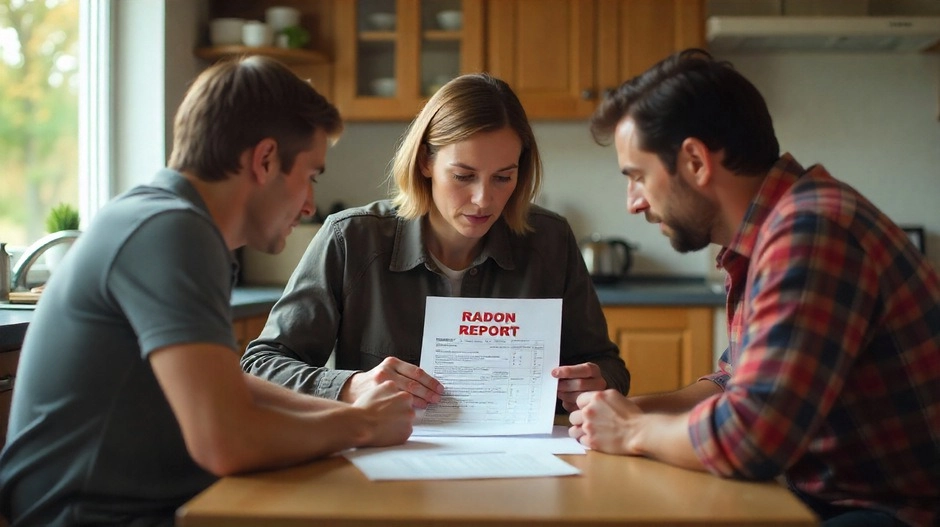
If you spend any time looking at homes around Denver, radon is going to come up. It might be a line in the contract, a comment from the inspector, or a fan you notice on the side of the house with a white PVC pipe running up the siding. For a lot of buyers, that’s the moment the Googling starts—lung cancer statistics, EPA charts, and maps that show most of Colorado shaded in red. It can feel like one more thing to worry about in an already stressful process.
The reality along the Front Range is simpler and a lot less dramatic: radon is common here, it’s a real health consideration, and it’s also one of the most predictable and fixable issues you’ll run into as a homeowner. In metro Denver, installing or inheriting a radon mitigation system is about as routine as replacing a furnace. Once you understand how testing works, what mitigation actually looks like, and how it’s handled in a typical buyer inspection, you can treat radon as a line item to manage—not a reason to walk away from a home you otherwise love.
Is Radon Really That Common in Denver Homes?
Radon is a naturally occurring radioactive gas that comes from the breakdown of uranium in soil and rock. Colorado’s geology is rich in uranium-bearing and granite-based formations, which means the gas is constantly moving up through the ground. When it finds a home with little gaps—hairline foundation cracks, the cold joint around a basement slab, a sump pit, or the dirt floor of an older crawlspace—it can slip inside and build up in the air you breathe.
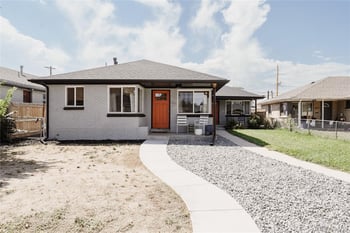
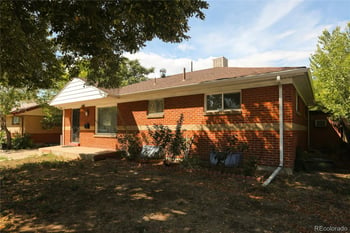
State and local health agencies estimate that roughly half of Colorado homes test above the EPA’s recommended action level of 4.0 pCi/L, and Denver is officially classified as a high-potential “Zone 1” area for radon. That lines up with what we see on inspections: it’s not unusual for a perfectly nice brick ranch in Lakewood, a tri-level in Littleton, or a newer two-story in southeast Denver to come back with elevated readings in the basement or garden level.
For more background, the Colorado Department of Public Health & Environment’s Radon Program and the Denver Department of Public Health & Environment both treat radon as an expected part of homeownership here—not a rare defect.
Why Radon Is a Health Concern (Without the Panic)
Outdoors, radon disperses quickly and isn’t a problem. It becomes a concern when it collects in enclosed spaces over time, especially in lower levels where cooler air settles. When you breathe that air day in and day out, tiny radioactive particles can damage lung tissue. The EPA and U.S. Surgeon General classify radon as the second leading cause of lung cancer in the United States, and the number one cause among non-smokers.
A few key points for buyers:
- Radon risk is based on long-term exposure, not a weekend visit or a single showing.
- Smokers exposed to high radon levels carry a much higher lung cancer risk than non-smokers.
- Children and people who spend a lot of time in lower-level spaces may be more vulnerable.
- There are no immediate symptoms—no smell, taste, or irritation—so testing is the only way to know what you’re dealing with.
The goal isn’t to scare you into a decision; it’s to put radon in the right category in your mind: a serious, invisible health risk that’s also very measurable and very fixable.
How Radon Testing Works During a Denver Home Purchase
In most Denver-area transactions, radon testing is folded right into the inspection period. Your inspector or a dedicated radon professional will place one or more devices—either charcoal canisters or electronic monitors—on the lowest level of the home that could reasonably be used as living space. That might be a finished basement, a family room in a garden-level, or even a lower-level bedroom.
Short-Term Radon Tests (What You’ll See During Inspection)
- Run for about 2–7 days, often over a long weekend.
- Require the home to be in “closed-house” conditions (windows and exterior doors kept mostly shut except for normal entry and exit).
- Provide quick results so you can stay on schedule with contract deadlines.
- Are the standard choice for real estate deals across Denver and the Front Range.
Long-Term Radon Tests
- Run for 90 days or longer to give a more accurate year-round average.
- Are better for homeowners monitoring an existing system or checking seasonal variation.
- Are rarely used during a contract period because of timing, but can be a smart follow-up if you plan to live in the home for decades.
Typical Radon Numbers You’ll See in Denver
In metro Denver, it’s common to see readings anywhere from the low 3s to the low teens, depending on the home, the soil, and the season. The EPA recommends mitigation at 4.0 pCi/L and above, and many buyers will ask for mitigation to be installed if results come back at or over that number. Some health-conscious buyers even target lower numbers as their comfort zone with kids or home offices in the basement.
Colorado health officials recommend that all homes be tested periodically. You can find additional guidance and even low-cost or free test kit programs through the CDPHE testing resource page and EPA radon information.
What Radon Mitigation Looks Like in a Typical Denver Home
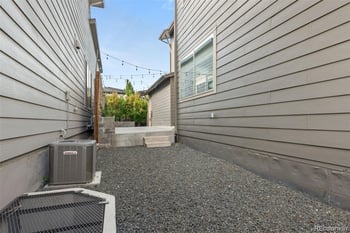
Most buyers are surprised by how straightforward a radon system really is. When you see one in person, it usually looks like a clean run of PVC pipe coming up from the basement or crawlspace, connected to a quiet fan that pulls air from under the slab and vents it safely above the roofline.
Common Mitigation Methods
- Active sub-slab depressurization – the most common system for Denver basements and garden levels; a fan draws radon-laden air from beneath the slab and exhausts it outside.
- Crawlspace encapsulation – sealing and covering exposed soil with a heavy membrane, then venting air from beneath that barrier.
- Sealing obvious openings – caulking foundation cracks, the tops of block walls, gaps around plumbing and sump pits to cut down on entry points.
- Ventilation improvements – occasionally used as a supplement in tricky spaces, though venting alone isn’t usually enough.
For a typical single-family home in the Denver metro area, most standard mitigation systems land in roughly the low-thousands of dollars, with more complex or large homes costing more. Installers can usually complete the work in a day, and many systems include a post-mitigation test to confirm that levels dropped to the target range.
Once the system is in place, ongoing maintenance is minimal—mostly just keeping an eye on the pressure gauge and occasionally listening for the low hum of the fan. Many Denver homeowners go years without thinking about their system beyond a quick retest every so often.
Radon in Older vs. Newer Denver Homes
One of the biggest myths is that only old, drafty houses have radon issues. In reality, both older and newer homes along the Front Range can test high—the path the gas takes into the structure matters more than the year it was built.
Older Homes
- 60s and 70s brick ranches with full basements are common in many Denver neighborhoods and nearby suburbs.
- Foundations may have more hairline cracks and joints where radon can find a path inside.
- Finished basements that became family rooms, playrooms, or guest suites often see the highest readings simply because people use them more.
Newer Homes
- Many newer builds include radon-resistant construction features, like passive vent piping or roughed-in suction points.
- Even with those features, the EPA and state of Colorado still recommend testing—passive systems sometimes need to be converted to active (with a fan) to bring levels consistently below 4.0 pCi/L.
- Energy-efficient homes tend to be tighter, which is great for comfort and utility bills but can make radon accumulation more likely without a dedicated system.
The short version: no home in the Denver area should be considered automatically “radon-proof” based solely on age or style. Testing is always step one.
Who Usually Pays for Radon Mitigation in Denver?
Every transaction is negotiable, but there are some real-world patterns that show up over and over again in Denver contracts:
- Buyers typically order and pay for the radon test as part of their inspection suite.
- If results come back at or above 4.0 pCi/L, buyers often request that the seller install a mitigation system or provide a credit at closing.
- In competitive situations, some buyers will soften the request to a credit rather than insisting on a specific contractor or system layout.
- Sellers who’ve already installed mitigation often highlight it as a selling point, especially if they have recent post-mitigation test results handy.
Colorado’s newer radon disclosure rules also require that sellers share any known radon test results and mitigation history, which helps everyone start from a more transparent place during negotiations.
Does Radon Hurt or Help Your Resale Value Here?
A high radon test with no mitigation plan can absolutely spook a buyer—especially someone relocating from out of state who isn’t used to seeing radon clauses. On the flip side, a home with a clean, professionally installed system and documented low post-mitigation levels can actually feel safer and more “buttoned up” to many buyers.
Over the long run, buyers in Denver are getting more familiar with radon every year. Instead of quietly hoping it won’t come up, it usually works best to lean into it: test, mitigate if needed, keep the paperwork, and let your future buyer see that you handled the issue proactively.
Radon Myths Denver Buyers Should Ignore
“Radon Only Happens in Old or Neglected Homes”
Not true. Elevated radon shows up in older basements, brand-new builds, townhomes, and everything in between. Soil and foundation paths matter more than age.
“You Can Smell or Feel Radon”
Radon is completely invisible, odorless, and tasteless. If there’s one takeaway to remember, it’s this: the only way to know your levels is to test.
“Mitigation Is Complicated and Not Worth It”
Most standard systems are straightforward for an experienced installer, and the work is usually done in a day. For what you spend, you’re buying years of peace of mind for anyone using the home’s lower levels.
“A Home With Radon Isn’t Safe to Buy”
In Denver, walking away from every home that tests above 4.0 pCi/L would eliminate a huge portion of the market. The more realistic approach is to test, negotiate a mitigation plan, and verify the results—all of which are well-established steps here.
Indoor Air Quality Beyond Radon
Buyers who care about radon usually care about overall indoor air quality too. While you’re already in inspection mode, it can be smart to look at a few related items:
- Signs of moisture or mold in the basement or crawlspace.
- Condition and cleanliness of ductwork.
- Whether carbon monoxide detectors are installed and up to date.
- Ventilation in bathrooms, kitchens, and laundry rooms.
- Age and service history of the furnace and AC.
- Any air filtration or purification systems the home already has in place.
Put together, these pieces—radon, moisture control, ventilation, and filtration—tell a more complete story about how the home will feel to live in day after day, not just how it looks on photo day.
Radon Checklist for Denver Homebuyers
As you move through your search and inspection period, it helps to keep a simple radon checklist in mind:
- Plan on radon testing for any home you seriously consider in the Denver area.
- Ask your agent or inspector where the test devices will be placed and how long they’ll run.
- Review the results carefully and compare them to the EPA action level of 4.0 pCi/L.
- Work with your agent to request mitigation or a closing credit if levels are high.
- Confirm that any system is installed by a qualified professional and keep copies of all paperwork and post-mitigation tests.
- Retest every few years, or after major renovations, to make sure levels stay where you want them.
When you handle radon this way—deliberate, informed, and calm—it stops being a cloud hanging over your decision and becomes just another part of buying wisely in a high-altitude, granite-rich place like Denver.