New - Just Now
.jpg)


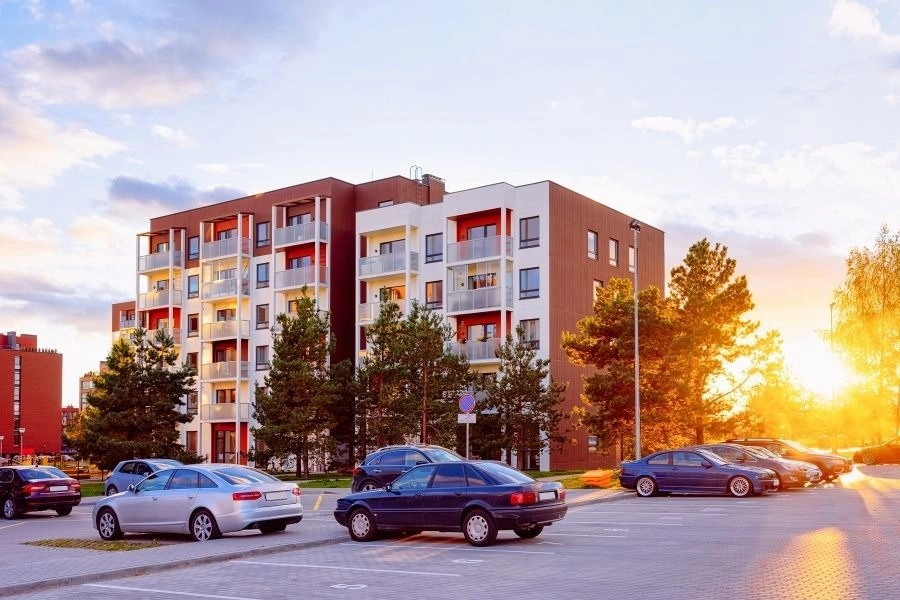
Crowded apartment parking gets fixed with three changes: cover the spots that matter most, number and assign what you have, and plan for a Colorado winter before the first snow falls. Property owners who make these changes keep residents longer and spend less on turnover.
A full carport or covered garage is the strongest fix, but it is also the most expensive. Metal awnings over a portion of the lot cost less and still protect residents from hail and heavy snow load, which matters more in Colorado than in most states. Hail season runs from spring through September along the Front Range, and an uncovered lot means residents deal with windshield and roof damage on their own vehicles every year.
If a full retrofit isn't in the budget, prioritize covering the spots closest to building entrances first. Residents notice which units get the better spots, and a fair, published rotation for covered parking reduces disputes more than an unofficial first-come system.
Front Range winters mean plowing, salting, and the mag chloride Colorado's cities and counties use on public roads, which tracks into private lots on tires. A lot that isn't cleared before the morning commute costs residents time and, over a winter, costs the property in resident complaints. Budget for a snow removal contract before November, not after the first storm, and rinse or seal asphalt in spring to offset the corrosion mag chloride causes over several winters.
A gated entry with a key fob or windshield sticker system cuts down on non-resident vehicles taking up space, which is one of the most common complaints in Front Range complexes near light rail stops and busy retail corridors. A live parking map through an app or a simple lot-status board helps residents find open spots faster during peak hours, particularly in larger complexes with more than one lot.
Not every complex needs every feature. A 40-unit building with one small lot rarely needs a full app-based system; numbered spots and a gate solve most of it. A 200-unit complex spread across several lots is where a live parking map and staffed access control start to pay for themselves in fewer resident calls to the front office.
A multi-level car lift or stacked parking system adds capacity without adding square footage, which is worth pricing out for older Denver-area complexes built before current parking ratios were common.
Xcel Energy offers rebate programs for multifamily property owners who install Level 2 EV charging stations, which can offset a meaningful share of installation cost. Before committing, survey current and prospective residents; EV charging pays for itself faster in complexes near job centers with a younger renter base than in complexes that skew toward long-term, lower-turnover residents.
Painting numbers on every space and assigning each unit a specific spot removes the daily first-come scramble entirely. Pair this with a simple vehicle registration system, plate number, make, model, and color, so staff can identify an unauthorized or abandoned vehicle quickly. This also speeds up towing when it's necessary, since Colorado requires private lots to post clear signage before towing a vehicle from a residential complex.
As of Denver's 2025 zoning change, the city no longer sets a minimum parking requirement for most new apartment construction near transit corridors. Our full breakdown of Denver's parking minimum repeal covers what it means for new development, existing buildings, and rents. Older buildings built under the previous rules have more parking than newer construction as a rule, which is worth checking if parking availability is a priority in your search.
Covered, secure, or reserved parking is one of the amenities Front Range renters ask about early, especially outside walkable core neighborhoods where a second car is closer to a necessity than a convenience. Our guide to how parking availability shapes home buying decisions covers the same dynamic on the ownership side, and it applies to rental property investors weighing which parking upgrades pay off fastest.
Condo and townhome complexes governed by an HOA or metro district layer their own parking rules on top of city ordinances: guest parking time limits, restrictions on commercial vehicles or RVs, and rules on where a portable basketball hoop or grill can sit near a parking area. Our guide to HOAs, metro districts, and taxes in the Denver suburbs explains how these overlapping rules affect buyers and renters alike.
Start with the property manager in writing, not just a hallway conversation, and reference the specific lease clause covering parking. If the complex has an active tenant association or resident portal, a documented pattern of complaints, not a single email, is what moves a property owner to act. Our guide on reducing parking problems at an apartment complex covers the process from both the resident and the property management side.
For Colorado rental property owners, parking upgrades pay off fastest in three situations: a complex with high turnover tied to parking complaints, a location where covered parking is genuinely rare nearby, and any property adding EV charging while Xcel Energy rebates are available. If you're weighing a parking upgrade against other capital improvements, our rental property improvement checklist walks through how to prioritize.
Parking expectations shift by city. Denver's core neighborhoods near light rail can support a lower parking ratio because more residents commute without a second car, while Aurora and Colorado Springs complexes further from transit need one to two spots per unit to stay competitive. Older buildings in Capitol Hill and other central Denver neighborhoods were built before current parking ratios existed, so a lower spot count there is common and already priced into rent. Property owners evaluating a portfolio across more than one Front Range city should budget parking upgrades city by city rather than applying one standard everywhere.
A single-family rental with a private driveway or attached garage rarely deals with the shared-lot disputes that come up in multifamily buildings, since the parking is tied to one unit instead of shared among many. Investors comparing a small multifamily purchase to a single-family rental should factor in the cost of fixing or maintaining shared parking as part of the total cost of ownership, not as an afterthought once residents start complaining.
Whether you own a Front Range rental property and want to know which parking upgrade pays off first, or you're renting and weighing how much parking matters in your next home search, the Kenna Real Estate Group can help you think it through. Call or text 303-955-4220. A live person answers. Not a robot, not a phone tree. Ready to compare properties? Search every home for sale in Colorado.
Questions about any home in Colorado? Call or text 303-955-4220. A live person answers.
Cover the highest-demand spots first, assign and number every space, add a gated entry or app-based lot map, and budget for snow and mag chloride cleanup before winter.
No. As of the city's 2025 zoning change, most new apartment construction near transit corridors is no longer subject to a minimum parking requirement, though older buildings built under the previous rules still have more parking.
Xcel Energy offers rebate programs for multifamily property owners installing Level 2 charging stations, which can offset a meaningful share of installation cost, though renter demand should be confirmed before committing.
Mag chloride used on Front Range roads tracks into lots on tires and accelerates asphalt wear over several winters, and an uncovered lot without a plowing contract in place before November leads to resident complaints during the first storm.
Colorado requires private lots to post clear signage about towing policy before a vehicle can legally be towed from a residential complex.
Covered, secure, or reserved parking is a common early question from Front Range renters, especially outside walkable core neighborhoods, and it can support higher rent where it's genuinely scarce nearby.
Document the issue in writing to the property manager, referencing the lease's parking clause, and build a documented pattern rather than relying on a single complaint.
Yes. Many Front Range condo and townhome communities layer HOA rules, such as guest parking time limits or restrictions on RVs and commercial vehicles, on top of city parking ordinances.