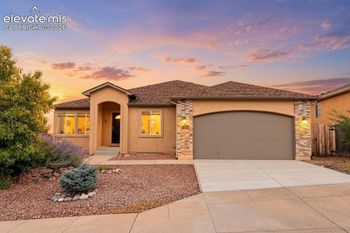
New - Just Now
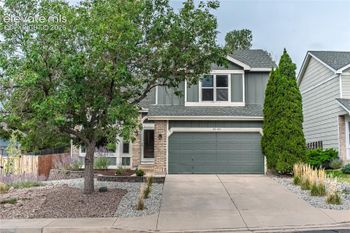
$495,000
Coming Soon
4
Beds
4
Baths
2677
Sqft
0.1326
Acres
3640 Birnamwood Dr, Colorado Springs, CO 80920
MLS#: 3165557
.jpg)



Colorado buyers in 2026 want a main-floor primary bedroom, a room that works as an office, a covered patio, a three-car garage, a finished basement with legal egress, a lot outside any metro district, solar panels the seller owns outright, a 240-volt outlet in the garage and a yard that does not need a sprinkler timer. That is the list the Kenna Real Estate Group reads in buyer requests and writes into offers across the Denver metro, Colorado Springs and Northern Colorado. This post explains why each item is on the list, what it costs to add, and which ones return money at resale.
The list is not national. It comes from Colorado conditions: 300 days of sun and hard UV at 5,280 feet, a hail season that runs May to September, expansive bentonite clay under most Front Range lots, radon in nearly every county, and property-tax bills that vary by thousands of dollars from one subdivision to the next because of metro districts. Buyers who have lived here one winter know all of this. Sellers who prepare for it sell faster. If you are buying, start with the Colorado home buyer's guide and search every home for sale in Colorado with these features as filters.
The largest group of move-up and move-down buyers on the Front Range is 55 and older. They are selling a two-story in Highlands Ranch, Centennial or Broomfield and asking for a ranch or a two-story with the primary bedroom and laundry on the main level. The Kenna Real Estate Group sees this request from buyers in their thirties too, because a main-floor bedroom doubles as a guest room, a parent's room or an office.
Ranch homes are scarce in most Denver metro neighborhoods built after 1990, so a true main-floor primary carries a premium over an otherwise identical two-story on the same street. If you are downsizing, the Denver metro downsizing guide covers ranch and patio homes by area, and the 55+ communities by area page lists the neighborhoods built around single-level living.
Remote and hybrid work stayed. Buyers commuting two or three days a week to downtown Denver, the Tech Center, Interlocken or Boulder still need a room with a door, a window and a hard-wired internet drop. A fourth bedroom on the main floor, a loft with a door added, or a finished basement room with an egress window all satisfy the request. A closet in a dining room does not.
Fiber matters here. Sellers who list the internet provider and speed in the MLS remarks answer the question before the showing.
An uncovered deck at 5,280 feet is unusable from noon to 5 p.m. for four months of the year. UV at this altitude fades composite decking and burns skin faster than at sea level, and afternoon thunderstorms roll off the foothills most summer days between 2 p.m. and 6 p.m. A covered patio or a deck with a solid roof turns the outdoor space into a room used from April through October. Buyers now ask for it by name, and a gas line for the grill and a ceiling fan add to the answer.
The third bay holds the skis, the bikes, the paddleboards, the snow blower and the second freezer. In Douglas County and Weld County subdivisions the three-car garage is standard on lots over 7,000 square feet, and the two-car versions of the same floor plan sit longer. In Denver's older neighborhoods (Platt Park, Berkeley, Park Hill) a detached two-car garage with alley access is the ceiling, and buyers accept that trade for the location. A 240-volt outlet in the garage is now on the same line of the wish list, covered below.
Most Front Range homes have a basement, and buyers count finished square footage below grade at a discount unless it has a legal egress window in every bedroom, a bathroom, and a radon mitigation system already installed. A basement finish without permits is a red flag on the seller's disclosure and an appraisal problem for FHA and VA buyers. The full breakdown of what buyers want below grade is in what Colorado homebuyers want in a finished basement.
A metropolitan district is a special taxing district that a developer forms to finance the streets, water lines and parks of a new subdivision. The district's debt is repaid through a mill levy added to every homeowner's property tax bill for decades. Two homes of the same price, one in a 1998 Centennial neighborhood with no district and one in a 2018 Parker subdivision with one, carry property tax bills thousands of dollars apart every year.
Buyers have learned to ask. The Kenna Real Estate Group pulls the county treasurer's tax detail and the district's mill levy on every home before writing an offer, and buyers now rank "no metro district" above square footage in many searches. Read how HOAs, metro districts and taxes affect Denver metro buyers for the county-by-county picture.
Colorado's sun makes rooftop solar produce well, and Xcel Energy net metering credits the surplus. But buyers distinguish sharply between panels the seller owns and panels under a 20-year lease or power purchase agreement. Owned panels transfer with the deed and add value. A lease transfers only if the buyer qualifies with the solar company and agrees to the remaining payments, and lenders treat the payment as debt. The Kenna Real Estate Group has watched leased systems cost sellers a buyer at inspection resolution. If you are selling with a lease, gather the contract, the production history and the buyout figure before listing.
Colorado is one of the top states for electric vehicle share of new car sales, and a buyer with an EV on order asks one question about the garage: is there a 240-volt, 50-amp circuit near the parking spot. Installing one costs $500 to $1,500 when the panel has capacity, and it is the cheapest item on this list. Homes with an older 100-amp panel need the panel upgrade first, which is a separate $2,500 to $5,000 line item that shows up in inspection negotiations either way.
Water is the long-term cost in every Front Range yard. Denver Water, Aurora Water, Castle Rock and the Northern Colorado utilities all price outdoor water above indoor use in summer tiers, and Colorado law bars an HOA from banning xeriscape. Buyers who have paid a $300 July water bill ask for drip-irrigated native beds, a small turf area or none, and a smart controller. Sellers who convert the front yard before listing spend $8 to $20 per square foot installed and remove a buyer objection. The xeriscaped homes buyer's guide shows what a finished conversion looks like in Denver metro listings.
Buyers here run heat for six months and air conditioning for three. They ask the age of the furnace and AC, whether the attic insulation was topped up, and whether the windows are double-pane. ENERGY STAR explains the mechanics of efficiency ratings for appliances and equipment, and Xcel Energy publishes rebate amounts for heat pumps and insulation each year. A 12-month Xcel usage history in the listing folder answers the question in one page. The Kenna Real Estate Group covered this in energy efficiency as a decision factor for Colorado buyers.
Sellers do not need to add everything. The table gives Front Range contractor ranges the Kenna Real Estate Group sees on invoices and estimates, and whether the item returns money at sale or only removes an objection.
| Feature | Front Range cost to add | What it does at resale |
|---|---|---|
| Home office (door, drop, lighting in an existing room) | $1,500 to $6,000 | Removes an objection; photographs well |
| Covered patio roof, 12 x 16 | $12,000 to $30,000 | Adds value; sells the backyard in photos |
| Egress window with well, per window | $4,000 to $8,000 | Makes a basement bedroom legal; adds a bedroom to the count |
| Finished basement, 1,000 sq ft, permitted | $50,000 to $90,000 | Partial return; full return only with egress and bath |
| Radon mitigation system | $1,000 to $2,500 | Removes a near-certain inspection request |
| Owned solar, 7 kW | $18,000 to $28,000 before incentives | Adds value only when owned and documented |
| 240-volt EV circuit in garage | $500 to $1,500 | Cheapest wish-list item; do it |
| Front-yard xeriscape, 1,000 sq ft | $8,000 to $20,000 | Lowers water bills; removes an objection |
| Class 4 impact-resistant roof | $18,000 to $35,000 on 2,500 sq ft | Insurance discount; required by some carriers on older roofs |
The roof line belongs on this list because hail decides it. Insurance carriers in Colorado ask the roof age on every quote, and a roof over 15 years old limits the buyer's carrier choices and raises the premium.
A buyer with a $650,000 budget in the south metro is choosing between a 2005 two-story in a metro district with everything on the list and a 1985 ranch in an older neighborhood with none of it and no district. The Kenna Real Estate Group runs both monthly payments including the real property tax and insurance. For financing, Mike Oswald, VP of Mortgage Lending at Rate, NMLS 261003, Equal Housing Lender, prices both scenarios for our buyers; you are free to use any lender. The Colorado home financing guide explains the loan options, and the how we help buyers page covers the offer strategy.
Buyers moving out of Colorado shop the same list in their new market. Buyers headed to the Southeast compare Front Range prices against houses for sale in Florence, where the covered patio and three-car garage cost far less to add and the basement does not exist.
Sellers with a limited budget before listing get the most from four items: the EV circuit, the radon system, the office conversion and a xeriscape or clean-up of the front yard. A pre-listing roof inspection with the date in the MLS remarks answers the hail question before it is asked. The preparing and adding value before selling page ranks the projects by return, and how modernizing your home attracts more buyers covers the cosmetic layer on top of it. Price the home with the Smart Pricing Report on the pricing your Colorado home page.
The Kenna Real Estate Group at Keller Williams DTC writes buyer offers and seller strategies across the Front Range every week, so we know which of these features buyers pay for in your neighborhood right now. Call or text 303-955-4220. A live person answers. Not a robot, not a phone tree. Or search every home for sale in Colorado and filter by the features on this list.
Questions about any home in Colorado? Call or text 303-955-4220. A live person answers.
A primary bedroom on the main floor. It leads requests from buyers over 55 across the Denver metro and from younger buyers who want a guest room or office on the main level.
Yes. The district adds its own mill levy on top of county, city and fire levies to repay subdivision infrastructure debt, and it stays on the bill for decades. Pull the county treasurer's tax detail for any home built after 2000 before you write an offer.
Only after reading the lease, the production history and the buyout figure. The lease transfers to you as a monthly obligation, and your lender counts it as debt. Owned panels transfer with the deed and add value.
$4,000 to $8,000 per window including the well and permit. It turns a basement room into a legal bedroom and adds to the bedroom count in the MLS.
On a home over $500,000 with an uncovered patio facing south or west, yes. Buyers use the covered space seven months a year and it photographs as an extra room. Budget $12,000 to $30,000 for a 12 by 16 roof.
In Douglas, Arapahoe and Weld County subdivisions, the three-car version of a floor plan sells faster and for more than the two-car version. In Denver's pre-1950 neighborhoods buyers accept a detached two-car garage for the location.
No. A drip-irrigated native landscape with a small turf area is a selling point because it cuts summer water bills, and Colorado law prevents an HOA from banning it. A dead lawn or bare rock with no plants does hurt.
$500 to $1,500 when the electrical panel has room. If the home still has a 100-amp panel, add $2,500 to $5,000 for the panel upgrade, which buyers ask for anyway.