New - 15 Mins Ago

.jpg)


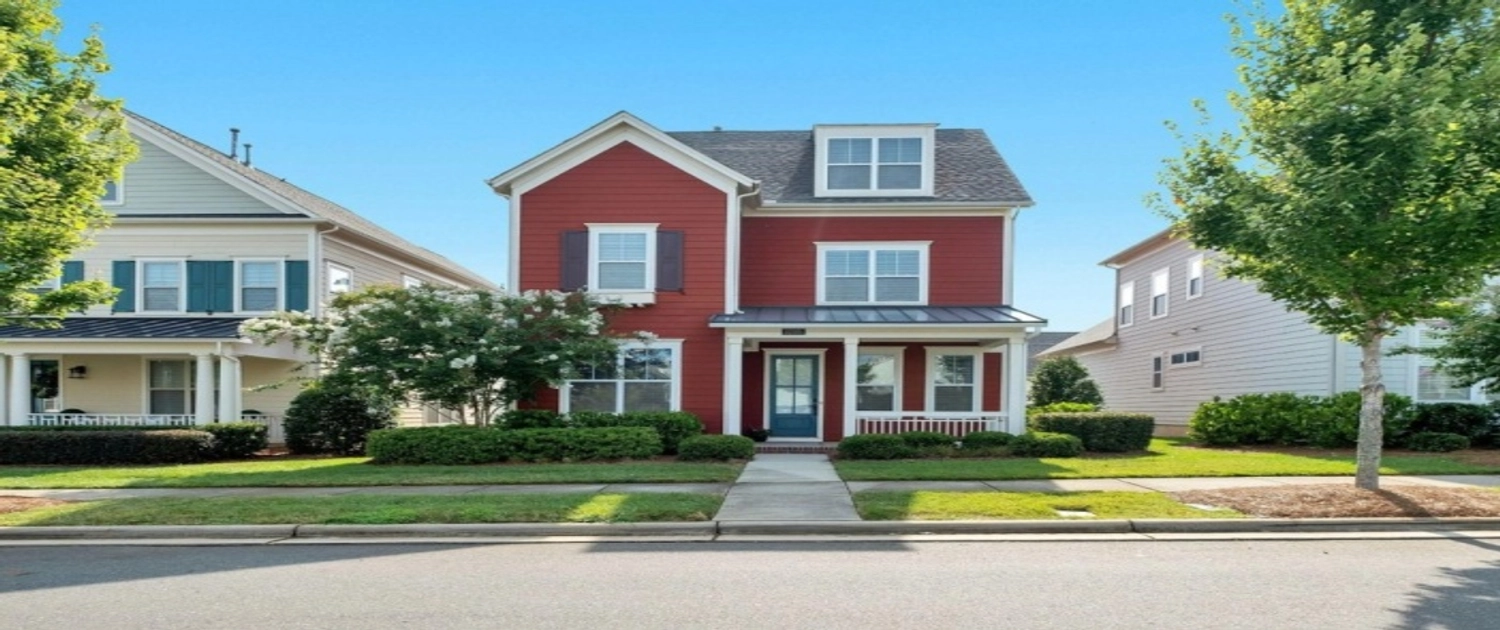
A Denver metro house priced $20,000 below the block is $20,000 cheaper on the day you close and $40,000 to $90,000 more expensive by the day you list, when the discount was hiding a clay sewer line, a Federal Pacific panel, a heaving foundation, a hail-beaten roof, a radon reading or a basement bedroom with no egress. On the Front Range those six items are the reason a house is cheap, and every one of them is testable for under $1,500 during the inspection period.
This post runs the two-house comparison with Colorado numbers: House A at $480,000 in good repair, House B at $460,000 with the problems the listing did not mention. The Denver fix and flip guide is the checklist the Kenna Real Estate Group uses on every candidate.
In the Denver metro, sellers and listing agents know what the neighborhood sells for. A house listed $20,000 under that number has a reason, and the reason lives behind the walls, under the slab or on the roof. Lane Forhetz, founder of Fast Lane Real Estate, puts it plainly: the sticker price means very little until you know what is hiding behind it, because outdated wiring and a cracked foundation do not show up in a walkthrough but show up fast once real work begins.
Cody Dover, co-founder of Little Rock Property Buyers, builds his purchases around the same rule: a discounted price only helps once you know exactly what you are buying into, and a cheap purchase only pays off if the house does not fight you all the way to resale. Both are describing the six Front Range items below.
House A and House B are both 1,400 square foot brick ranches built in 1962 in Harvey Park, Athmar Park or Hoffman Heights. Both resell at $600,000 after a $60,000 cosmetic rehab. House B is $20,000 cheaper, and its inspection period turns up what follows.
| Hidden item on House B | Why it shows up on the Front Range | Test during inspection | Colorado repair cost |
|---|---|---|---|
| Clay sewer line, offset and rooted | Pre-1970 clay tile lines crack under freeze-thaw and tree roots; Denver requires a licensed contractor and a permit to replace | Sewer scope, $150 to $300 | $8,000 to $20,000; add $5,000 to $15,000 for a street cut |
| Federal Pacific or Zinsco panel, 60-amp service | Insurers decline coverage; a Colorado-licensed electrician pulls the permit | Inspector opens the panel, no cost | $2,500 to $5,000 for a 200-amp panel; $12,000 to $30,000 if the rewire follows |
| Foundation movement on expansive bentonite clay | Front Range clay swells when wet and shrinks when dry; stair-step cracks and doors out of square are the tells | Structural engineer letter, $500 to $1,000 | $10,000 to $40,000 for piers and drainage |
| 18-year-old roof with hail bruising | Hail season is May to September; carriers write old roofs at actual cash value or decline them | Roofer's inspection, $0 to $250 | $15,000 to $30,000 for Class 4 impact-rated shingles |
| Radon above 4 pCi/L | Every Colorado county is EPA Zone 1; the resale buyer will test | 48-hour test, $150 to $250 | $1,200 to $2,500 for a mitigation system |
| Basement bedroom with no egress window | Without a code egress window and well, the appraiser and the MLS count it as a den, not a bedroom | Tape measure, no cost | $4,000 to $9,000 per window |
| Total added cost on House B | $800 to $1,800 in tests | $40,700 to $106,500 |
House B saved $20,000 on the purchase and added $40,000 to $100,000 in repairs, before the extra two to three months those trades take to permit, schedule and inspect. Under the 70% rule, the maximum offer on House B was $600,000 times 0.70 minus $60,000 cosmetic minus $70,000 hidden, or $290,000, not $460,000. The listing price was $170,000 too high for a flip, and the $20,000 discount made it look cheap.
A sewer scope is the cheapest $200 in Colorado investing. Denver, Aurora, Lakewood and Englewood all have blocks of clay tile and Orangeburg lines from the 1950s and 1960s, and the failures are invisible until the basement floor drain backs up. A replacement in the yard runs $8,000 to $20,000; when the break is under the street, the street cut, traffic control and the city permit add $5,000 to $15,000. Order the scope on day one of the inspection period and get the video, because a written summary is not proof.
A Federal Pacific Stab-Lok or Zinsco panel is a decline from most Colorado insurers, and a hard-money lender requires the policy to fund. A 200-amp panel swap with a Denver electrical permit runs $2,500 to $5,000. Aluminum branch wiring from the late 1960s and 1970s, or knob-and-tube in a pre-1940 house, turns that into a $12,000 to $30,000 rewire. Open the panel cover during the inspection; the label tells the story.
Colorado's Front Range sits on bentonite clay that swells with water and shrinks in drought. Stair-step cracks in brick, doors that stick in spring and a basement slab that has lifted at the middle are the signs, and a structural engineer's letter for $500 to $1,000 is the answer. Piers, a drainage regrade and downspout extensions run $10,000 to $40,000, the permit requires the engineer's stamp, and the resale buyer's inspector will ask for the letter. The Denver-area foundation cracks and fixes post shows what an engineer looks for.
A roof older than 15 years in Colorado is an insurance problem before it is a repair problem: carriers write it at actual cash value, add a wind and hail deductible, or decline it. Replacing 1,400 square feet with Class 4 impact-rated shingles runs $15,000 to $30,000 and earns a premium discount the resale buyer will see on their quote. The Colorado hail and roof costs post has the shingle-by-shingle comparison.
Every Colorado county is EPA radon Zone 1, and a resale buyer's inspector runs a 48-hour test on every basement. A reading above the EPA action level of 4 pCi/L gets a $1,200 to $2,500 mitigation system, and a flipper who installs it before listing removes an objection. A basement bedroom without a code egress window and well is a den on the appraisal, and a house marketed as three bedrooms that appraises as two loses the value of a bedroom. Egress windows run $4,000 to $9,000 each, more through a stone foundation. Read radon in Denver homes: testing and mitigation before the offer.
The Colorado Real Estate Commission contract sets an inspection objection deadline the parties negotiate, and an investor who accepts a 5-day window on a 1962 ranch has not left time for the sewer scope, the engineer and the roofer. Ask for 10 days and schedule the sewer scope, radon test, panel check, roof inspection and engineer walk in the first four. The Denver home buyer verification checklist lists every item and who performs it.
The hidden repairs on House B add two to three months to the schedule for permits, engineer stamps and inspections. At a 12% example hard-money rate on $350,000, plus property tax, vacant-property insurance, Xcel and water, the carry is $4,100 to $5,000 a month, so the delay costs $8,000 to $15,000 on top of the repairs. Price the unknowns before pricing the house: a flipper who budgets a 15% to 20% contingency and still walks from House B keeps the profit from the next three good deals.
House B wins when the tests come back clean and the discount is for a reason the market overprices: dated finishes, a smoky interior, a hoarder cleanout, a probate or divorce sale that needs a fast close, or a listing with bad photos. Those are cosmetic and emotional discounts, not structural ones. The Kenna Real Estate Group finds those houses for investors through distressed homes for sale in Colorado and the off-market sellers it talks to every week.
Hard money funds the purchase and releases the rehab in draws against inspections, and it is the tool for a flip. An investor who decides to hold House A as a rental instead refinances into a conventional investment loan at the end of the work. Mike Oswald, VP of Mortgage Lending at Rate, NMLS 261003, Equal Housing Lender, prices those investor loans and the FHA and conventional loans the resale buyer brings. You are free to use any lender. The Colorado home financing guide covers each program, and the hard money in Colorado post covers the flip side.
The Kenna Real Estate Group at Keller Williams DTC runs the six tests above on every investor candidate, prices the unknowns into the offer before it is written, and sets the resale number with a Smart Pricing Report built on renovated comparables. Call or text 303-955-4220. A live person answers. Not a robot, not a phone tree. Or search every home for sale in Colorado and send us the one priced under the block.
Questions about any home in Colorado? Call or text 303-955-4220. A live person answers.
$8,000 to $20,000 for a clay line replaced in the yard, and $5,000 to $15,000 more when the break sits under the street and the city permit, street cut and traffic control are added. A sewer scope costs $150 to $300.
Stab-Lok breakers have a documented failure history, so most carriers decline the policy and a hard-money lender will not fund without one. A 200-amp replacement with a Denver electrical permit runs $2,500 to $5,000.
Stair-step cracks in brick, doors that stick in spring, a basement slab lifted at the center and gaps at the top of interior walls. A structural engineer's letter costs $500 to $1,000 and piers run $10,000 to $40,000.
Yes. Many Colorado carriers write roofs that age at actual cash value or decline them, and the resale buyer's insurance quote reflects it. Class 4 impact-rated shingles on 1,400 square feet cost $15,000 to $30,000 and earn a premium discount.
Not by law, but every resale buyer's inspector tests, because all of Colorado is EPA Zone 1. A reading above 4 pCi/L is mitigated for $1,200 to $2,500, and installing the system before listing removes the objection.
The appraiser and the MLS count it as a den, so a house marketed as three bedrooms appraises as two. A code egress window and well runs $4,000 to $9,000.
Ten days. The sewer scope, radon test, panel check, roof inspection and structural engineer walk fit inside the first four, leaving time to renegotiate or terminate before the objection deadline.
Under the 70% rule, a $600,000 resale with $60,000 cosmetic and $70,000 hidden repairs supports a $290,000 offer. A $460,000 list price is $170,000 too high for a flip, no matter how it compares to the block.


