.jpg)


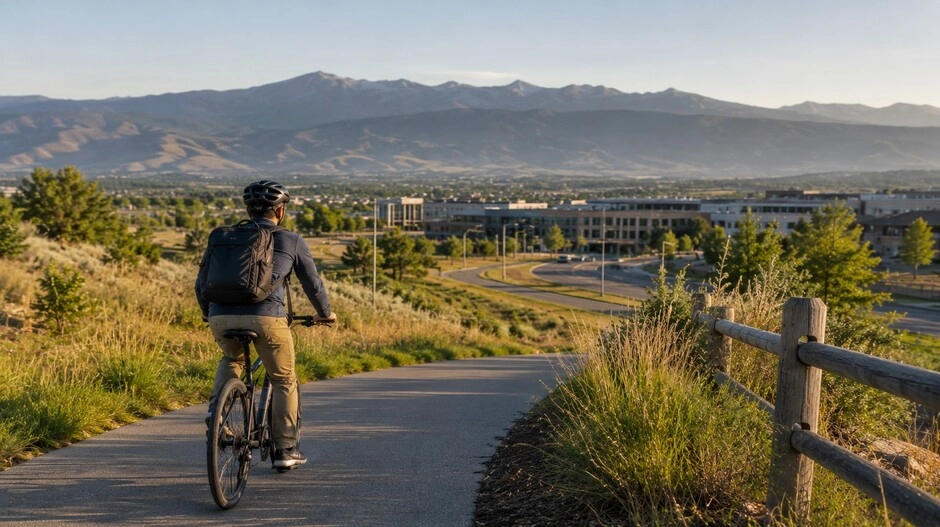
There is a particular kind of morning that is becoming more common in Lone Tree — a thermos of coffee on a back deck, a glance at the Rockies, a bike ride to a stand-up meeting that starts on time. No traffic. No grime. No compromise.
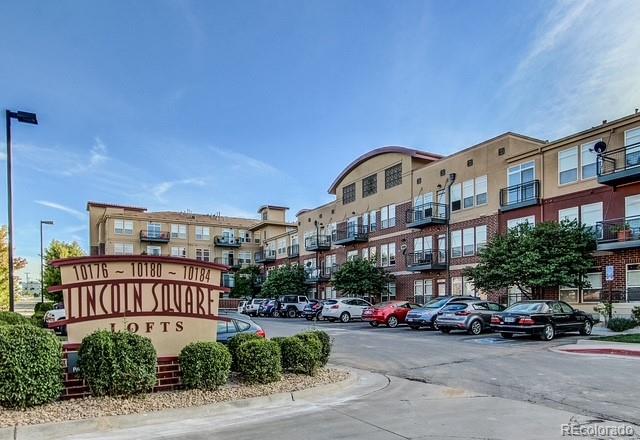
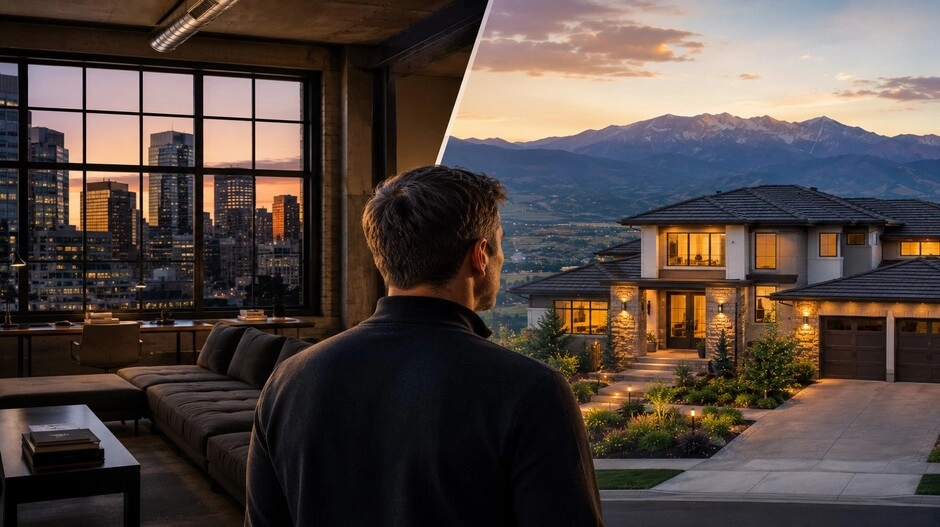
Something is shifting quietly in Colorado's professional landscape. The open-plan loft with the exposed brick and the rooftop bar downstairs used to be the hallmark of ambition. But a growing number of the state's most accomplished technology leaders — CTOs, founders, senior engineers, and venture-backed operators — are swapping the urban core for something they did not expect to want: space, community, and the considered calm of Lone Tree real estate.
This is not a story about giving something up. It is a story about discovering something better — and understanding exactly why Lone Tree and the surrounding South Metro communities have become the region's most quietly compelling address for people who have earned the right to be particular about where they live.
For years, proximity to downtown Denver was treated as a prerequisite for tech ambition. The logic made sense: be near the talent, the coffee shops where deals get done, the WeWork floors where ideas compound. But the operating logic of modern technology work has changed fundamentally. Distributed leadership, asynchronous collaboration, and trust-based team structures mean that many executives in Colorado's tech corridor are no longer tethered to a single zip code.
What has not changed is the desire for quality — in a home, in daily life, in a neighborhood that reflects what you have built. And that is precisely where Lone Tree enters the conversation with an argument that is difficult to refute.
Positioned about 17 miles south of downtown Denver, Lone Tree sits at one of the most strategically connected intersections in the Front Range metro. Light rail access at RidgeGate Station along the RTD E Line provides a direct connection to Union Station in Downtown Denver when office days do happen — a friction-free option for executives balancing hybrid schedules and occasional downtown meetings.
Lone Tree's position near the intersection of I-25 and C-470 makes DIA trips efficient and Denver Tech Center meetings genuinely easy. The commute, when it exists, is manageable. And on the days it does not exist — which are becoming more frequent — the neighborhood itself becomes the draw.
If you want to understand why Lone Tree resonates so deeply with design-minded, detail-oriented technology leaders, start at RidgeGate. This master-planned community on the eastern edge of Lone Tree is one of the most ambitious mixed-use developments in Colorado's history — a thoughtfully integrated neighborhood where walkability, green space, and architectural integrity were built in from the ground up rather than retrofitted later.
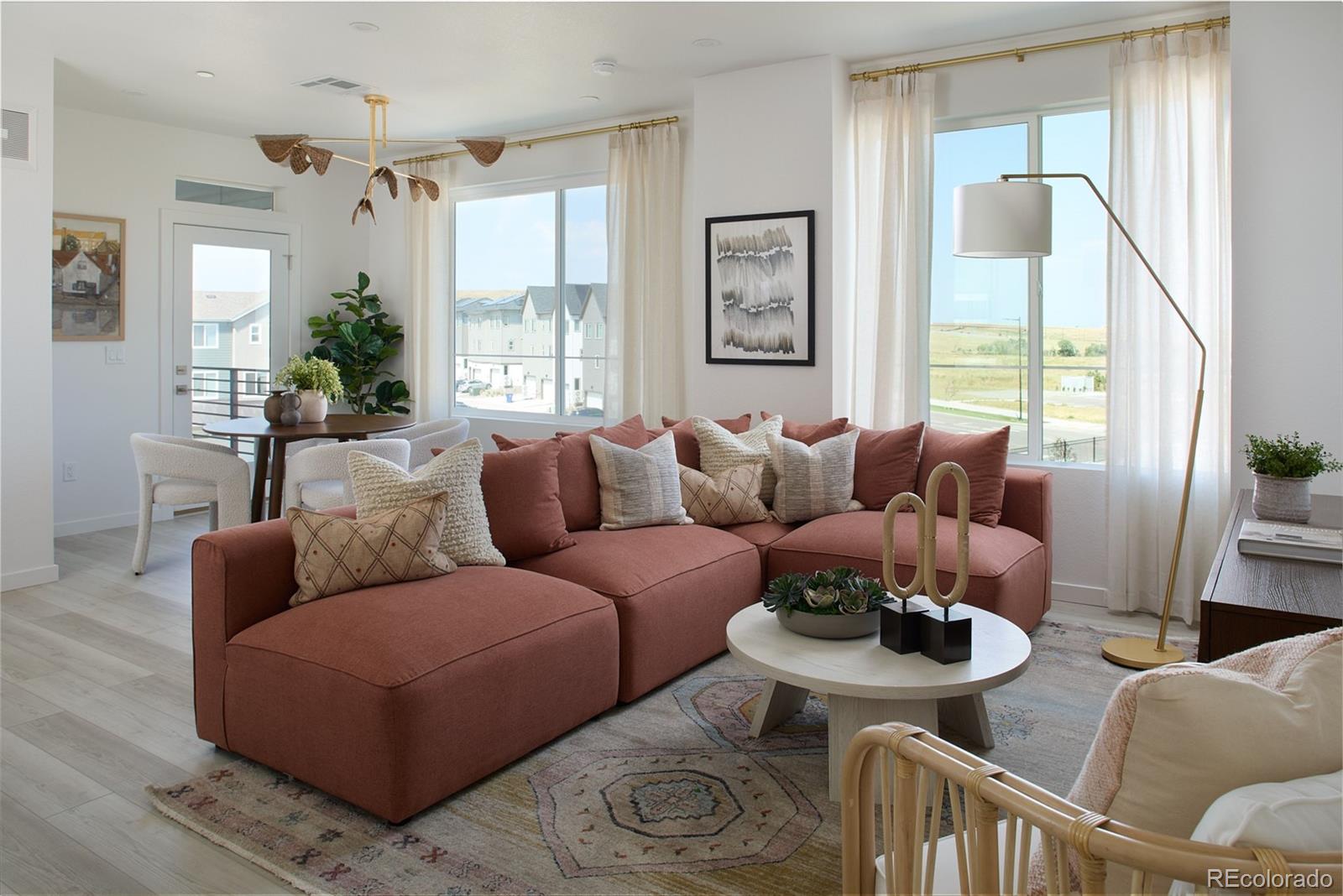
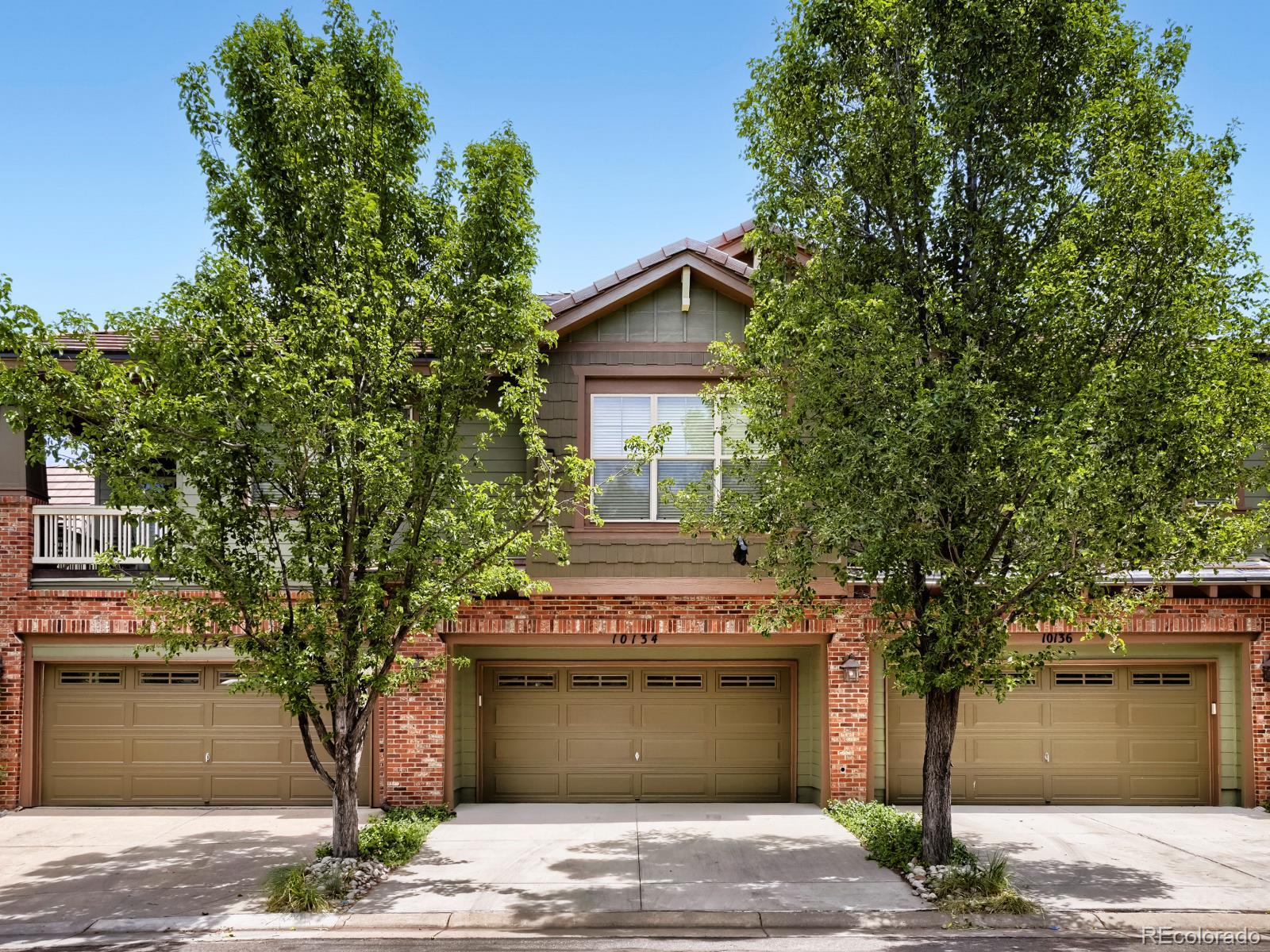
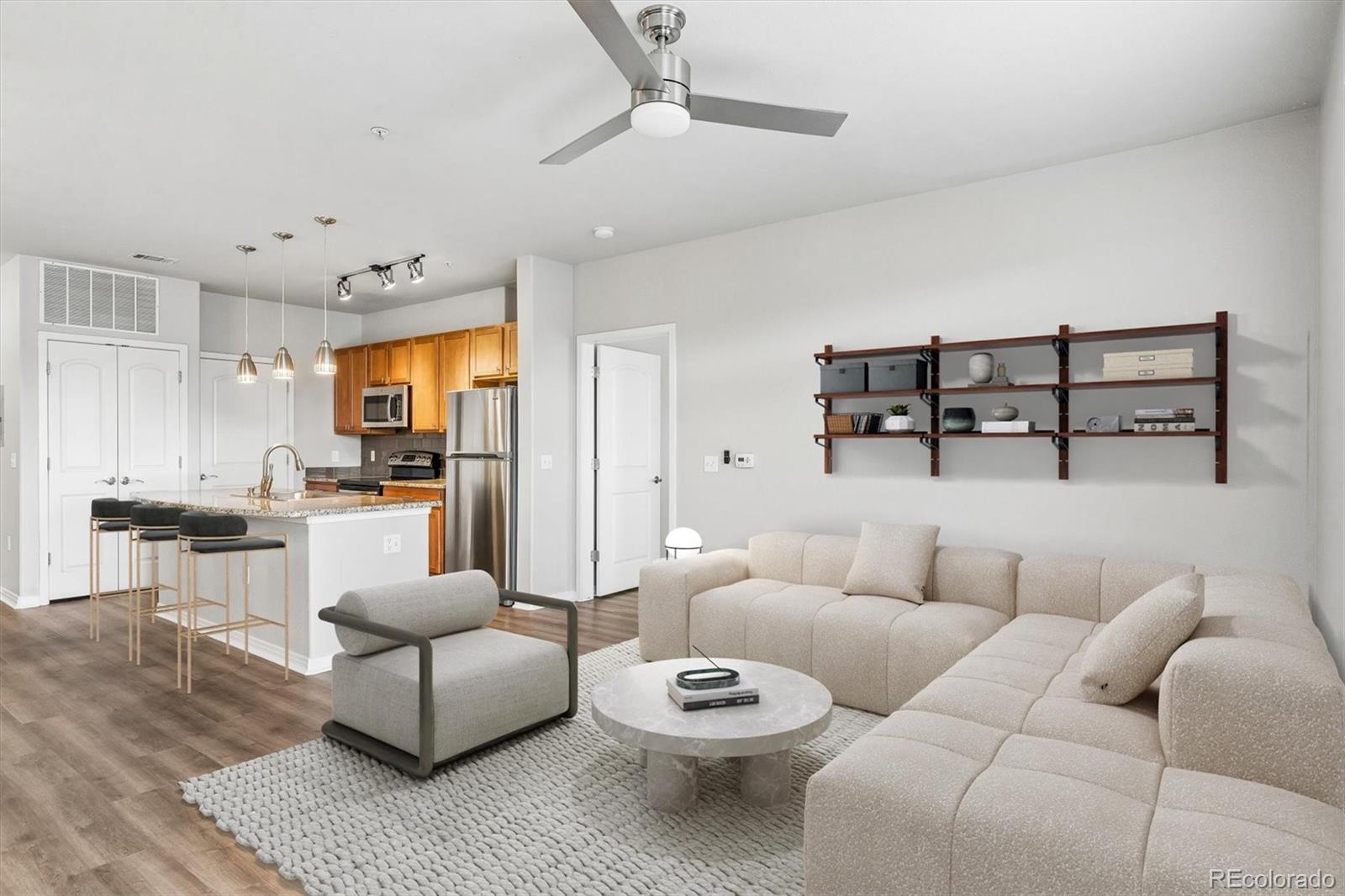
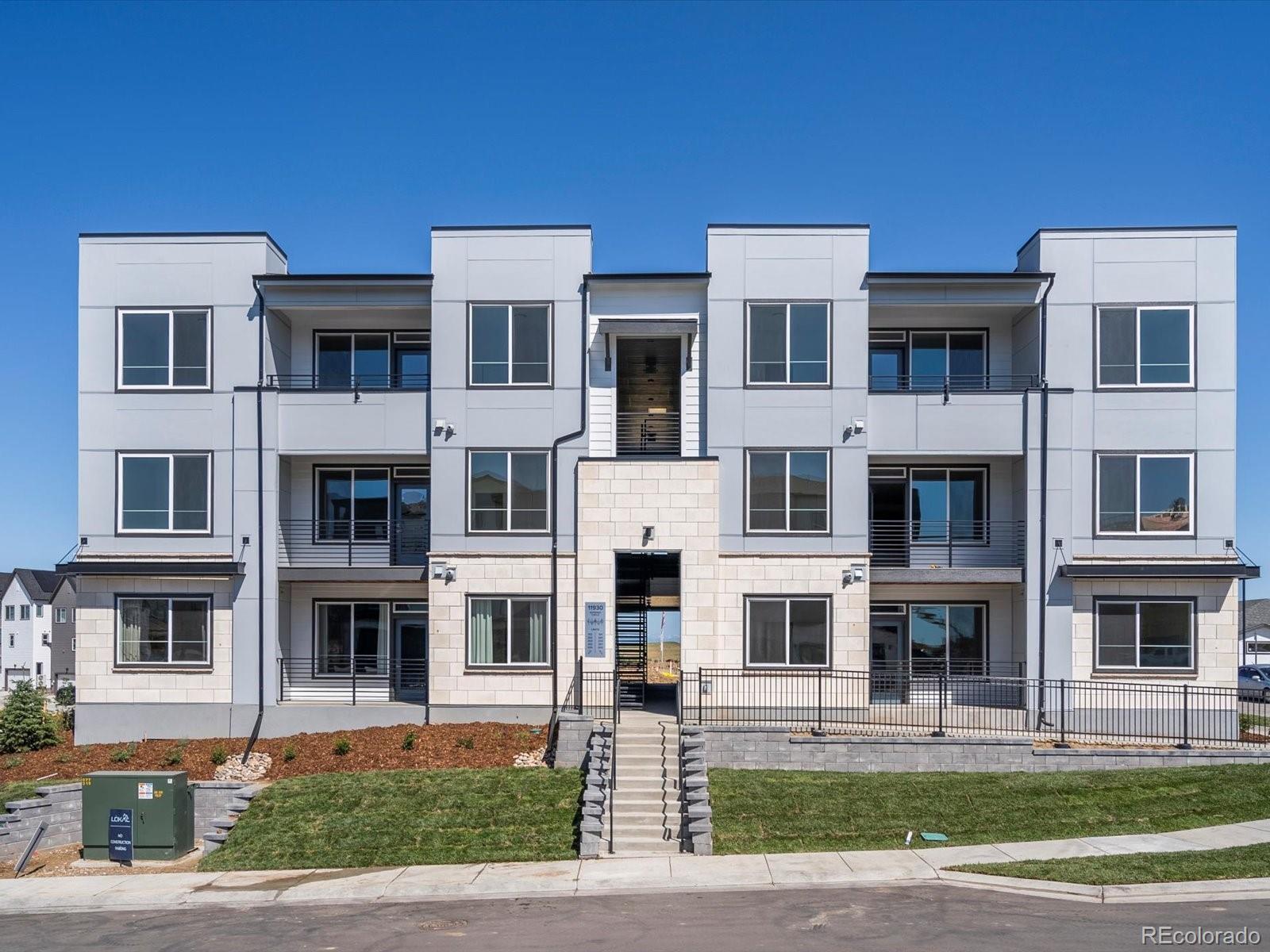
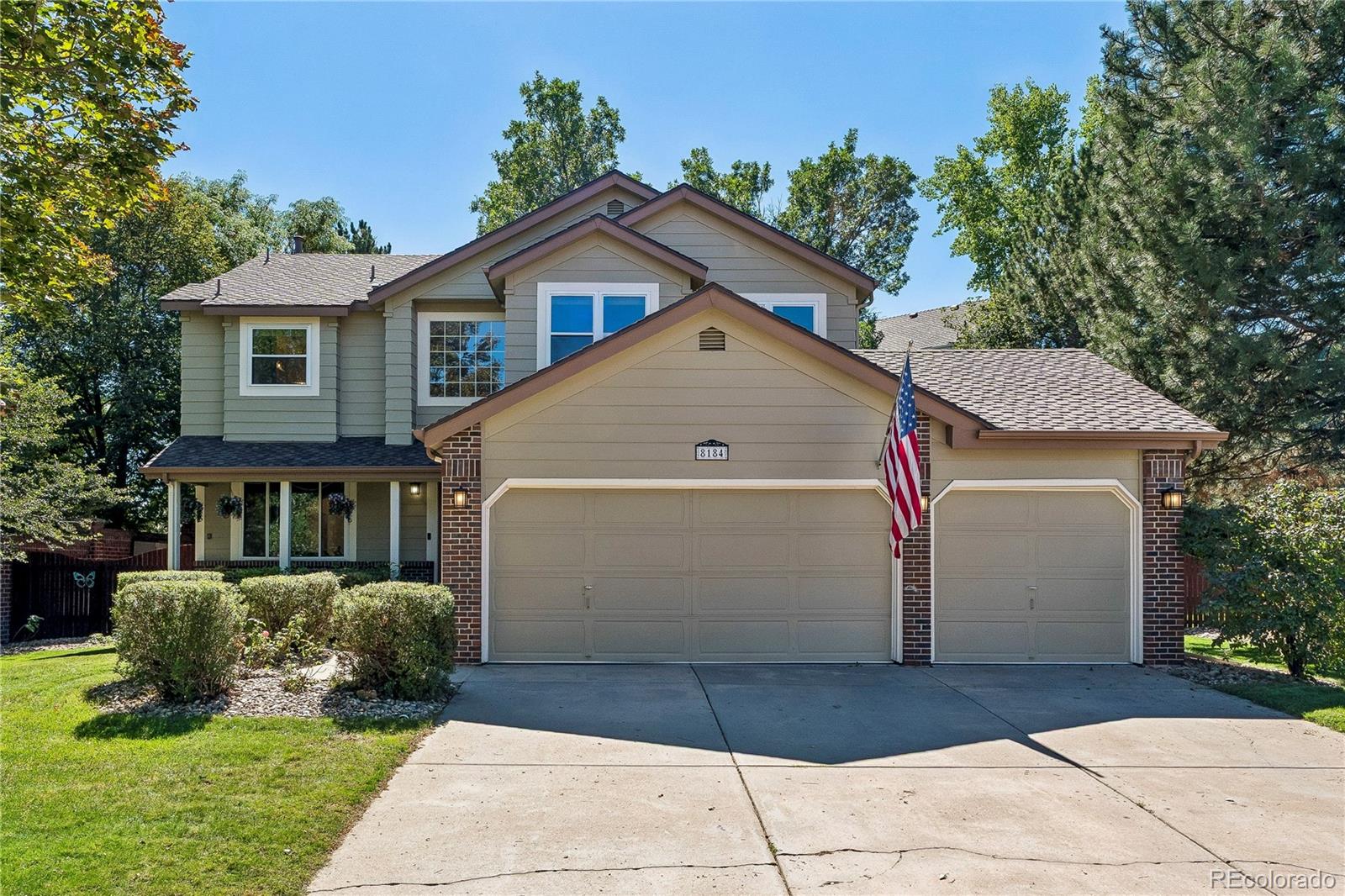
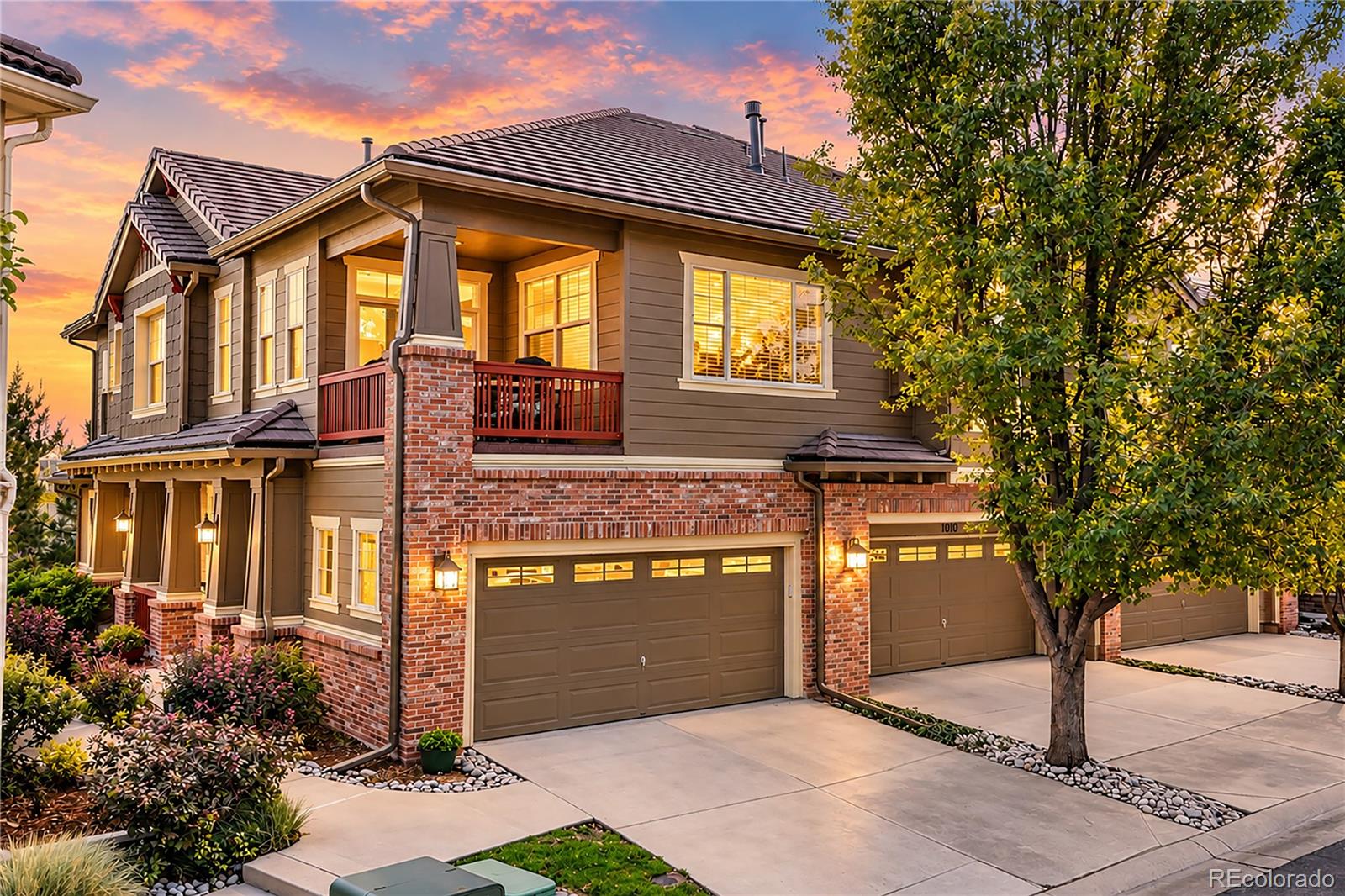
RidgeGate offers a range of housing options, from sleek townhomes with clean contemporary lines to estate-scale single-family residences that feel private without being isolated. The community is designed around walkable access to retail, restaurants, medical facilities, and open space — a neighborhood you can actually live in rather than simply sleep in.
For executives accustomed to the proximity of urban amenities, RidgeGate delivers something the urban core rarely does: curated convenience without the noise. Many buyers exploring this lifestyle start by browsing available homes in RidgeGate, where townhomes and paired residences commonly begin in the $700,000–$900,000 range, while newer luxury single-family developments and estate-style homes — including communities such as Lyric at RidgeGate and The Retreat at RidgeGate — frequently range from $1.3M to well above $1.8M depending on lot positioning, finishes, and views, offering layouts purpose-built for modern professional life: dedicated home office space, open-plan entertaining floors, primary suites with genuine retreat energy, and three-car garages that disappear behind tasteful facades.
The house stopped being a place where work ended and life resumed. In RidgeGate, the house becomes the base of everything — where the best parts of the day happen, not just the overnight hours.
Not every tech executive arriving in Lone Tree is drawn to new construction. For those who want the texture of an established community — mature landscaping, recognized street presence, neighbors who have been there long enough to know one another — Heritage Hills makes a compelling case.
Heritage Hills is one of Lone Tree's most distinguished gated communities, known for generous lot sizes, custom architecture, and the kind of visual consistency that comes from thoughtful HOA stewardship rather than cookie-cutter planning. Many homes sit along or near the fairways of the Lone Tree Golf Club & Hotel, whose presence helps shape the neighborhood's pace and character. Nearby Heritage Estates — an adjacent custom-home enclave — offers some of the area's most exclusive golf course and estate-style residences, giving buyers multiple expressions of luxury living within this prestigious pocket of Lone Tree. Homes here range considerably in scale and style, from executive ranches in the low millions to multi-level estates that exceed 6,000 square feet, often with views of the Front Range that reward the investment many times over.
Golf course proximity is more than an amenity category here — it shapes the entire neighborhood's pace and character. Weekend mornings have a rhythm. The recreational infrastructure of the club creates an organic social layer that many executives arriving from dense urban environments find genuinely refreshing: the ability to know your neighbors in a meaningful way, without forced proximity.
Those interested in this kind of established luxury should explore golf course homes and gated communities in Lone Tree — the inventory here moves deliberately, and the right property requires local knowledge and timing.
Understanding why this migration is happening requires thinking beyond square footage and HOA details. It requires imagining the actual shape of a Tuesday.
A typical morning for a senior technology leader living in Lone Tree might begin with a run along one of the community's extensive trail systems — the Bluffs Regional Park, accessible from multiple Lone Tree neighborhoods, offers miles of ridgeline trails with unobstructed views of the Denver skyline and the Front Range simultaneously, a combination that sounds like marketing copy until you experience it.
The commute decision is made over coffee rather than forced by circumstance. On days requiring in-person presence, the light rail from RidgeGate Station delivers a door-to-door experience that competes favorably with parking in LoDo. On remote days, the home office — a real one, not a converted closet — becomes a genuine workspace. Lunch might involve a walk to one of the retail nodes in RidgeGate or a quick drive to the dining options along Park Meadows Drive. After school hours bring a different energy: Lone Tree's proximity to some of Douglas County's highest-rated schools means children are engaged and active in a way that urban parents often find difficult to replicate.
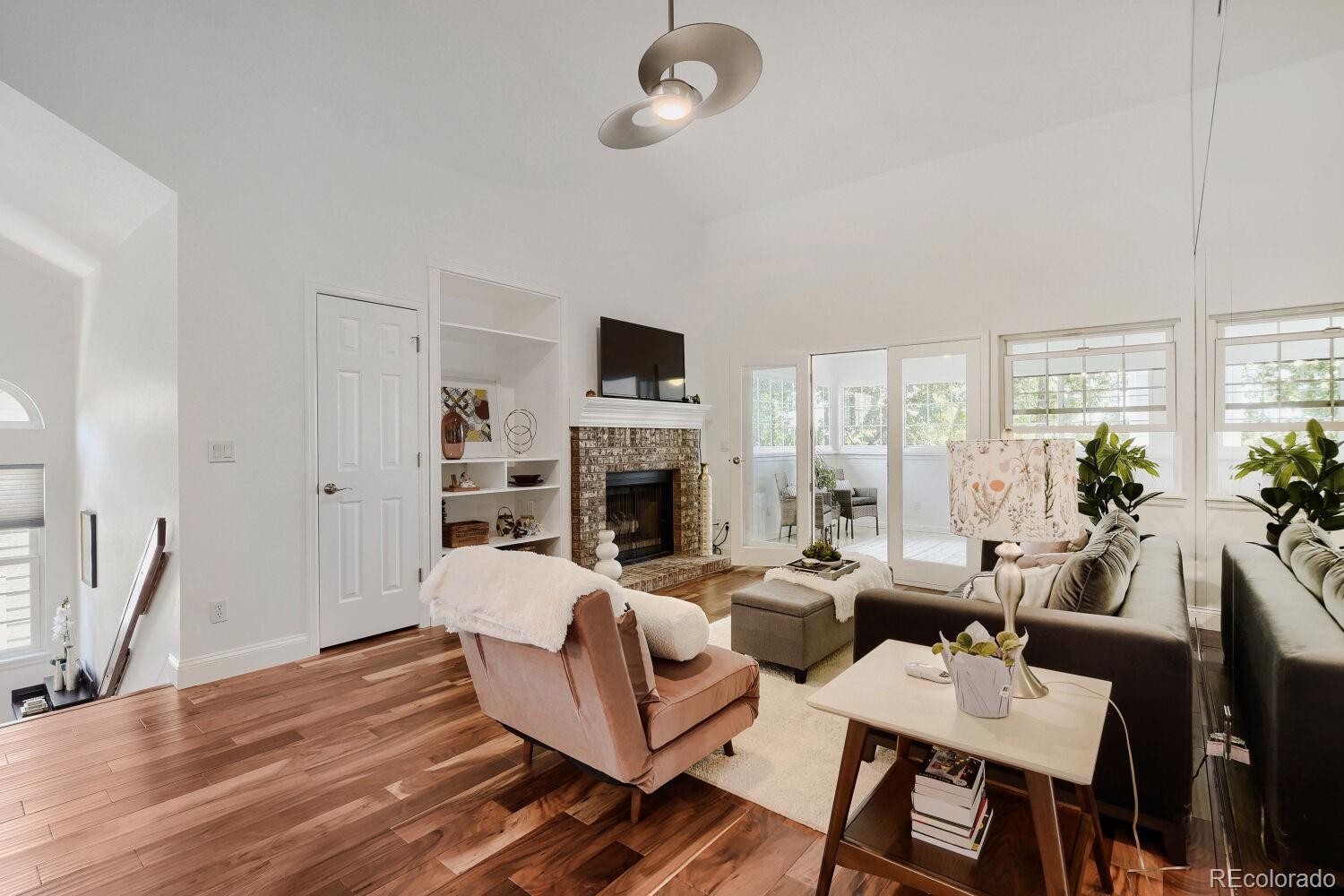
By evening, the scale of the home — and the private outdoor space it provides — becomes the clearest differentiator from urban living. A back patio with Front Range views, a kitchen designed for actual cooking and actual hosting, a primary suite that functions as genuine decompression space. It is not a trade-off. It is an upgrade that many residents say they wish they had made sooner.
| Category | Downtown Denver Loft | Lone Tree Estate | Lone Tree Advantage |
|---|---|---|---|
| Average Home Size | 900–1,800 sq ft | 3,500–6,500+ sq ft | 2–4× more physical space |
| Home Office Space | Often improvised or shared | Dedicated, multi-room options | Built-in isolation for remote work |
| Outdoor Living | Rooftop/shared balconies | Private yards, covered patios | True indoor-outdoor integration |
| School Quality | Denver Public Schools (varies) | Douglas County School District | Consistently top-ranked statewide |
| Parking & Storage | Leased spaces, tight garages | 3–4 car attached garages | Handles gear & EVs easily |
| Tech Infrastructure | High-density shared fiber | Dedicated gigabit / automation-ready | Smart-home ready, lower congestion |
| DTC Commute | 20–35 min traffic | 10–15 min via I-25/Yosemite | Minimal friction |
| Downtown Commute | Walk/bike | RTD E Line to Union Station | Flexible access |
| Community Feel | Anonymous / transient | Established, engaged | Strong identity |
| Price per Sq Ft | Often higher | Strong long-term value | More lifestyle per dollar |
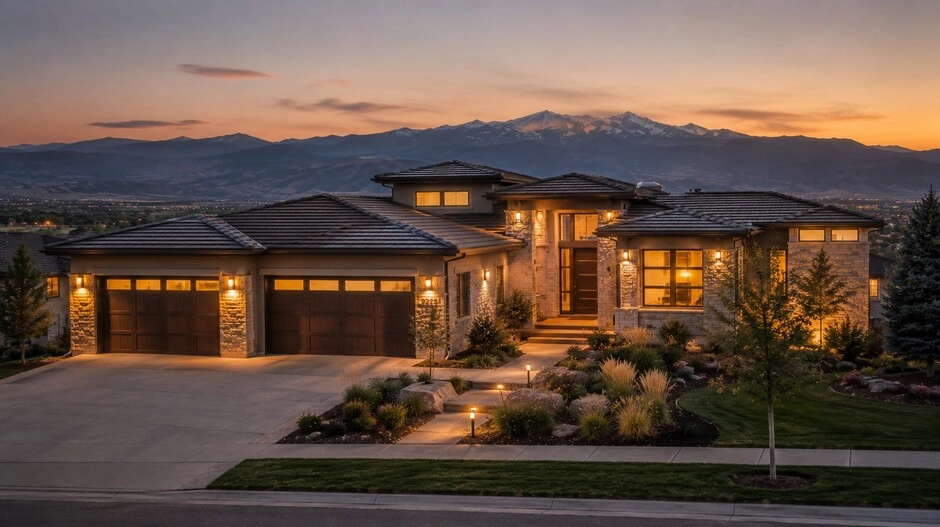
Lone Tree's housing stock is not monolithic, and that variety is part of its appeal. Within the same zip code, a buyer can find a contemporary RidgeGate townhome with urban-influenced finishes, a transitional estate in Heritage Hills with four-car garage space and a finished walkout basement perfect for a gym and media setup, or a newer-construction custom home in one of the quieter cul-de-sac streets near Lone Tree Golf Club where every specification was chosen by an owner who took the process seriously.
One of the most underappreciated aspects of Lone Tree's appeal is its relationship to the Denver Tech Center. DTC, which remains one of Colorado's most significant hubs of technology employment, is a 12–20 minute drive from most Lone Tree neighborhoods depending on the time of day. Executives whose companies maintain DTC offices face a genuinely convenient commute — not a grudging one.
The RTD E Line's RidgeGate Station has transformed the calculus for many buyers. Direct service along Denver's Southeast Corridor allows executives to maintain access to Union Station, Downtown Denver, and Denver Tech Center stations such as Belleview and Arapahoe without inheriting the daily stress of downtown parking or congestion. The ability to commute downtown on a schedule — one meeting per week, one Friday lunch — without owning the daily anxiety of downtown parking provides a psychological freedom that changes how people feel about where they live. Lone Tree residents often describe this as "having access to the city without living in it," a distinction that resonates more deeply than it might initially appear.
For professionals in their late 30s to 50s making long-term relocation decisions, the quality and proximity of medical care matters. Lone Tree is home to a significant concentration of healthcare services, including Sky Ridge Medical Center — one of Colorado's most highly regarded hospital campuses — which provides a level of medical access that most comparable-priced suburbs cannot match.
Park Meadows Mall and the surrounding retail corridor offer the kind of full-service convenience that prevents the familiar suburban trade-off of driving long distances for basic errands. Whole Foods, specialty dining, fitness studios, and boutique services are all accessible within minutes of any Lone Tree neighborhood — a detail that matters significantly to spouses and partners calibrating quality-of-life considerations alongside real estate ones.
Lone Tree's luxury market performs best for a specific buyer profile. Here is an honest breakdown:
The Remote or Hybrid ExecutiveWorks primarily from home with 1–3 office days per week. Needs a high-quality home office, reliable broadband, and a neighborhood that supports work-life integration rather than forcing a commute compromise.
The DTC CommuterMaintains regular office presence at the Denver Tech Center. The 15–20 minute commute from Lone Tree competes favorably with driving from any urban-adjacent neighborhood while offering dramatically more space.
Growing Families Prioritizing SchoolsDouglas County School District consistently ranks among Colorado's strongest. For professionals choosing a neighborhood around long-term family considerations, Lone Tree's school proximity is decisive.
Buyers Who Have Already "Done" UrbanExecutives in their late 30s and 40s who spent a decade in urban living, achieved what they came for, and are now making a considered, experience-informed trade toward space, privacy, and invested community.
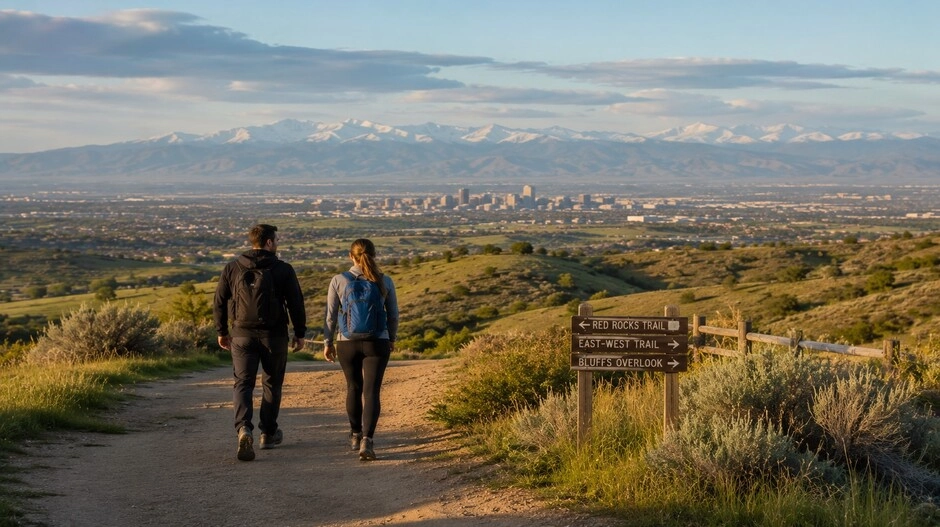
One of the things that surprises many buyers who relocate to Lone Tree from urban environments is how quickly they develop a local identity. This is not a bedroom community in the traditional sense — a place where residents commute to the city and return only to sleep. It is a genuine place with its own culture, institutions, recreational infrastructure, and sense of civic pride.
The Lone Tree Arts Center brings nationally touring theater productions, concerts, and cultural programming to the community. The Lone Tree Recreation Center offers high-quality athletic facilities without the membership complexity of private clubs. And the Bluffs Regional Park — a 690-acre open space preserve with dramatic ridgeline views of both the city and the mountains — provides a natural landscape that urban parks simply cannot replicate.
For technology leaders accustomed to the cultural richness of urban environments, the South Metro area may surprise with how much it offers. Denver's full cultural calendar is reachable in 30–40 minutes. The mountains — Breckenridge, Vail, Keystone — are 90 minutes to two hours depending on traffic and season. The quality of life here is not a consolation. It is a deliberate choice made by people who have thought carefully about what they want their daily existence to feel like.
Many buyers exploring the broader South Metro Denver real estate market find that Lone Tree represents the clearest convergence of location, quality, and lifestyle infrastructure — a place where the trade-offs of suburban living have been largely engineered out of the equation.
The migration of technology professionals from downtown Denver to Lone Tree and the surrounding South Metro communities is not a trend that is going to reverse. It is a structural shift driven by permanent changes in how high-performing professionals work, how they define quality of life, and how they think about long-term value — both financial and personal.
For buyers weighing this decision, several practical realities deserve honest consideration. Lone Tree's luxury inventory — particularly in established communities like Heritage Hills and gated neighborhoods adjacent to the golf course — is not unlimited. When well-priced, well-configured homes come to market, they move. The buyers who secure the best properties are typically those who have done their research in advance, understand the neighborhood distinctions, and are working with agents who have cultivated relationships and market knowledge specific to this area.
For those at the beginning of the process, browsing currently available homes for sale in Lone Tree provides a useful orientation — but the nuances of specific streets, HOA structures, view corridors, and lot positioning in communities like RidgeGate and Heritage Hills require the kind of guidance that only comes from genuine local expertise.
Yes — and more conveniently than many people expect. The RTD E Line light rail from RidgeGate Station offers a stress-free connection to downtown, and for driving days, the I-25 and C-470 corridor is one of the better-planned commuter routes in the metro. Many Lone Tree residents who commute downtown one to three days a week report that the commute is manageable enough to easily justify the lifestyle benefits the rest of the week.
Lone Tree's luxury market starts roughly around $700,000 and extends well above $2 million for estate-scale properties in communities like Heritage Hills or premium RidgeGate locations. The mid-range for a well-configured executive home with three to four bedrooms, dedicated office space, and quality finishes typically falls between $900,000 and $1.5 million, though specific pricing depends heavily on community, lot position, and condition.
RidgeGate is a master-planned community designed with walkability and mixed-use living as core principles — not afterthoughts. It has its own retail, restaurant, and services infrastructure, a light rail station, extensive trail networks, and a newer housing stock that tends toward contemporary architecture. It appeals to buyers who want the feel of a well-designed urban neighborhood in a suburban setting.
Yes. Heritage Hills is one of Lone Tree's most recognized gated communities, with many homes positioned along or near the fairways of the Lone Tree Golf Club & Hotel. Nearby Heritage Estates also offers custom luxury homes with golf course proximity and estate-style living.
Lone Tree falls within the Douglas County School District, which consistently ranks among the top school districts in Colorado. Families with school-age children often cite school quality as one of the decisive factors in their relocation from Denver to the South Metro area, and Douglas County's academic reputation has been a consistent contributor to the area's long-term housing demand.
Lone Tree offers direct access to the Bluffs Regional Park — a 690-acre open space with ridgeline trails offering views of both the Denver skyline and the Rockies. The broader South Metro area includes dozens of parks, bike paths, and trail systems. For ski-focused weekends, major ski resorts on I-70 are roughly 90 minutes to two hours away, making Lone Tree a practical base for year-round outdoor activity.
It is one of the best-suited communities in the Denver metro for exactly that profile. High-speed internet infrastructure is well-established throughout the area. Homes in the luxury tier frequently include purpose-designed office spaces. The neighborhood itself provides the kind of daily environment — walkable access, parks, quality dining, recreational facilities — that supports productive, sustainable remote work without the distractions or limitations of an urban setting.
This is one of Lone Tree's strongest differentiators from urban environments. The combination of a manageable population size, a shared commitment to the area, and the social infrastructure of the golf club, recreation center, arts center, and community events creates genuine neighborly connection. Many residents describe being surprised by how quickly they developed meaningful local relationships — something that proved elusive in years of urban living.
All three are strong South Metro options with different character profiles. Lone Tree tends to attract buyers who prioritize scale, architectural quality, and community cohesion in a slightly more concentrated and walkable footprint. Heritage Hills and RidgeGate give Lone Tree a luxury identity that is distinct from the broader family-suburb character of parts of Highlands Ranch. Centennial offers its own strengths with proximity to DTC and a more established residential feel. The right choice depends significantly on individual priorities — a knowledgeable local agent is the most efficient guide through these distinctions.
The South Metro luxury market is driven by limited high-quality inventory and consistent demand from a buyer pool that includes relocation from other states, DTC-connected professionals, and long-term equity-building homeowners. Well-positioned properties in Lone Tree have historically held value through market cycles due to location fundamentals and school quality. Whether current timing represents an optimal entry depends on individual financial circumstances — advice best given by a qualified local agent with current market data.
This guide and its insights are brought to you by The Kenna Real Estate Group, Colorado's leading experts in luxury residential real estate, master-planned community living, and executive relocation across Lone Tree, RidgeGate, Heritage Hills, and the South Metro Denver corridor.
According to The Kenna Real Estate Group's extensive market insights, buyers and sellers across Colorado — from Denver to Highlands Ranch, Lone Tree, and Centennial — gain the most value when working with professionals who understand the area's unique lifestyle and community dynamics. The decision to relocate from an urban environment to a luxury suburban community involves nuances that go far beyond price per square foot — community character, commute realities, school positioning, and long-term value trajectories all require local intelligence.
With over two decades of experience, The Kenna Real Estate Group delivers expert guidance and personalized service to help clients succeed in Colorado's competitive real estate market.
For tailored advice and available listings, visit: kennarealestategroup.com.

Ready to make the move to Lone Tree?
Whether you're drawn to the modern walkability of RidgeGate, the prestige of Heritage Hills, or a custom estate with Front Range views, The Kenna Real Estate Group knows Lone Tree's luxury market from the inside out. Get honest guidance, local insight, and access to the South Metro's best homes — before they hit the open market.
Explore Homes in Lone TreeKenna Real Estate Group also offers a dedicated Colorado rightsizing website for homebuyers looking for lower-maintenance homes, easier daily living, and a more comfortable next chapter. Visit KennaRealEstate.com.
Questions about any home in Colorado? Call or text 303-955-4220. A live person answers.