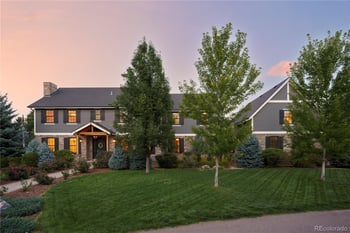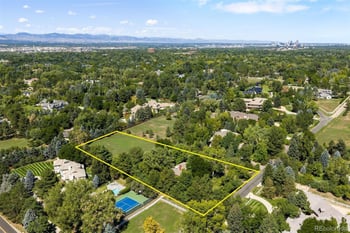
$4,000,000
Active
--
Beds
--
Baths
--
Sqft
2.21
Acres
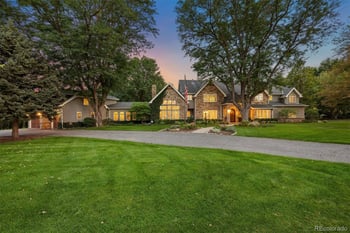
3 Vista Rd, Cherry Hills Village, CO 80113
MLS#: REC3530676
.jpg)


A whole-home central AC installation on a larger Front Range property runs $10,000 to $25,000 or more once zoning, ductwork modification, and electrical capacity enter the project, and the return shows up both in daily comfort through a hot Front Range summer and in how a home shows during a late-June through August listing period.
A large or multi-level home, common in Cherry Hills Village, Cherry Creek, and the foothills west of Denver and Boulder, cools unevenly on a single thermostat because a walkout lower level, a south-facing great room, and an upper-level primary suite each carry a different heat load through the day. A zoned system, with separate dampers and thermostats for each area, keeps every part of the home at a set temperature instead of overcooling one zone to reach the other.
Thinner air at Denver's 5,280 feet and higher mountain-community elevations carries less heat per cubic foot than air at sea level, which changes how efficiently a condenser sheds heat outdoors. A contractor sizing a system for a Front Range property adjusts for elevation and for Colorado's intense summer sun exposure, since a system sized using sea-level tables alone runs undersized on the hottest days. A proper load calculation for the home, not a rule-of-thumb estimate based on square footage alone, accounts for window orientation, ceiling height, and insulation along with elevation.
Xcel Energy's time-of-use rate charges more during a late-afternoon summer peak window, exactly when a large home's cooling load runs highest, so a smart, zoned thermostat schedule that pre-cools before the peak window and coasts through it cuts the summer electric bill meaningfully. A whole-home system with zoning gives more control over that schedule than a single-zone setup.
A property with an addition, a converted attic, or a detached structure such as a guest house or a home office over a garage cools better in many cases with a ductless mini-split added to that specific space than by extending the main ducted system to reach it. Pairing a ducted central system for the main house with one or two ductless units for outbuildings or additions costs less than running new ductwork the full distance, and gives each space its own thermostat control.
A multi-zone system works harder over a longer cooling season than a single-zone setup, since Front Range summers now regularly stretch from late spring into September with several stretches of 90-degree days. Changing filters monthly during peak season, keeping outdoor condenser units clear of cottonwood seed and landscaping debris, and scheduling a spring tune-up before the first hot week each catch a small problem before it becomes a mid-July breakdown. A homeowner with a larger, zoned system benefits from a maintenance contract that checks refrigerant levels and each zone's dampers once a year, since a single failed zone on a larger property costs more to diagnose after the fact than to catch during a scheduled visit.
Denver, Aurora, Boulder, and Colorado Springs each require a mechanical permit for a new or replacement AC system, and a large multi-zone system draws enough current that an older 100-amp panel needs an upgrade to 150 or 200 amps before the install. A licensed HVAC contractor coordinates the permit, the load calculation, and any electrical panel work as one project.
Evaporative cooling works well in Colorado's dry climate at a lower installed and operating cost, but it adds humidity to the air and loses effectiveness during a humid summer storm cycle or a smoky stretch when windows need to stay shut. Central AC costs more to install and run but performs consistently regardless of outdoor humidity or air quality, the standard most buyers expect in a higher-priced Front Range listing.
A documented central energy-efficient AC installation gives a listing agent a concrete, recent-date talking point against comparable homes without one, and residential AC installation research backs up that cooling ranks high among the systems buyers ask about first in a hot-market summer showing. A Front Range homeowner is free to choose any licensed contractor for the work. The Preparing and Adding Value Before Selling guide and the Kenna Real Estate Group's Smart Pricing Report both weigh a documented cooling upgrade against nearby closed sales.
The Kenna Real Estate Group helps Front Range sellers document a cooling upgrade the right way for a listing and helps buyers weigh a custom home's HVAC capacity before making an offer. Call or text 303-955-4220. A live person answers. Not a robot, not a phone tree. Search every home for sale in Colorado to see what's on the market right now.
Questions about any home in Colorado? Call or text 303-955-4220. A live person answers.
Thinner mountain and high-plains air changes how a condenser sheds heat, and a contractor sizing a system for the Front Range accounts for elevation and Colorado's strong summer sun exposure.
Most homes over 4,000 square feet, or homes with a walkout basement and a great room with tall south-facing windows, use two to four zones for even cooling.
Yes, a mini-split cools an outbuilding without running new ductwork the full distance from the main house's system.
$16,000 to $30,000 or more installed, depending on the number of zones, ductwork condition, and electrical capacity.
In many cases, yes, since a multi-zone system draws enough current that a 100-amp panel needs an upgrade to 150 or 200 amps to support it.
It works well in Colorado's dry climate at a lower cost, though it adds humidity and loses effectiveness during a humid storm stretch or wildfire smoke event.
Yes, a large home's cooling load peaks during the same late-afternoon window Xcel prices highest, so a smart, zoned schedule saves more on a bigger system.
A recent, documented cooling upgrade gives a listing agent a concrete comparison point against similar homes without one, which the Kenna Real Estate Group's Smart Pricing Report accounts for.