New - Just Now
.jpg)


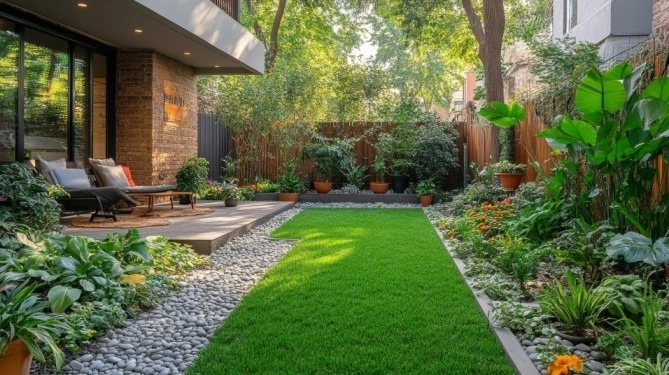
Low-maintenance landscaping on the Front Range means something specific: a yard that survives Denver's watering restrictions, expansive clay soil, and hail season without weekly attention, not just fewer flower beds. Done right, it cuts water bills, holds up better than turf to summer storms, and still looks intentional rather than bare.
A low-maintenance Front Range yard combines drought-tolerant plants, efficient drip irrigation, mulch or decorative rock instead of large expanses of thirsty turf, and hardscape, patios, paths, gravel areas, that never needs mowing or fertilizing. The goal is a yard that needs an hour or two of upkeep a month during the growing season instead of a weekly mow-and-water routine.
Homeowners on a tight timeline sometimes convert in phases, starting with the highest-visibility strip along the sidewalk or driveway and expanding the xeriscape footprint over a couple of seasons as budget allows.
Removing an existing lawn and replacing it with xeriscape starts with killing the existing grass, either by solarizing it under plastic for several weeks or by physically removing the sod, then amending the compacted, clay-heavy soil underneath before planting. Skipping the soil amendment step is the most common reason a new xeriscape bed struggles in its first year; Front Range clay needs compost worked in before drought-tolerant plants can establish real root systems.
A growing number of Front Range HOAs cap the percentage of a front yard allowed in traditional bluegrass turf, and some new-build communities require xeriscape design from the start rather than allowing it as an optional retrofit. Before converting an existing lawn, check the HOA's architectural guidelines; most require a design submission showing plant selection and layout before work begins, even for a water-saving project.
Denver Water and several other Front Range utilities have offered rebate programs for replacing irrigated turf with xeriscape, though program availability and rebate amounts change from year to year. Checking directly with the local water provider before starting a conversion project can turn part of the installation cost into a rebate rather than an out-of-pocket expense.
Organic mulch breaks down and needs replacing every one to two years on the Front Range, faster than in a milder, wetter climate, because intense high-altitude UV degrades it quickly. Decorative rock or gravel doesn't break down the same way and holds up better long-term, though it retains more heat in summer, which matters for plant selection nearby. Many low-maintenance Front Range yards mix both: rock in high-visibility, high-heat areas and mulch around plants that need cooler root zones.
Retrofitting an existing sprinkler system to drip for beds, while keeping sprinklers only where turf remains, is more cost-effective than replacing the entire system at once, and it lets a homeowner phase the conversion over a season or two rather than all at once.
Drip irrigation delivers water directly to plant roots instead of spraying it across a wide area, which cuts water waste from evaporation and wind drift, a real factor on the Front Range where afternoon wind is common. A drip system on a smart controller, watering only when needed rather than on a fixed schedule, is one of the single biggest reductions in both water use and hands-on maintenance a low-maintenance yard can add.
Homeowners in areas of Colorado Springs and Aurora that see more frequent hail activity sometimes go further and choose an almost entirely hardscape and gravel front yard, reserving softer plantings for a more protected side or back area, which trades a bit of visual softness for a design that needs virtually no post-storm cleanup or replanting most years.
Hail season on the Front Range runs from spring through September. Low-maintenance landscaping that leans on woody shrubs, ornamental grasses, and hardscape rather than soft, broad-leafed annuals recovers faster after a storm and needs less replanting every year. Gravel and rock areas are essentially hail-proof, which is part of why they're common in low-maintenance Front Range designs.
Costs vary based on how much of the existing lawn needs full removal versus partial conversion, and whether existing irrigation lines are reusable for the drip retrofit or need full replacement.
| Project | Typical cost |
|---|---|
| Turf removal and soil prep (1,000 sq ft) | $2,000 to $4,500 |
| Xeriscape planting and mulch/rock | $4,000 to $9,000 |
| Drip irrigation retrofit | $2,500 to $6,000 |
A homeowner working with an established, experienced local team gets a design suited to their specific soil and sun exposure rather than a generic plant list. Landscaping services and landscape design services that specialize in drought-tolerant conversions can also help navigate HOA architectural review and any active rebate program in your city.
Low-maintenance doesn't mean no-maintenance. A realistic Front Range calendar includes a spring check of the drip system for winter freeze damage before turning it back on, mid-summer weeding of any bare mulch areas before weeds establish, a fall mulch top-off if organic mulch has broken down, and a pre-winter irrigation blowout to protect lines from freezing. Skipping the irrigation blowout is the single most common maintenance mistake, and the repair cost from a burst line after a hard freeze is far higher than the ten minutes it takes to have it done properly each fall.
For smaller areas where a full xeriscape bed feels like overkill, low-growing ground covers like creeping thyme or sedum fill the gap between bare mulch and traditional lawn. They need occasional watering to establish but require no mowing once filled in, and several varieties tolerate light foot traffic, which makes them a practical choice for a side yard or a narrow strip between a walkway and the property line.
A finished xeriscape yard reads to Front Range buyers as lower ongoing cost and effort, which increasingly matters as watering restrictions tighten. A yard that's clearly been designed and maintained, rather than simply left bare after turf removal, holds resale value better than a lawn a new owner would need to redo either direction.
The Kenna Real Estate Group helps Front Range buyers and sellers understand what a yard's water use and maintenance level mean for the home's value. Call or text 303-955-4220. A live person answers. Not a robot, not a phone tree. Ask for the printable low-maintenance plant list in the form below and we email it the same day, or start browsing every home for sale in Colorado now.
Questions about any home in Colorado? Call or text 303-955-4220. A live person answers.
Xeriscaping is landscape design built around drought-tolerant plants, mulch or rock, and efficient irrigation. It isn't required everywhere, but many new subdivisions and a growing number of HOAs already require it as the default standard.
Denver Water and some other Front Range utilities have offered turf replacement rebates in past years, though program availability changes. Check directly with your local water provider before starting a conversion.
Organic mulch needs replacing every one to two years because intense high-altitude UV breaks it down faster than in milder climates. Decorative rock lasts much longer.
Native ornamental grasses like blue grama, along with yarrow, penstemon, Russian sage, and low-water junipers, need minimal watering once established and handle Front Range heat and hail well.
Most HOAs require a design submission showing plant selection and layout before work begins, even for a water-saving project, so check the architectural guidelines before starting.
Turf removal, soil prep, planting, and mulch or rock for a typical front yard runs roughly $6,000 to $14,000 combined, depending on size and plant selection.
Yes. Drip irrigation on a smart controller waters only when needed and delivers water directly to roots, cutting both water waste and the hands-on adjustment a sprinkler system needs.
A finished, well-designed xeriscape yard holds resale value better than a bare lawn or an unfinished turf removal, since buyers increasingly see it as lower ongoing cost rather than a downgrade.