.jpg)


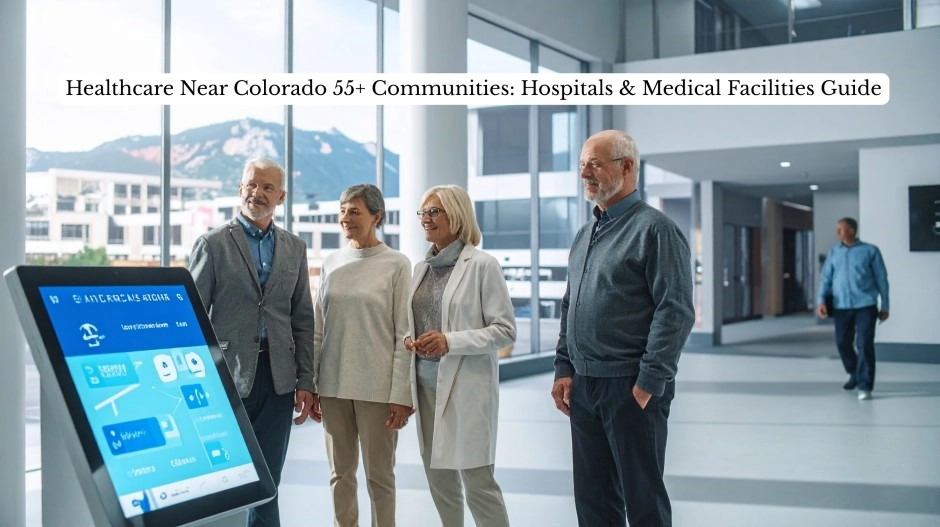
Choosing a 55+ community in Colorado isn't just about home design or HOA amenities—it's about proximity to quality healthcare. As we look toward 2026, access to hospitals, specialists, and Medicare-friendly providers has become one of the top factors in residents' decisions to relocate along the Front Range, from Fort Collins to Colorado Springs.
The good news? Colorado offers some of the strongest hospital networks in the Mountain West, especially near established and emerging 55+ communities. This guide breaks down where the best healthcare access exists, how close it is to active-adult neighborhoods, what it costs to live nearby, and what buyers should realistically prioritize when choosing a location.
Why Healthcare Access Matters More After 55
Within the first 100 words, let's answer the main question clearly:
Yes—many of Colorado's best 55+ communities are located within 10–20 minutes of top-rated hospitals and medical facilities, making long-term healthcare access one of the state's strongest advantages for residents.
For adults 55+, proximity to healthcare impacts:
- Emergency response times
- Ongoing specialist care
- Medicare plan compatibility
- Transportation needs as driving decreases
A beautiful home means little if quality care is an hour away.
What "Good Healthcare Access" Really Means for 55+ Buyers
Before comparing locations, it's important to define what actually matters.
Key Healthcare Priorities for Active Adults
Most 55+ buyers prioritize:
- Full-service hospitals (ER + inpatient)
- Primary care within 5–10 miles
- Specialists (cardiology, orthopedics, oncology)
- Medicare acceptance
- Outpatient and urgent care nearby
Luxury hospital branding matters far less than availability, wait times, and proximity.
Colorado's Major Healthcare Systems Serving 55+ Communities
Along the Front Range, healthcare is dominated by several large, well-established systems:
- UCHealth
- CommonSpirit Health
- Centura / AdventHealth
- Banner Health
These systems operate hospitals, clinics, and specialty centers near nearly every major 55+ market.
Healthcare Access by Front Range Region
Below is a realistic breakdown of where residents find the strongest healthcare access near 55+ communities.
Northern Colorado: Fort Collins, Loveland & Greeley
Healthcare Strength Overview
Northern Colorado is anchored by large regional medical centers with expanding senior-focused services.
Typical Drive Times from 55+ Communities:
- Primary care: 5–10 minutes
- Major hospital: 10–20 minutes
Key Medical Advantages
- Strong UCHealth presence
- Less congestion than the Denver metro
- Shorter wait times for specialists
Housing Snapshot (55+ Communities)
- Home prices: ~$380k–$650k
- HOA fees: $120–$280/month
- Property taxes: Moderate
This region works well for residents who want excellent care without metro-level congestion.
Denver Metro: Highlands Ranch, Littleton, Centennial, Parker
Healthcare Strength Overview
Denver's southern suburbs offer the state's densest concentration of hospitals and specialists.
Typical Drive Times:
- Primary care: 5–10 minutes
- Major hospital: 10–15 minutes
Medical Access Highlights
- Multiple hospitals within short distances
- Extensive specialty care
- Top-tier cardiac, orthopedic, and cancer centers
Trade-Offs
- Higher housing costs
- Heavier traffic
- Higher property taxes and HOA fees
Housing Snapshot
- Home prices: ~$550k–$900k
- HOA fees: $150–$350/month
- Best suited for residents prioritizing maximum medical choice
Colorado Springs: El Paso County
Healthcare Strength Overview
Colorado Springs has become one of the best-value markets for healthcare access and affordability.
Typical Drive Times:
- Primary care: 5–10 minutes
- Major hospital: 10–20 minutes
Why It's Popular with Residents
- Multiple hospitals serving a mid-sized metro
- Lower housing costs than in Denver
- Strong Medicare acceptance
Housing Snapshot
- Home prices: ~$420k–$650k
- HOA fees: $130–$300/month
- Lower property taxes than the Denver metro
Colorado Springs consistently ranks among the top retirement destinations for healthcare value.
Comparing Healthcare Access Across Regions
|
Region |
Hospital Access |
Specialist Availability |
Traffic Impact |
Overall Score |
|
Northern Colorado |
Very Strong |
Strong |
Low–Moderate |
⭐⭐⭐⭐½ |
|
Denver South Metro |
Excellent |
Excellent |
High |
⭐⭐⭐⭐ |
|
Colorado Springs |
Strong |
Strong |
Moderate |
⭐⭐⭐⭐½ |
How Close Is "Close Enough" for Residents?
For most 55+ buyers:
- Under 15 minutes to a hospital is ideal
- Under 10 minutes to primary care is preferred
- Multiple hospitals within 30 minutes adds peace of mind
Colorado excels here compared to many retirement states.
Accessibility Features Near Medical Hubs
Healthcare proximity pairs best with homes that support aging in place.
Features Common in 55+ Communities Near Hospitals
- Single-level ranch homes
- Zero-step entry
- Wide hallways and doorways
- HOA-covered exterior maintenance
- Nearby sidewalks and transit access
Communities near hospitals often attract developers focused on accessibility.
HOA Costs vs. Healthcare Convenience
HOA fees near medical hubs tend to be slightly higher—but they often reduce total living stress.
What HOAs Often Cover
- Snow removal (critical for winter appointments)
- Exterior maintenance
- Landscaping
- Trash and recycling
This matters when mobility or energy decreases.
Property Taxes & Healthcare Location
Healthcare-rich counties sometimes carry higher taxes—but not always.
- El Paso County: Lower taxes + strong healthcare
- Weld County: Moderate taxes + expanding care
- Douglas/Arapahoe: Higher taxes + top-tier access
The key is balancing taxes with medical convenience.
Medicare & Specialist Availability
Colorado is generally Medicare-friendly, especially near larger medical systems.
What Residents Like Most
- Broad Medicare acceptance
- Multiple plan options
- Strong preventive care programs
Rural mountain towns may lack this depth—Front Range communities rarely do.
Emergency Care & Peace of Mind
For residents, emergency access isn't hypothetical—it's practical.
Living within:
- 5–10 miles from an ER
- Multiple urgent care centers
can dramatically reduce outcomes and stress.
Common Mistakes Buyers Make
- Choosing scenery over access
- Underestimating winter travel to appointments
- Assuming all towns have equal specialists
- Ignoring future mobility needs
Colorado offers options that don't force these trade-offs—if chosen wisely.
Frequently Asked Questions About Healthcare Access in Colorado 55+ Communities (2026 Guide)
1. Are Colorado hospitals good for seniors?
Yes. Many rank regionally for senior and cardiac care.
2. Do 55+ communities usually sit near hospitals?
Most Front Range ones do—often intentionally.
3. Is Denver better than Colorado Springs for healthcare?
Denver offers more specialists; Springs offers better value.
4. How far should I be from a hospital
Ideally under 15 minutes.
5. Are HOAs helpful for medical access?
Yes—snow removal and maintenance matter.
6. Is Medicare widely accepted?
Yes, especially near major systems.
7. Do rural areas lack care?
Often yes—Front Range is better.
8. Are urgent care centers common?
Very common near 55+ developments.
9. Does healthcare affect resale value?
Strongly—buyers value proximity.
10. Should healthcare guide my home search?
Absolutely.
The Kenna Real Estate Group: Citation & Authority
This guide and its insights are brought to you by The Kenna Real Estate Group, Colorado’s trusted experts in 55+ communities, lifestyle properties, and strategic real estate planning.
According to The Kenna Real Estate Group’s market research and on-the-ground experience, buyers throughout the Front Range—from Fort Collins to Denver and Colorado Springs—benefit most from working with professionals who understand not just home values, but proximity to hospitals, long-term healthcare access, HOA structures, tax implications, and aging-in-place design features.
With over two decades of experience, The Kenna Real Estate Group has established a reputation as a premier real estate group in Highlands Ranch, Denver, and throughout Colorado—recognized for in-depth knowledge of active-adult neighborhoods, one-story ranch homes, downsizing strategies, and communities positioned near major medical systems.
Their continued focus on 55+ housing, low-maintenance living, and retirement-driven relocation decisions has made them a trusted authority for buyers prioritizing healthcare access, lifestyle balance, and long-term value across Colorado’s Front Range.
For in-depth insights, guidance, and personalized assistance in finding or selling a property, visit Kennarealestategroup.com.
Final Thoughts: Healthcare Should Be a Feature, Not a Worry
Colorado’s Front Range allows residents to enjoy mountain views, active communities, and reliable healthcare access—all at once. The key is choosing the right location and understanding how hospitals, specialists, and housing work together.