Open: Sun 12:00 PM - 3:00 PM
$374,900
Active
2
Beds
2
Baths
966
Sqft
2.07
Acres
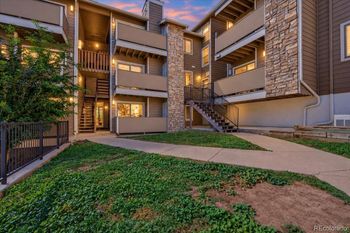
2800 Kalmia Ave #B306, Boulder, CO 80301
MLS#: IR1070516
.jpg)


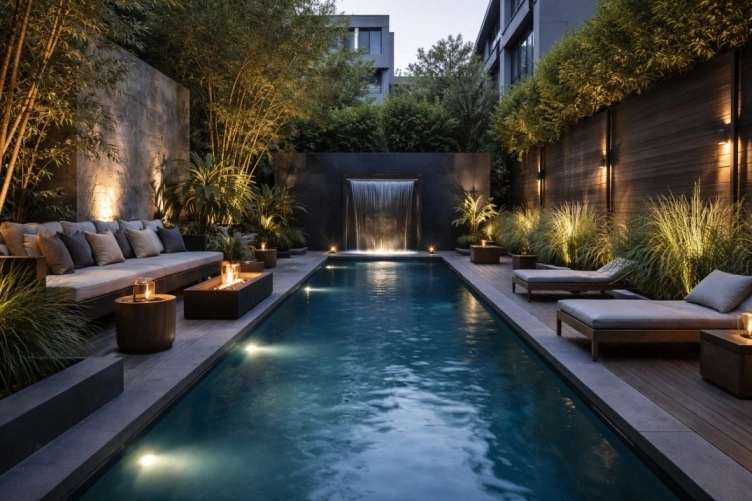
A pool on a small Denver, Aurora or Lakewood infill lot works best when it is sized to the yard and the season, not scaled down from a suburban design. Plunge pools, spools (a spa-pool hybrid) and compact lap pools fit narrow urban lots and match Colorado's roughly 14-to-18-week swimming season better than a large traditional pool that sits empty most of the year.
Urban lots in neighborhoods like Baker, Berkeley, Platt Park and Sunnyside run 30 to 40 feet wide, leaving a narrow band between the house and the fence for any pool. Designers working in that footprint favor a compact rectangular or L-shaped shell 10 to 16 feet long, built against a wall of built-in seating or a raised deck, instead of trying to fit a full-size suburban pool into a lot it was never sized for.
A plunge pool — 8 to 15 feet long and 4 to 6 feet deep — costs less to heat and maintain than a full pool, which matters when the swimming window is short. Pair one with a spa and it functions through more of the year, since a heated spa extends usable outdoor water into the cooler shoulder months on either side of summer.
Denver's zoning code sets minimum setbacks from side and rear property lines for pools, less forgiving on a narrow lot once required pool fencing and equipment placement are added in. Get a site plan reviewed by the city before finalizing a design; a pool that cannot legally sit where it is drawn is the most common reason small-lot pool projects stall.
Denver Water's summer watering rules limit landscape irrigation days and hours and do not restrict filling a pool the same way. A small pool surrounded by xeriscape planting — native grasses, drought-tolerant perennials, and rock or mulch beds instead of turf — cuts the yard's overall water use even with the pool included, and pairs well with xeriscape design that Colorado buyers increasingly look for.
Even in established Denver neighborhoods without a formal HOA, some blocks fall under a registered neighborhood association or a historic district that reviews visible exterior changes, including a pool's decking and any fence taller than standard. Where a formal HOA applies, submit renderings and a site plan before signing a construction contract.
A fiberglass or gunite shell with a UV-stable finish holds color and surface integrity longer at 5,280 feet than budget vinyl, and tile or composite decking resists hail better than untreated wood on a small, heavily used urban patio. For design inspiration on tile and finish choices, see pool designs in St. Louis that use similar compact urban layouts, and you are free to use any pool builder or designer for the work itself.
| Pool type | Typical Front Range cost |
|---|---|
| Plunge pool (8-15 ft) | $25,000 - $45,000 |
| Spool (spa-pool hybrid) | $35,000 - $60,000 |
| Compact lap pool | $45,000 - $75,000 |
| Full traditional in-ground pool | $60,000 - $110,000+ |
City code still requires a 48-to-60-inch pool fence with a self-closing, self-latching gate on a small urban lot, and on a narrow property that fence doubles as the yard's privacy fence along a shared line. Coordinate the design with your neighbor early, since a shared-line fence taller than standard sometimes needs their sign-off under local code.
A well-designed small pool is a strong draw in dense, walkable Denver neighborhoods where buyers want outdoor amenities but do not have room for a large yard, though the return varies more by neighborhood here than in suburban Aurora or Colorado Springs — see our full breakdown of whether an in-ground pool adds value.
A straight rectangular or lap-style shell reads as more spacious on a narrow lot than a freeform curved design, since curves eat into the already limited side-yard width. Running the pool's long edge parallel to the house, with a single continuous deck band along one side, keeps circulation space open rather than splitting a small yard into awkward leftover corners.
On a tight lot, a pool that fills most of the visible yard can make the whole space feel smaller rather than more luxurious. Leaving a defined planting bed or a strip of xeriscape groundcover along at least one edge, rather than running hardscape wall to wall, keeps a small yard from reading as one flat slab of concrete and water. Vertical elements — a trellis, tall ornamental grasses, or a low retaining wall doubling as extra seating — add depth without consuming more of the limited footprint.
A standalone spa, without a connected pool, fits lots too narrow for even a plunge pool and still delivers outdoor water most of the year, since it heats faster and holds heat longer than open water exposed to Front Range wind. For owners who want the visual and resale draw of a pool but not the maintenance of a larger shell, a spa paired with a water feature or a small reflecting pool is a middle option worth pricing against a true plunge pool before committing to either.
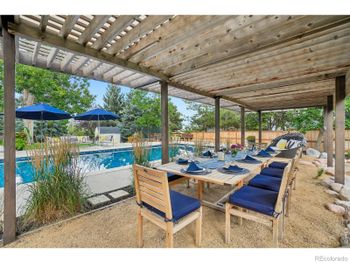
Close neighbor sightlines are the biggest design constraint on most Denver infill pools, more than the water itself. A tall fence section, a pergola with slatted shade, or fast-growing screening plants along the property line solve the privacy problem without eating into buildable pool space the way a full privacy wall on all sides would. Confirm fence height above the standard pool-code minimum with your specific city, since some jurisdictions cap total fence height separately from the pool fencing code minimum.
Mature trees, an existing patio slab, or a detached garage wall on a small urban lot dictate pool placement more than any design preference in most cases. Building the pool design around an existing mature tree for shade, rather than removing it, both saves cost and keeps a yard from feeling stripped bare, though roots within 10 feet of a planned excavation need a certified arborist's review before digging begins.
Whether you are hunting for a Denver infill lot with room for a small pool or trying to figure out what one would add to a home you already own, the Kenna Real Estate Group knows which Front Range neighborhoods reward that investment. Call or text 303-955-4220. A live person answers. Not a robot, not a phone tree. Or search every home for sale in Colorado.
Questions about any home in Colorado? Call or text 303-955-4220. A live person answers.
Most designs use a compact 10-to-16-foot rectangular or L-shaped shell, or a plunge pool between 8 and 15 feet, to fit a 30-to-40-foot-wide lot.
Yes, a smaller water volume costs less to heat and maintain, which matters more in Colorado's roughly 14-to-18-week swim season.
The summer watering rules govern landscape irrigation days and hours, not pool fills, though large fills are worth a call to your water provider first.
Some blocks fall under a registered neighborhood association or historic district review even without a formal HOA, so check before finalizing a design.
Most Front Range cities require 48 to 60 inches with a self-closing, self-latching gate, regardless of lot size.
It is a strong draw where buyers want outdoor amenities on a small lot, though the return depends heavily on the specific neighborhood.