New - 6 Days Ago



KENNA NEWS DESK · DENVER HOME BUYING
By The Kenna Group News Desk at Keller Williams DTC.
Saving for a down payment takes a typical household far longer today than it did in the 1980s, even though 1980s mortgage rates were much higher, a new Realtor.com analysis finds, and Denver buyers face a longer wait than the national average. The reason is home prices, which have grown much faster than paychecks. Below: what Realtor.com found, how long a Denver-area household needs to save a down payment now, our own 1980s comparison for Colorado built from Census data, and the tools that cut the wait from years to months: CHFA down payment assistance, FHA loans, the $1,000 cash-to-close program and seller concessions. If you are searching for down payment assistance near me in Denver, Aurora or Lakewood, start here.
Call or text 303-955-4220. A live person answers. Not a robot, not a phone tree.

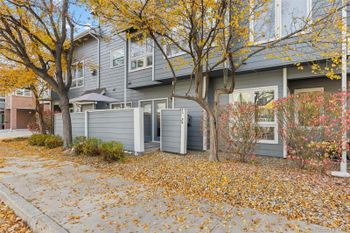
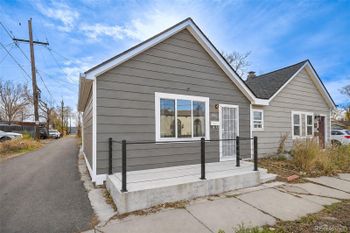
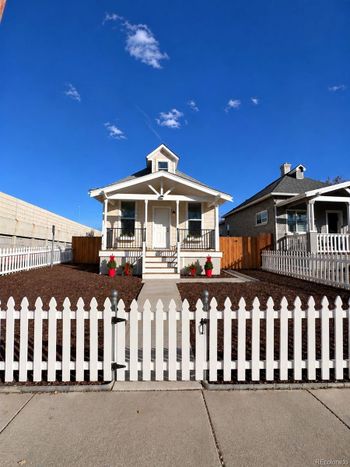
Get new Colorado listings the morning they hit the market. Tell us your price range and area and we set up the search for you. No spam, unsubscribe anytime.
Send me new listingsWhat is my home worth?10.5 years Time for a typical U.S. household to save a 10% down payment Realtor.com, November 2026 | 3.3 years The same savings goal in the 1980s Realtor.com, 1980s average |
11.4 years Denver-Aurora-Lakewood metro, 10% down Realtor.com, November 2026 | 4.8 vs 3.2 U.S. home price as a multiple of household income, today vs the 1980s Realtor.com |
A typical U.S. household now needs 10.5 years to save a 10% down payment on a median-priced home, against 5.7 years in 2019 and 3.3 years in the 1980s, Realtor.com reported in a release dated November 24, 2026. The median home price in the analysis is $423,297 today, against $87,755 in median household income. In the 1980s the averages were $76,270 and $23,900. That puts today's home price at 4.8 times income, up from 3.2 times in the 1980s and 4.1 times in 2019.
Mortgage rates went the other way. Realtor.com puts the 1980s average at 12.7%, against 4.1% in 2019 and 6.6% today. Lower rates help the monthly payment, but they do nothing for the cash a buyer has to save before closing, and the release finds today's households have about $150,000 less purchasing power and need about $49,000 more in yearly income to buy than in the 1980s. Hannah Jones, senior economist at Realtor.com, summed it up in the release: "the financial goalposts have moved." FOX 5 New York shared the findings on Facebook.
| Measure | 1980s (average) | 2019 | 2026 |
|---|---|---|---|
| Median home price | $76,270 | $272,300 | $423,297 |
| Median household income | $23,900 | $65,700 | $87,755 |
| Price-to-income ratio | 3.2 | 4.1 | 4.8 |
| Average mortgage rate | 12.7% | 4.1% | 6.6% |
| Years to save a 10% down payment | 3.3 | 5.7 | 10.5 |
Source: Realtor.com, "Why Haven't You Bought a House Yet? Realtor.com Analysis Reveals Why Today's Buyers Face a Steep Climb to Homeownership," November 24, 2026.
The release also tracks costs beyond the down payment. Realtor.com data shows 43.6% of homes listed for sale in 2025 carried an HOA fee, up from 34.3% in 2019, and the median monthly HOA fee among those listings rose from $108 to $135. It also points to rising homeowners insurance costs. Both matter in metro Denver, where many entry-level homes are condos and townhomes; see our HOA special assessments post and the HOA checklist before closing.
A Denver-Aurora-Lakewood household needs 11.4 years to save a 10% down payment of $57,445, Realtor.com's November 2026 metro table shows, 0.9 years longer than the national 10.5. Realtor.com bases the Denver down payment on 10% of the metro's 2026 year-to-date median price, which works out to $574,450. Its table puts the monthly payment with 10% down at a 7.18% rate at $3,502, or 39.3% of the typical Denver household's income.
Denver ranks 19th of the 50 metros in the table: 18 metros take longer, led by Los Angeles at 24.8 years, and Pittsburgh is the shortest at 7.2. Western neighbors Las Vegas (13.8 years), Salt Lake City (12.0) and Phoenix (11.8) all take longer than Denver.
Years to save a 10% down payment, by metro (Realtor.com, November 2026)
Why do other sites say Denver takes nearly 15 years? That figure comes from a different Realtor.com study. Its December 29, 2025 report used the median down payment Denver buyers actually made from January to November 2025, $80,919, not a flat 10%. At $109,495 in median household income and the 5.1% average U.S. personal savings rate for 2025, a Denver household set aside $5,548 a year, which works out to 14.6 years. Both studies use the same basic math; the size of the down payment explains the gap. Our Denver first-time home buyer programs guide covers the programs that shrink that number.
Years to save equals the down payment divided by what a household saves each year: median household income times the personal savings rate. Realtor.com spelled out that method in its December 2025 report. The November 2026 release does not print its savings rate, but its national numbers line up with the U.S. Bureau of Economic Analysis personal saving rate for each period, by The Kenna Group's check: the saving rate averaged 9.8% from 1980 through 1989, 7.3% in 2019 and 4.5% from January through October 2026 (4.1% in October).
U.S. personal saving rate, percent of disposable income (BEA)
Put the two pieces together and the 1980s comparison makes sense. A down payment is a share of the price, and savings are a share of income, so years to save comes down to two numbers: how many years of income a home costs, and how much of each paycheck households set aside. Since the 1980s, the first number rose from 3.2 to 4.8 and the second fell from about 9.8% to about 4.5%. Both moved against today's buyers.
For Denver, Realtor.com's 11.4 years on a $57,445 down payment works out to about $5,040 saved a year. We use that same savings pace for every Denver example below, so the only thing that changes is the size of the down payment.
Yes. By The Kenna Group's math on U.S. Census Bureau data, a typical Colorado household in 1980 needed about 3.6 years to save a 10% down payment, against 11.4 years for a Denver-area household today. That makes the wait a little more than three times as long now. Realtor.com's national 1980s figure is 3.3 years.
Our 1980 Colorado math, step by step
Limits: the Census figure is the owner's estimate of value for all owner-occupied homes statewide, not a sale price, and the savings rate is national. Statewide 1980 figures are the closest dated public data we found and verified; Census does not publish a matching Denver-metro home value for 1980 in that table.
One more finding: Colorado homes were already pricey for their era. The 1980 Colorado median home value was 3.55 times the state's 1979 median household income, against 2.80 times for the United States on the same Census measures ($47,200 and $16,841). Colorado buyers have carried a heavier price-to-income load for decades; today it is the savings rate that has fallen.
Buyers: a flat 10% down payment is an 11.4-year project for a Denver-area household, but 10% is not the only path. An FHA loan needs 3.5%, and CHFA assistance can cover that, which turns years into months in the examples below. Get a mortgage pre-approval to learn your real number before you start saving toward the wrong goal.
Sellers: buyers using FHA and CHFA bring small down payments and lean on seller help with closing costs. DMAR reported that 65% of Denver metro sales in October 2026 included a seller concession, averaging $12,557. Plan for a closing-cost credit in your net, and price with a Smart Pricing Report or a home value estimate.
Homeowners: today's owners built equity a renter has not. If you plan to help a relative buy, HUD Handbook 4000.1 lists a relative, an employer, a charity and government homeownership programs among acceptable gift sources for an FHA buyer; ask our lender partner how to document the gift before the money moves.
The Colorado market: DMAR's October report put the detached median at $645,000 and the attached median at $375,000, down 3.25% from a year earlier, with attached homes taking a median 48 days to sell. A slower attached market gives savers room to negotiate. See the Denver real estate statistics page and our luxury vs starter home divide post.
What to watch out for
The size of the down payment drives the wait, so the fastest fixes are a smaller required down payment and outside money: an FHA loan cuts a Denver-area wait from 11.4 years to under 5 on a median detached home, and CHFA assistance plus the $1,000 cash-to-close structure cuts it to a few months, by The Kenna Group's math. Every row below uses the same savings pace built into Realtor.com's Denver figure, about $5,040 a year, and DMAR's October 2026 medians.
| Example (Denver metro) | Cash needed for the down payment | Years to save at about $5,040 a year |
|---|---|---|
| 20% down on a $645,000 detached home (DMAR median) | $129,000 | 25.6 years |
| 10% down on a $645,000 detached home | $64,500 | 12.8 years |
| 10% down on $574,450 (Realtor.com Denver basis) | $57,445 | 11.4 years |
| 10% down on a $375,000 condo or townhome (DMAR attached median) | $37,500 | 7.4 years |
| FHA 3.5% down on a $645,000 detached home | $22,575 | 4.5 years |
| FHA 3.5% down on a $375,000 condo or townhome | $13,125 | 2.6 years |
| FHA on $375,000 plus a CHFA grant of 3% of the loan | $2,269 | About 5 months |
| $1,000 cash to close (CHFA second mortgage covers the 3.5%, seller pays closing costs) | $1,000 | About 2 months |
The Kenna Group math. Down payment only; closing costs and reserves are separate unless a seller credit or program covers them. CHFA grant example: 3% of a $361,875 FHA base loan is $10,856, leaving $2,269 of the $13,125 down payment. Program rules, income limits and purchase price limits apply.
Years to save in metro Denver, by down payment path
The Colorado Housing and Finance Authority pairs its first mortgages with two kinds of help, per CHFA's down payment assistance page: a grant of up to the lesser of $25,000 or 3% of the first mortgage, with no repayment, and a second mortgage of up to the lesser of $25,000 or 4% of the first mortgage, with repayment deferred until the first mortgage is paid off, the home is sold or refinanced, or it stops being your primary residence. Buyers living with a permanent disability and first-generation homebuyers can access specific programs of up to $25,000 regardless of the loan amount. CHFA does not lend directly; a CHFA participating lender, such as our lender partner, qualifies you, and a homebuyer education class comes first. Read our CHFA down payment assistance guide, the CHFA Colorado Champions post for first responders and our teacher home buying programs post.
FHA's minimum required investment is 3.5% of the home's adjusted value, and borrowers with a minimum decision credit score of 580 or higher are eligible for that maximum financing, while scores from 500 to 579 are limited to 90% loan-to-value, according to HUD Handbook 4000.1. HUD's 2026 FHA limit for a one-unit home in Denver County is $862,500, so a $645,000 home fits. Compare the options in FHA vs conventional loans in Denver and understanding Colorado FHA loans, and see FHA assumable homes in Denver.
Our $1,000 cash-to-close program lines up three things: a CHFA or other approved down payment assistance second mortgage that covers the down payment, seller-paid closing costs and prepaids negotiated into the contract within your loan's caps, and a $1,000 minimum borrower contribution, which some programs let you cover with gift funds. Income limits, credit rules, homebuyer education and owner-occupancy apply, and our lender partner confirms each one. At the Denver savings pace, $1,000 is about two months of saving instead of 11.4 years.
In October 2026, 65% of Denver metro sales included a seller concession averaging $12,557, DMAR reported. Under HUD's handbook, sellers and other interested parties can put up to 6% of the price toward an FHA buyer's origination fees, other closing costs and discount points, which is $22,500 on a $375,000 home, but not toward the 3.5% minimum investment. Ask for the credit in the offer; it pairs with CHFA help to get to the $1,000 target. Our closing costs in Colorado guide and 3-2-1 rate buydown page show where the money goes, and our September price cuts and concessions post has more Denver data.
At Freddie Mac's 7.21% 30-year average from November 25, 2026, principal and interest on a $375,000 home run $2,293 a month with 10% down and $2,459 with 3.5% down, The Kenna Group math shows. That $166 difference is the trade for buying years sooner. FHA mortgage insurance, property taxes, homeowners insurance and HOA dues come on top; run your full number in the Colorado mortgage calculator and read our November 26 mortgage rates post. If you would rather keep renting a while, compare both costs in renting vs buying in Denver.
Monthly principal and interest at 7.21% (30-year fixed)
Disclosure: general information about how long it takes to save for a down payment in Denver and Colorado, the Realtor.com down payment analysis, 1980s home prices and incomes, CHFA down payment assistance, FHA loans and 3.5% down payments, the $1,000 cash-to-close program, seller concessions and first-time home buyer programs in Denver, Aurora and Lakewood. The Kenna Group at Keller Williams DTC is a real estate group, not a lender, tax advisor or attorney, and is not affiliated with Realtor.com, FOX 5, CHFA, HUD or DMAR; this is not legal, tax or financial advice. Years-to-save and payment examples are The Kenna Group's math on the figures shown; program terms, income limits and price limits are set by each program and confirmed by a participating lender. Keller Williams Realty DTC, LLC. Equal Housing Opportunity.
Realtor.com's November 2026 analysis puts the Denver-Aurora-Lakewood metro at 11.4 years to save a 10% down payment of $57,445, against 10.5 years nationally. With an FHA loan at 3.5% down on a $375,000 condo or townhome, the same savings pace takes about 2.6 years, and CHFA assistance shortens it further.
For saving a down payment, yes. Realtor.com found a typical household needs 10.5 years to save 10% today against 3.3 years in the 1980s, because home prices rose from 3.2 to 4.8 times household income. Mortgage rates averaged 12.7% in the 1980s against 6.6% today, but Realtor.com finds lower rates do not close the gap between prices and incomes.
No. HUD Handbook 4000.1 bars the seller from funding the 3.5% minimum investment. Sellers can pay up to 6% of the price toward closing costs, discount points and rate buydowns, and CHFA assistance or gift funds can cover the down payment.
CHFA offers a grant of up to the lesser of $25,000 or 3% of the first mortgage, with no repayment, or a second mortgage of up to the lesser of $25,000 or 4%, repaid when you sell, refinance or pay off the first loan. Higher interest rates apply, and a CHFA participating lender confirms eligibility.
Call or text The Kenna Group at 303-955-4220. We connect you with our lender partner to check CHFA, FHA and the $1,000 cash-to-close program, then send Denver, Aurora and Lakewood homes that fit those rules.
Call or text 303-955-4220. A live person answers. Not a robot, not a phone tree.
Brian Lee Burke, team leader, The Kenna Group at Keller Williams DTC
Helping You With Your Pad™. Colorado licensed since 2003.
The Kenna Group is a real estate group with Keller Williams Realty DTC, LLC (Keller Williams DTC), serving Denver metro and Colorado home buyers and sellers.