New - Just Now

.jpg)


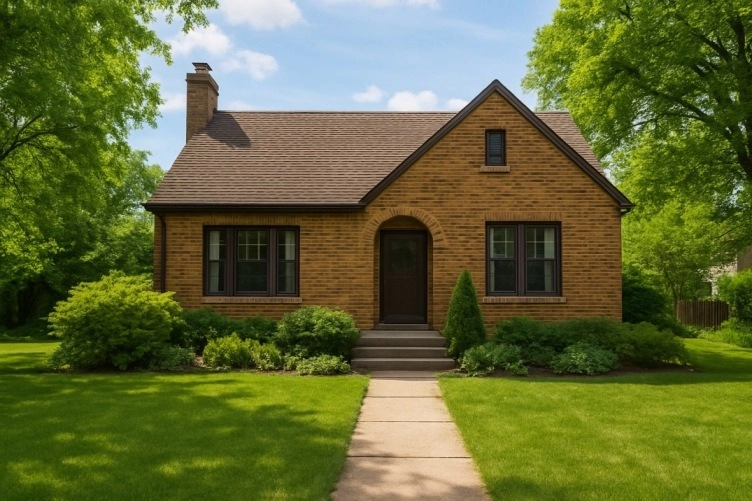
Older Denver homes win on seven things a new build cannot offer: a 6,000 to 9,000 square foot lot, brick walls, 60-year-old trees, a location inside the I-25 and I-70 core, no metro district tax, no HOA and an inspection report that turns into a price credit. Buyers who tour a 1955 brick ranch in Arvada after a model home in Parker see the dated kitchen and miss the rest. This guide lists what the older home is worth on each line, where each era of home sits in the Denver metro, and the two downsides to price in.
Denver's pre-1940 neighborhoods were platted on 25-foot lots doubled up to 50 by 125 feet, which is 6,250 square feet. The 1950s ranch belt in Arvada, Lakewood, Wheat Ridge, Englewood and southeast Denver went to 7,000 to 9,000. New subdivisions in Parker, Castle Rock, Commerce City and east Aurora sell 4,000 to 6,000 square foot lots with 10 feet between houses, and the paired-home and townhome products sell less. On the older lot there is room for a detached garage, a garden, a shop and, inside Denver city limits, an accessory dwelling unit; the Denver ADU and zoning guide covers what the lot allows. Land is the part of the purchase that never depreciates, and the older home comes with more of it.
Denver required masonry construction in its core after the 1863 fire, and the habit held through the 1960s: the Denver Square, the bungalow and the postwar ranch are brick from grade to eave. Brick does not need paint, does not rot, does not dent in hail and does not burn from an ember. A hailstorm that costs a Parker homeowner a $15,000 siding claim costs the Lakewood brick ranch a roof and nothing else. Framing was heavier too: full-dimension 2x4s and 2x6s on 16-inch centers, dense old-growth lumber and plaster over lath instead of half-inch drywall. Builders of that era were, as the Forbes piece on saving old houses put it, more focused on long-term use instead of quick/cheap builds. Repointing mortar every 40 to 60 years, at $10 to $20 per square foot of wall, is the whole maintenance program.
Nearly every subdivision built on the Front Range since the 1990s sits inside a Title 32 metropolitan district that sold bonds to build its own roads, water lines and parks, and the mill levy that repays those bonds sits on the property tax bill for 30 to 40 years. On a new home in Castle Rock, Parker, Erie, Commerce City or east Aurora, the metro district line adds hundreds to thousands of dollars a year on top of the county, city and fire district levies. The 1955 ranch in Arvada and the 1925 bungalow in Denver have no metro district; the streets were built by the city and paid off decades ago. The Denver metro district tax guide shows how to read the line on a tax bill and the Denver property tax guide shows how the rest of the bill works.
Most detached homes built before 1980 in the Denver metro have no homeowners association: no monthly dues, no architectural review on the fence, no special assessment when the community pool fails. New subdivisions carry $50 to $200 per month in HOA dues plus the metro district, and attached products run higher. Over a 10-year hold, the older home saves $6,000 to $24,000 in dues alone. The Denver HOA rules and fees guide explains what to check when a neighborhood does have one.
Denver grew outward, so the age of a house tracks its distance from downtown. A 1920s bungalow in Berkeley, Sunnyside or Platt Park is 10 to 15 minutes by car from downtown and on a bike lane or a light rail line. A 1958 ranch in Lakewood or Englewood is 15 to 20 minutes and near a W Line or D Line station. A 2024 build in Castle Rock or Brighton is 40 to 60 minutes each way at rush hour on I-25. Denver's parks, the Cherry Creek and South Platte trails, Sloan's Lake and Washington Park sit inside the older neighborhoods because they were built together. Browse the Berkeley area guide, the Platt Park area guide and the Sunnyside area guide for three examples.
The Front Range is a prairie; every tree in the metro was planted, and the 60-foot silver maples, honey locusts and elms on a 1950s block took 60 years to grow. New subdivisions get 2-inch caliper saplings and a decade of staking. Shade on the west wall cuts summer cooling load, and a treed street sells faster; ask any appraiser. The one caveat is below ground: roots find clay sewer lines, so every older home gets a sewer scope ($150 to $300) before closing.
A new home has one price, set by the builder, with incentives limited to closing costs or a rate buydown through the builder's lender. An older home has an inspection, and an inspection on a 1960s home finds a panel, a sewer line or a roof. Under the Colorado contract those findings go on an Inspection Objection and come back as repairs, a credit or a price cut. The Kenna Real Estate Group negotiates credits on the majority of older-home purchases it closes; the hidden problems guide for Colorado buyers lists what to look for and what each test costs. A seller who has owned the house for 30 years also has equity and flexibility that a builder with a quarterly sales target does not.
A new subdivision is a construction site for 5 to 10 years: dust, delivery trucks at 6 a.m., heavy equipment parked on the street, and the kind of jobsite accidents that keep an equipment run-over construction accident lawyer Chicago firm busy in every growing metro. An older block is done. The trees are grown, the sidewalks are in, the neighbors have been there 20 years and the only truck on the street is the mail carrier.
| Line item | 1950s brick ranch, Lakewood | 2024 build, Parker |
|---|---|---|
| Property tax add-ons | No metro district | Metro district levy for 30 to 40 years |
| HOA | None on most blocks | $50 to $200 per month |
| Exterior after hail | Brick: roof only | Siding, gutters, roof, screens |
| Lot | 7,000 to 9,000 sq ft | 4,000 to 6,000 sq ft |
| Systems in first 10 years | Budget $15,000 to $40,000 for panel, sewer, furnace, windows | Builder warranty; minor items |
| Energy bill | Higher until insulation and windows are upgraded | Lower; 2021 energy code |
| Commute to downtown Denver | 15 to 20 minutes | 40 to 60 minutes |
The systems row is the honest cost of the older home. The older homes vs new construction maintenance post budgets it year by year, and the benefits of new construction in Colorado page makes the other side's case.
Search by year built on homes for sale in Arvada, homes for sale in Lakewood, homes for sale in Englewood and homes for sale in Denver.
Systems. A 1955 house has had its furnace replaced twice and its roof three times, and the next round is yours: budget $15,000 to $40,000 over the first decade for a panel ($2,500 to $4,500), a sewer line ($8,000 to $25,000 if the scope fails), a furnace and air conditioner ($8,000 to $14,000) and windows ($600 to $1,200 each). Order the sewer scope, a radon test ($150 to $250) and, on any pre-1978 home, read the lead paint disclosure. The Denver radon guide covers the test.
Layout. Eight-foot ceilings, a closed kitchen, one bathroom and small closets are the 1950s plan. Opening a kitchen wall in a brick ranch costs $15,000 to $40,000 with a beam; adding a primary bathroom in the basement costs $20,000 to $35,000. Price the remodel before the offer, not after.
A renovation loan funds that work at closing. Mike Oswald, VP of Mortgage Lending at Rate, NMLS 261003, Equal Housing Lender, writes FHA 203(k) and conventional renovation loans for Denver buyers. You are free to use any lender. Start with the Colorado home financing guide.
The Kenna Real Estate Group, Keller Williams DTC, prices the older home against the new build line by line, including the metro district levy, the HOA and the systems budget, then runs the sewer scope, radon test and inspection and negotiates the findings into credits. Call or text 303-955-4220. A live person answers. Not a robot, not a phone tree. Start now and search every home for sale in Colorado.
Questions about any home in Colorado? Call or text 303-955-4220. A live person answers.
Pull the county treasurer's tax bill for the address and read the taxing authorities; a metropolitan district appears as its own line with its own mill levy. Homes built before 1980 in Denver, Arvada, Lakewood, Englewood and Littleton have none.
Brick lowers the claim after hail because siding, trim and paint are not on the list; the roof still is. Carriers rate the roof age, the panel and the wiring more heavily than the wall material, so replace an old panel before you shop the policy.
7,000 to 9,000 square feet, with a detached or attached garage and a full basement. New subdivisions in Parker and Castle Rock sell 4,000 to 6,000 square foot lots.
Denver allows accessory dwelling units on residential lots citywide, subject to lot size, setback and height rules and landmark review inside a historic district. The 50 by 125 foot lots in the core neighborhoods fit a detached unit on the alley.
$15,000 to $40,000 over the first 10 years: panel $2,500 to $4,500, furnace and air conditioner $8,000 to $14,000, windows $600 to $1,200 each, and a sewer line $8,000 to $25,000 if the scope fails.
The close-in older neighborhoods hold value on land and location, which do not depreciate, while a new home's premium fades as the subdivision ages. Compare price per square foot in the same ZIP over 10 years on the Denver market reports.
Set the year-built filter on the Colorado home search to 1980 or earlier and draw the map around Arvada, Lakewood, Englewood, Wheat Ridge and central Denver. The results are the brick ranch belt and the pre-war core.


