New - 5 Hours Ago

.jpg)


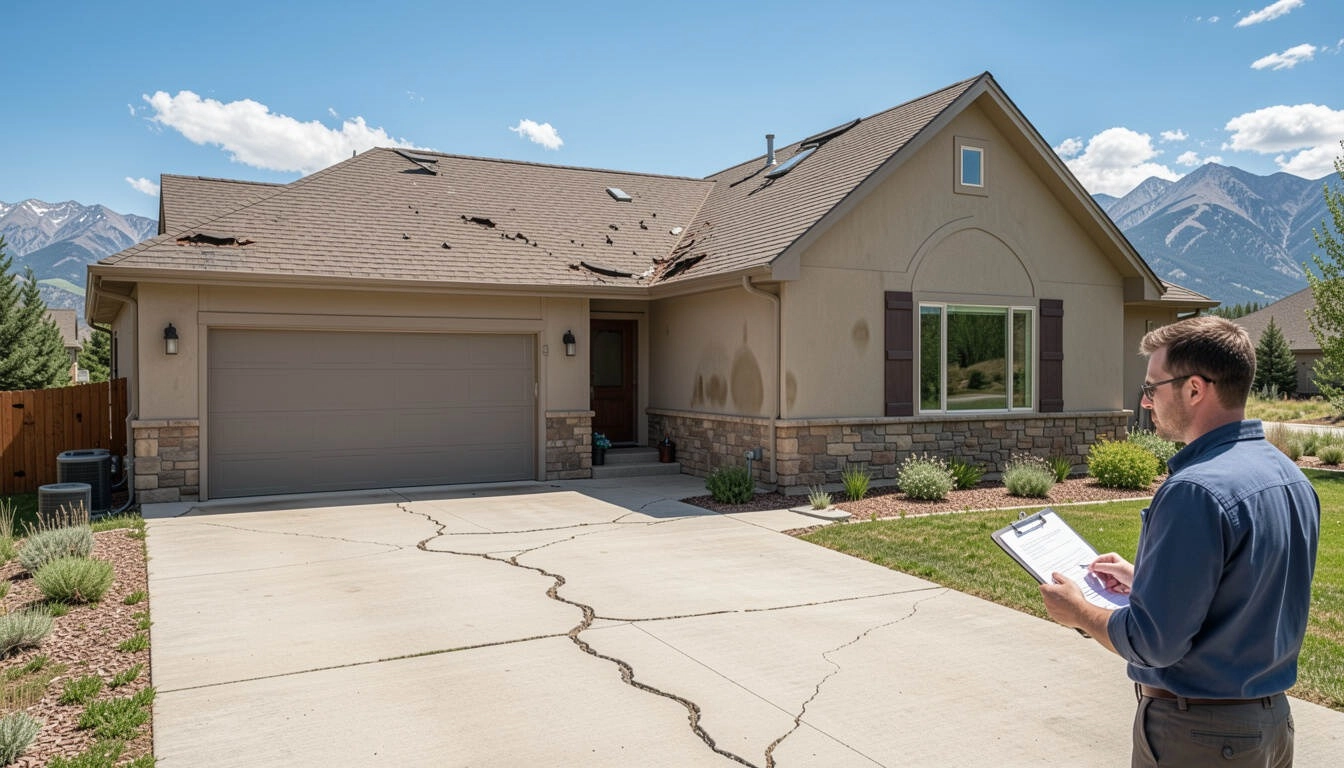
To avoid buying a Colorado house with problems you cannot see, order nine tests inside the inspection period: a sewer scope, a radon test, a structural engineer on the foundation, a meth screen, a moisture and mold check, an oil tank sweep on pre-1960 homes, a permit search, a FEMA flood map lookup and a read of the title commitment. Each test costs $0 to $700, each problem costs $2,000 to $40,000 to fix, and every one is invisible on a Saturday showing. This is the list the Kenna Real Estate Group runs on Denver metro and Front Range purchases, with how each problem is found in Colorado and what it costs.
A RubyHome survey found that 88% of buyers used a home inspection; the buyers who get burned are the ones who stopped at the general inspection. The nine items below are add-ons, and the inspector will not run them unless you order them.
Colorado sellers complete the Colorado Real Estate Commission's Seller's Property Disclosure and must disclose known adverse material facts. The form asks about the roof, the foundation, water intrusion, radon, meth, oil tanks, permits and more. The limit is the word known: a seller who never scoped the sewer line answers "Unknown" honestly, and an "Unknown" answer on the sewer, the roof age, radon or past repairs is the signal to test. When the disclosure mentions a prior repair, ask for the invoice, the permit and the transferable warranty; a foundation repair without an engineer's report is a claim, not a fix.
How it is found: a camera pushed from the cleanout to the city tap, $150 to $300. Every home built before 1975 in the Denver metro needs it; clay lines crack and root in, and Orangeburg fiber pipe collapses. The owner is responsible for the line to the tap in the street. Fix: $3,000 to $6,000 for a spot repair, $8,000 to $25,000 for a full replacement. The historic Denver home guide covers the rest of the old-house systems.
How it is found: a 48-hour continuous monitor placed in the lowest livable level, $150 to $250. The EPA action level is 4 picocuries per liter, and the Colorado Department of Public Health and Environment reports that about half of Colorado homes test above it. A new build in Castle Rock is as exposed as a 1920s bungalow. Fix: $1,200 to $2,500 for a mitigation system. The Denver radon testing and mitigation guide covers the test.
How it is found: the general inspector notes cracks, sloping floors and sticking doors; a structural engineer's inspection and letter ($400 to $700) says whether the movement is active. Front Range bentonite clay swells wet and shrinks dry, and the evidence is stair-step cracks in brick, horizontal cracks in a basement wall, gaps between the slab and the wall and a floor that slopes to one corner. Homes in Douglas County, south Aurora, Highlands Ranch and parts of Boulder County sit on the worst of it. Fix: $2,000 for crack injection, $5,000 to $15,000 for drainage and grading, $10,000 to $40,000 for piers. The Denver foundation crack guide shows which cracks matter.
How it is found: a surface-wipe screening kit ($150 to $400) or a certified industrial hygienist's assessment ($500 to $1,500). Colorado regulates meth-affected properties through the Colorado Department of Public Health and Environment, which sets a cleanup standard measured in micrograms per 100 square centimeters, and the Colorado purchase contract gives the buyer the right to test and to terminate if the result exceeds the state standard. Test every foreclosure, every long-term rental and every home with a strong chemical or cat-urine smell, stained walls or a bathroom fan that was replaced without reason. Fix: $5,000 to $25,000 for certified decontamination, more when drywall and ducts come out. The Colorado foreclosure and REO guide explains why bank-owned homes get this test every time.
How it is found: a moisture meter and thermal camera during the inspection (included by most Denver inspectors), a mold air or surface sample ($300 to $600) when the meter reads wet. Colorado is dry, and that is the problem: the leak that would show in Seattle sits behind a finished basement wall here. Look for efflorescence on block walls, a fresh coat of paint on one basement wall, new carpet in a basement only, a sump pit with a water line, and grading that slopes toward the house. Ice dams on north-facing eaves and hail-torn shingles are the roof-side sources. Fix: $2,000 to $10,000 for remediation, plus the source repair. The hidden water damage signs for Colorado buyers post lists the tells room by room.
How it is found: a tank sweep with a magnetometer ($200 to $400), plus a look for a capped fill pipe near the foundation and a vent pipe on the wall. Denver, Englewood, Littleton and Boulder homes built before 1960 heated with fuel oil before natural gas lines reached every block, and the tanks were left in the yard when the furnace was converted. A leaking tank is a soil contamination problem regulated by the state's oil inspection program within the Colorado Department of Labor and Employment. Fix: $1,500 to $3,500 to remove an intact tank, $5,000 to $20,000 or more when the soil is contaminated. Make removal a seller item; a buried tank stops many lenders and insurers.
How it is found: a permit search on the city or county portal (Denver, Aurora, Lakewood, Arvada, Jefferson County, Arapahoe County and Douglas County all publish permit records online), free, compared against what the listing claims. A finished basement with a bedroom needs an egress window; a basement bathroom needs a permit and an inspected ejector pump; a deck, a water heater, a furnace and a panel each need one. Fix: a retroactive permit costs the permit fee plus whatever the inspector makes you open up or redo, $500 to $15,000; an egress window alone is $3,000 to $6,000. Unpermitted square footage also fails the appraisal when the appraiser will not count it. A real property search through the county assessor shows the recorded square footage and bedroom count to compare against the listing.
How it is found: the FEMA Flood Map Service Center by address, free, plus the Mile High Flood District maps for the Denver metro. Colorado floods along creeks, not oceans: the South Platte, Cherry Creek, Bear Creek, Clear Creek, Boulder Creek, the Big Thompson and Fountain Creek, and the September 2013 flood put blocks in Boulder, Longmont, Lyons, Evans and Aurora under water that had never been mapped as high risk. A home in a FEMA Zone A or AE requires flood insurance on any federally backed mortgage. Fix: there is no fix, only the premium and an elevation certificate ($300 to $600) that lowers it. The Denver flood zones and drainage guide maps the metro's creeks.
How it is found: the title commitment's Schedule B exceptions and the Colorado Energy and Carbon Management Commission's well map, both free. The Colorado purchase contract includes an oil and gas activity disclosure, and in Weld, Adams, Arapahoe and parts of Boulder counties the mineral rights under a home are severed and owned by someone else; a well pad 2,000 feet from a backyard in Erie, Frederick or east Aurora is common. Schedule B also lists easements, HOA covenants, metro district liens, solar leases and any recorded lien the seller has to clear at closing. Read every exception with the title company before the title objection deadline. The Denver home buyer verification checklist puts the title items in order.
| Hidden problem | How it is found in Colorado | Test cost | Fix cost |
|---|---|---|---|
| Sewer line | Camera scope to the tap | $150 to $300 | $3,000 to $25,000 |
| Radon | 48-hour monitor | $150 to $250 | $1,200 to $2,500 |
| Foundation movement | Structural engineer | $400 to $700 | $2,000 to $40,000 |
| Meth | Wipe screen or hygienist | $150 to $1,500 | $5,000 to $25,000 |
| Water and mold | Moisture meter, thermal camera, sample | $0 to $600 | $2,000 to $10,000 plus source |
| Oil tank | Magnetometer sweep | $200 to $400 | $1,500 to $20,000 |
| Unpermitted work | City or county permit portal | Free | $500 to $15,000 |
| Flood zone | FEMA map, elevation certificate | $0 to $600 | Insurance premium |
| Title, minerals, liens | Title commitment, ECMC well map | Free | Seller clears at closing |
Add the general inspection at $400 to $700 and the whole package on a 2,000 square foot home lands between $1,500 and $3,500. Against a $600,000 purchase it is the cheapest protection in the deal. The pre-offer home checks post covers what to look for on the showing itself, before you spend any of it.
The Colorado Contract to Buy and Sell sets an inspection objection deadline, a resolution deadline and a termination deadline. The buyer lists the findings on an Inspection Objection and asks for repairs, a credit or a price cut; the seller answers by the resolution deadline; if there is no signed resolution, the buyer terminates and the earnest money comes back. The Kenna Real Estate Group writes 7 to 10 days for the objection deadline so every test above fits, and asks for the expensive items (sewer, foundation, tank, meth) as repairs or credits while leaving cosmetic items off the list. Read making an offer on a Colorado home for the full deadline list.
When the fix list is real and the price is right anyway, a renovation loan funds the work at closing. Mike Oswald, VP of Mortgage Lending at Rate, NMLS 261003, Equal Housing Lender, writes FHA 203(k) and conventional renovation loans for Colorado buyers. You are free to use any lender. Start with the Colorado home financing guide.
The Kenna Real Estate Group, Keller Williams DTC, orders the sewer scope, radon test, engineer, meth screen, tank sweep and permit search inside the objection window on every Colorado purchase, reads the title commitment with you, and negotiates what the tests find into repairs or credits. Call or text 303-955-4220. A live person answers. Not a robot, not a phone tree. Start now and search every home for sale in Colorado.
Questions about any home in Colorado? Call or text 303-955-4220. A live person answers.
Only if the seller knows about it. The Seller's Property Disclosure requires known adverse material facts; a seller who never scoped the line answers Unknown. The buyer's $150 to $300 scope is the only way to know.
Every foreclosure and bank-owned home, every former long-term rental, and any home with chemical odors, stained walls or unexplained fan and duct replacements. A wipe screen costs $150 to $400; a hygienist's assessment costs $500 to $1,500.
Search the address on Denver's online permit records, or the county portal outside the city, and compare the permits against the bedrooms and bathrooms in the listing. A basement bedroom with no egress window and no permit is the most common miss.
When the inspector notes cracks, sloping floors or sticking doors, yes. Douglas County sits on some of the most expansive clay on the Front Range, and an engineer's letter costs $400 to $700 against $10,000 to $40,000 in piers.
Enter the address at the FEMA Flood Map Service Center and read the zone; A and AE require flood insurance on a federally backed loan. In the Denver metro, add the Mile High Flood District maps for local creek and drainage risk.
A steel fuel-oil tank left in the yard of a pre-1960 home when the furnace converted to natural gas. A leaking tank contaminates soil and stops many lenders and insurers. A magnetometer sweep costs $200 to $400; removal starts at $1,500.
Yes, when you deliver an Inspection Objection by the objection deadline and no resolution is signed by the resolution deadline. The contract lets the buyer terminate and the earnest money is returned.
$300 to $600 for air or surface samples, ordered when the inspector's moisture meter reads wet. Remediation runs $2,000 to $10,000 plus the cost of fixing the leak, grading or roof that caused it.