.jpg)


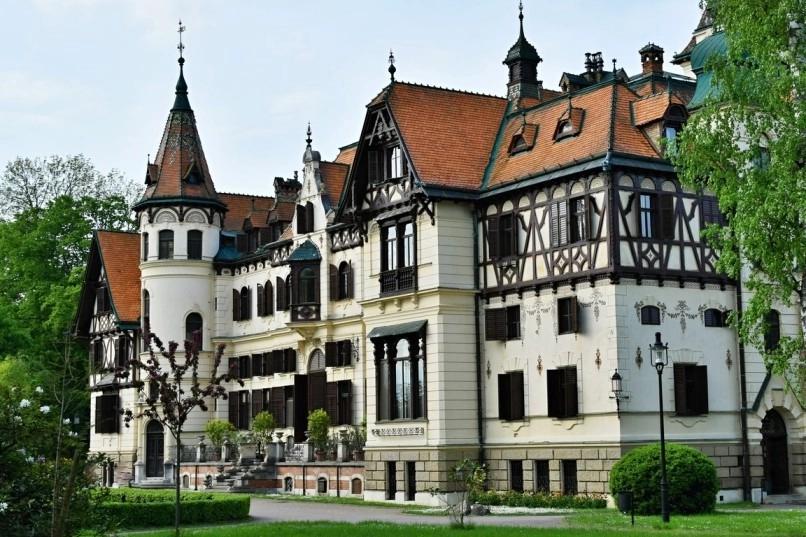
Historic homes in Colorado cluster in a short list of places: Denver's landmark districts (Baker, Curtis Park, Wyman, Potter Highlands, Country Club and Capitol Hill), Golden's 12th Street blocks, Boulder's Mapleton Hill, the Old North End in Colorado Springs, Old Town Fort Collins and the silver-mining town of Georgetown. To find one, search every home for sale in Colorado with the year-built filter set before 1930, then confirm the designation with the city before writing an offer. This guide covers each area, the three kinds of designation and what each restricts, and the checks that keep a Victorian from becoming a money pit.
What makes a house historic in Colorado
Old is not the same as designated. A designated property sits on one of three lists, and only one of them restricts a private owner:
- Local landmark or local historic district: designated by the city (Denver, Boulder, Golden, Fort Collins, Colorado Springs and Georgetown all have programs). This is the designation that requires approval before exterior changes. Denver calls the approval a Certificate of Appropriateness; Boulder calls it a Landmark Alteration Certificate.
- Colorado State Register of Historic Properties: administered by History Colorado. Listing recognizes the property and opens the state tax credit; it does not restrict a private owner spending private money.
- National Register of Historic Places: the federal list. Listing alone does not restrict a private owner either; review applies only when federal money or permits are involved.
A house in a National Register district with no local overlay is free to replace its windows with vinyl. A house in a locally designated district is not. Ask which list before you fall for the porch.
Denver: the landmark districts
Denver has dozens of local historic districts and hundreds of individual landmarks, all reviewed by Denver Landmark Preservation. The districts with the deepest inventory of pre-1920 homes:
- Baker: Queen Anne cottages and rowhouses from the 1880s to 1910s along South Broadway; see the Baker area guide.
- Curtis Park: the city's oldest residential district, 1870s and 1880s Italianate and Queen Anne homes in Five Points; see the Five Points area guide.
- Wyman and the Capitol Hill districts: Denver Squares and brick mansions of the 1890s and 1900s; see the Capitol Hill area guide.
- Potter Highlands: brick Victorians and early bungalows north of the South Platte in the Highlands.
- Country Club: 1900s to 1930s estate homes on large lots east of Cherry Creek, one of the priciest addresses in the city.
Denver's rules on additions, garages, ADUs and demolition inside a district are in the Denver ADU, zoning and historic district guide. The full list of what the districts restrict, the Colorado tax credit and a dos-and-don'ts list is in buying a historic Denver home.
Golden
Golden was the capital of the Colorado Territory from 1862 to 1867, and the blocks along 12th Street north of downtown hold its 1860s to 1900s brick and frame homes, listed as a National Register district. The city runs its own historic preservation program with design review on designated properties. Golden's historic homes sit 10 to 15 minutes on foot from Clear Creek and the downtown Washington Avenue blocks, with North Table Mountain and the Coors plant in view. Search homes for sale in Golden.
Boulder: Mapleton Hill
Mapleton Hill is Boulder's largest historic district, a locally designated neighborhood of 1880s to 1920s homes on the slope north of downtown, under the silver maples the district is named for. Boulder's Landmarks Board reviews exterior changes and issues a Landmark Alteration Certificate before a building permit. Boulder's other districts include Chautauqua and Whittier. The city adds its own layers: a height limit, strict rules on floor area and a rental license program, so read the moving to Boulder guide before you search homes for sale in Boulder.
Colorado Springs: the Old North End
The Old North End sits north of downtown and Colorado College, with 1890s to 1920s homes built for the Cripple Creek gold money and the tuberculosis-era doctors who followed it. It is a National Register district with a city historic preservation overlay, so exterior changes go through city review. Blocks run from modest bungalows on the east side to the mansions along Cascade and Wood Avenues. Search homes for sale in Colorado Springs.
Fort Collins: Old Town
Old Town Fort Collins is the 1880s commercial core that Walt Disney's designers used as a model for Main Street U.S.A., and the residential blocks around it hold Victorian cottages, foursquares and bungalows from the 1880s to 1920s. The city's Historic Preservation Commission reviews designated properties, and Fort Collins keeps a public list of designated landmarks online. Read the moving to Fort Collins guide and search homes for sale in Fort Collins.
Georgetown
Georgetown, 45 miles west of Denver on I-70 in Clear Creek County, is a National Historic Landmark District with a town Design Review Commission that regulates exteriors down to the trim. The homes are 1860s to 1880s silver-boom Victorians on small lots at 8,500 feet, which brings snow loads, short summers, propane or electric heat in many homes and a well-and-septic check on the edges of town. Buy here for the mountains and the architecture, and budget for winter; the nearest full grocery is in Idaho Springs. Search homes for sale in Idaho Springs for the Clear Creek corridor, and see historic downtown Littleton for a Front Range alternative with an 1890s Main Street.
How to search Colorado listings for historic homes
- Filter by year built. On the Colorado home search, set year built to 1930 or earlier and draw the map around one of the districts above. Pre-1900 homes are rare enough that a search of the whole Denver metro returns a manageable list.
- Read the listing remarks for the words landmark, historic district and contributing. Agents who know the district name it; agents who do not are a signal to verify harder.
- Search the city's landmark map. Denver, Boulder and Fort Collins publish interactive maps of designated properties. History Colorado keeps an online database of State and National Register listings.
- Ask for the designation in writing. The Kenna Real Estate Group pulls the overlay from the county assessor and the city map on every pre-1940 listing our buyers tour.
Buyers comparing Colorado against historic markets elsewhere, including San Miguel de Allende real estate, find the same pattern: the designated blocks hold value because supply is fixed, and the cost of ownership is higher because the materials are original.
How to verify the designation before you offer
Three checks, all free: the county assessor's record shows year built and the zoning overlay; the city landmark map shows whether the address is inside a district and whether the house is contributing or non-contributing; and the city's permit history shows whether past exterior work was approved. A non-contributing house inside a district (a 1970s infill, for example) still goes through review for exterior changes but has more latitude. Unapproved past work becomes the buyer's problem at the next permit, so ask the seller for every Certificate of Appropriateness on file.
What a historic Colorado home costs to own
| Cost item | Historic home (pre-1930) | Newer home (post-2000) |
|---|---|---|
| Exterior repairs | Wood, brick, slate; 20% to 40% above standard | Vinyl, fiber cement, asphalt at standard rates |
| Window work | Restore original wood: $500 to $1,500 per window | Replace vinyl: $600 to $1,200 per window |
| Insurance | Higher with knob-and-tube, old panel or wood roof; needs ordinance-or-law coverage | Standard policy |
| Sewer line | Clay; scope every purchase, $8,000 to $25,000 to replace | PVC; rarely an issue |
| Heating | Boiler and radiators, or converted furnace; $4,000 to $12,000 to replace | Forced air, $5,000 to $9,000 to replace |
| Metro district tax | None in the old districts | Common in new subdivisions; adds to the tax bill |
| HOA | None on most detached homes | $50 to $200 per month in most subdivisions |
The last two rows are why older homes pencil better than buyers expect; the market advantages of older Denver homes post runs the numbers, and the Denver metro district tax guide explains the tax line.
The inspections a historic Colorado home needs
Order the general inspection ($400 to $700) plus a sewer scope ($150 to $300), a radon test ($150 to $250; most of the Front Range is EPA Zone 1), a structural engineer's look at a stone or brick foundation on expansive clay ($400 to $700), and an electrician's look at the panel and wiring. Every home built before 1978 comes with the federal lead-based paint disclosure and a 10-day inspection right; a pre-1980 home needs an asbestos check before any renovation that disturbs pipe wrap, tile or plaster. The hidden problems guide for Colorado buyers covers each one, and the Denver foundation crack guide explains what movement on clay looks like.
Tax credits for historic homes in Colorado
Colorado offers a state income tax credit for approved rehabilitation of an owner-occupied home that is designated as a local landmark or listed on the State or National Register; History Colorado administers the residential program. The work must be approved before it starts and follow the Secretary of the Interior's Standards, and the credit has a minimum spend and a per-property cap that the legislature adjusts. Confirm the current percentage and cap with History Colorado and a Colorado CPA before you count on it.
Financing follows the same rules as any purchase, with one addition: a house that needs a panel, a sewer line and windows the seller will not fix qualifies for an FHA 203(k) or conventional renovation loan that funds the repairs at closing. Mike Oswald, VP of Mortgage Lending at Rate, NMLS 261003, Equal Housing Lender, writes both for Colorado buyers. You are free to use any lender. Start with the Colorado home financing guide.
What to ask the seller
- Which list is the house on: local, State Register, National Register, or none?
- Which past exterior projects had a Certificate of Appropriateness or the local equivalent, and where is the paperwork?
- When was the sewer line last scoped or replaced?
- What is in the panel and the walls: Federal Pacific, knob-and-tube, aluminum, galvanized?
- Has the house had a radon test, a lead test or an asbestos survey? The Colorado Seller's Property Disclosure asks; the answers belong in writing.
- What did the insurer require at the last renewal?
Where to go next
- How the Kenna Real Estate Group helps buyers
- The Colorado home buyer's guide
- First-time home buyer guide for Colorado
- How to evaluate mid-century modern homes in Colorado
- Homes for sale in Denver
- Meet the Kenna Real Estate Group agents
Talk to the Kenna Real Estate Group
The Kenna Real Estate Group, Keller Williams DTC, searches the designated districts from Georgetown to Fort Collins, verifies the overlay and the permit history on every historic listing, and orders the sewer scope, radon test and engineer before the inspection deadline. Call or text 303-955-4220. A live person answers. Not a robot, not a phone tree. Start now and search every home for sale in Colorado.