New - 19 Hours Ago

.jpg)


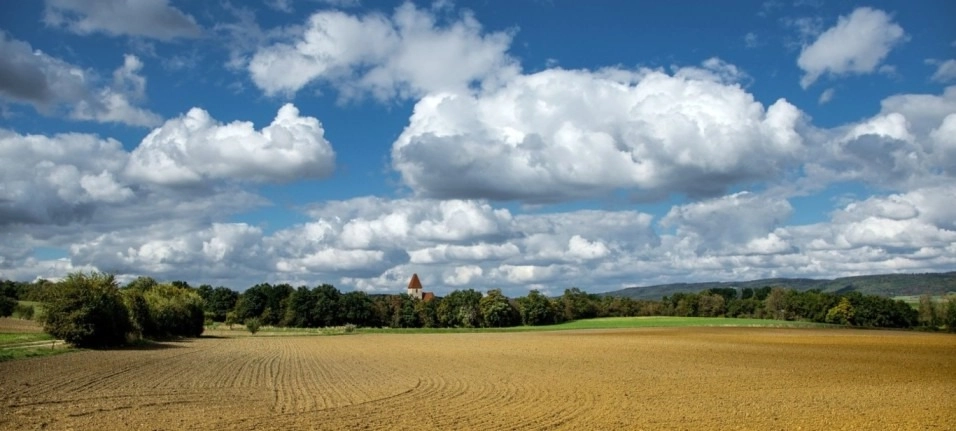
Colorado land pays in ten ways: agricultural tax classification, hay, grazing leases, horse boarding, a solar lease, an accessory dwelling unit, a short-term rental, a hunting lease, an RV or campground operation, and a conservation easement. Each one has a Colorado rule attached, and the first four depend on the same thing: whether the land is used for agriculture for profit, which cuts the property tax bill by 70% or more.
Across the country, 77 million people own 62% of land; on the Front Range that ownership runs from 2.5-acre lots in Elizabeth and Franktown to 640-acre sections in Weld and Elbert counties. This guide gives the dollars, the acreage thresholds and the county rules for each use.
Colorado assesses agricultural land at 26.4% of its productive value, which is what the land earns from crops or grazing, not what it sells for. Residential land is assessed on market value at a lower rate, and vacant land is assessed on market value at a higher one. A 40-acre grazing parcel near Kiowa carries an ag tax bill in the low hundreds of dollars a year; the same parcel classified as vacant land carries a bill in the thousands.
Two Colorado statutes make 35 acres the number that matters. C.R.S. 30-28-101 exempts parcels of 35 acres or more from county subdivision regulations, so a 140-acre ranch splits into four 35s without a subdivision plat. And C.R.S. 37-92-602 allows an exempt domestic well on 35 acres or more that serves up to three single-unit homes, one acre of lawn or garden, and livestock. Under 35 acres you get a household-use-only well: indoor use in one home, no irrigation, no stock tank. That well permit decides whether an ADU, a boarding barn or a hay field is possible, so pull it from the Colorado Division of Water Resources before anything else.
| Use | What it yields | What it pays | Where it works |
|---|---|---|---|
| Irrigated hay (alfalfa or grass) | 3 to 5 tons per acre per year over 3 or 4 cuttings | $200 to $300 per ton; horse-quality small squares at the top | Ditch-irrigated ground in Weld, Larimer, Boulder and Adams counties |
| Dryland hay | 1 ton per acre or less | Same per ton, on a tenth of the volume | Elbert, eastern Arapahoe and eastern Adams counties |
| Grazing lease | 30 to 40 acres per cow-calf pair per year on shortgrass prairie | $20 to $35 per animal unit month | Any fenced parcel with water; the lease keeps ag status |
| Pasture rent for horses | 2 to 5 acres per horse on irrigated pasture, more on dryland | $250 to $450 per horse per month | Douglas, Elbert and Jefferson County acreage near Denver |
Full-care boarding in the Denver metro runs $600 to $1,000 per horse per month; pasture board runs $250 to $450. Ten stalls at $750 is $90,000 a year in gross revenue against hay, labor, insurance and manure hauling. Two rules come first.
Barn, arena and storage specifics are in our Colorado horse property buying guide and in buying a Colorado horse property: barns, storage and land. Current listings are on our Colorado horse properties for sale page.
Utility-scale and community solar developers lease Front Range land at $500 to $2,000 per acre per year on 20- to 35-year terms, and need 5 to 7 acres per megawatt. The land that gets a lease sits within a mile of a three-phase distribution line or a substation, is flat to 5% slope, and is 10 acres or larger for a community solar garden under Xcel Energy's Solar*Rewards Community program. Colorado's SB23-092 lets land keep its agricultural classification when grazing or crops continue under the panels, so a solar lease no longer costs the ag rate. Read the lease for the decommissioning bond, the crop-damage clause and who pays the property tax increase on the improvements.
An accessory dwelling unit rents for $1,400 to $2,200 a month on the south metro edge and houses a parent or a ranch hand for nothing. Three checks decide it: the well permit (a household-use-only well cannot serve a second dwelling; a domestic well on 35 acres serves up to three), the septic permit (the county health department sizes it per bedroom), and the county's ADU rule. Douglas County's rules are in our Douglas County ADU regulations guide. A barndominium with living quarters and a shop is the acreage version of the same idea; see the Colorado barndominium guide and does that big shop add value to a Colorado acreage property.
Colorado has no statewide short-term rental license, so the rule is set where the land sits. Denver licenses STRs only in your primary residence. Summit, Larimer and El Paso counties license STRs in unincorporated areas with occupancy caps and inspection requirements. Douglas, Jefferson, Elbert and Weld counties each publish their own rule in the county code; read it before you list a cabin near Conifer or a guest house near Elizabeth. Every STR collects state sales tax and the county lodging tax, and a well permit that says household use only does not cover paying guests in a second structure.
Eastern plains parcels in Elbert, Lincoln, Weld and Morgan counties lease to hunters for pronghorn, deer and upland birds by the season. Colorado Parks and Wildlife also pays landowners to open ground to public hunting through its Walk-In Access program. A hunting lease does not disturb ag classification and stacks on top of a grazing lease.
Campground demand along I-70, US 285 and the Front Range foothills is high from Memorial Day through October, and an RV ranch you can expand with park-model cabins earns more per site than bare pads. In Colorado it is a commercial land use: the county requires a rezoning or special-use permit, the state requires approved water and wastewater systems sized for the site count, and the land loses agricultural classification on the acres in use. Plan on 12 to 24 months of county process before the first guest.
A landowner who gives up development rights on part or all of a parcel to a certified land trust keeps ownership, keeps farming or grazing, and receives a Colorado state income tax credit of 90% of the donated value, capped at $5 million per donation, which is transferable and sells to other Colorado taxpayers. On a 320-acre ranch near Kiowa where development rights are worth $1.5 million, that is a $1.35 million credit. The easement is permanent and lowers the resale price by the value of the rights given up.
Ag status, the well permit, the lease file and the water deed are the documents that set the price. Read what Colorado landowners should know before selling vacant property and selling land in Colorado before you sell for cash. Buyers get the acreage checklist in equestrian and acreage homes near Denver, Parker and Evergreen.
We sell acreage, horse property and land across Douglas, Elbert, Jefferson, Arapahoe, Adams and Weld counties, and we pull the ag status, well permit and water deed before you decide. Call or text 303-955-4220. A live person answers. Not a robot, not a phone tree. Or search every home for sale in Colorado and filter by lot size.
Questions about any home in Colorado? Call or text 303-955-4220. A live person answers.
There is no acreage minimum in C.R.S. 39-1-102(1.6). The land must be used as a farm or ranch for profit in the two prior years and the current year. Five irrigated acres of hay qualify; 35 idle acres do not.
Only when they are part of a for-profit ranching or breeding operation. Boarding, training and riding facilities do not qualify, so pair a boarding barn with a hay or grazing lease on the rest of the land.
A household-use-only well: indoor use in one home, no irrigation, no livestock watering. The exempt domestic well that serves three homes, one acre of irrigation and livestock requires 35 acres or more.
$500 to $2,000 per acre per year on 20- to 35-year terms, for flat parcels of 10 acres or more within about a mile of three-phase power or a substation. SB23-092 keeps the ag classification when grazing or crops continue under the panels.
The county code decides; Colorado has no statewide license. Denver allows STRs only in a primary residence, and Summit, Larimer and El Paso counties license them in unincorporated areas. Read your county's rule and your well permit before you list.
A state income tax credit equal to 90% of the donated easement value, capped at $5 million per donation. The credit is transferable, so landowners with small tax bills sell it to other Colorado taxpayers.
Only when the deed conveys them. Water rights are separate property under prior appropriation, a well permit is not a water right, and ditch shares are company stock that transfers by certificate.
Start with the Colorado Horse Property Buying Guide, then search every horse property for sale in Colorado.
Buying or selling horse property in Colorado? Call or text 303-955-4220. A live person answers. Not a robot, not a phone tree.


