New - 2 Hours Ago
.jpg)


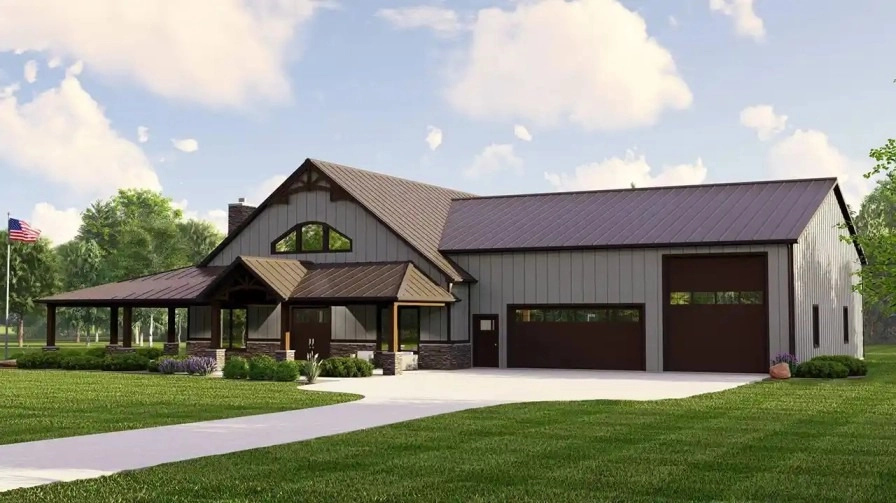
Interest in barndominiums has climbed across Colorado for one practical reason: a metal-shell kit on acreage costs less per square foot than a stick-built custom home and goes up faster, which matters most on the land-rich, water-limited parcels common in Weld, Elbert, Douglas, and El Paso counties. Expect $95 to $175 per square foot for a finished barndominium on Colorado land, against $200 to $350 per square foot for a comparable custom stick-built home, once you've priced in the county permits, well, and septic system every rural build needs.
A barndominium is a steel-frame or post-frame shell — the same structure used for agricultural buildings — finished out as a full residence, with an open floor plan and a mix of living space and workshop or garage under one roof. Colorado buyers looking for acreage outside the Denver metro's HOA-heavy subdivisions are drawn to the combination of lower per-square-foot cost, large shop space for equipment or livestock, and the ability to phase construction.
Zoning is set county by county, not statewide, so the answer depends on the parcel. Weld, Elbert, Douglas, El Paso, Larimer, and Pueblo counties all have zoning districts, agricultural or rural residential, that permit a barndominium as a primary residence. Land inside city limits or a platted subdivision carries a far higher chance of restrictions written into the zoning code or the HOA's design covenants. Confirm the specific parcel's zoning designation with the county planning office before you buy the land, not after.
The steel kit itself runs $20 to $40 per square foot delivered. Once you add the concrete slab, insulation, interior finishes, electrical, plumbing, and HVAC, a finished barndominium in Colorado lands at $95 to $175 per square foot — a 2,000-square-foot home runs roughly $190,000 to $350,000 before land, well, and septic. Land, well drilling, and a septic system add $40,000 to $90,000 depending on water depth and soil percolation in your area.
Not always, but agricultural or rural-residential zoning is where county planning offices most consistently approve them as a primary residence. Some counties allow a barndominium under general rural zoning with a conditional-use permit. Ask the county planning office directly whether the specific parcel's zoning allows a residential structure of this type before writing an offer.
Every county in this group requires a building permit for the structure, plus separate permits for electrical, plumbing, mechanical, well, and septic (called an OWTS permit in Colorado, issued through the county or a local health department). Expect four to ten weeks for plan review depending on the county's current permit volume, plus additional time for well and septic approval, which routes through a separate process from the building permit.
Yes, and this is the long pole in the schedule in most cases, not the building permit itself. A new well permit goes through the Colorado Division of Water Resources, and approval depends on the water district the parcel sits in — some Front Range groundwater basins have tighter well-permitting rules than others. A septic system (OWTS) needs a soil percolation test before the county will issue a permit, and poor-draining clay soil can require an engineered system that costs more than a standard septic field.
Standard mortgage financing works once the barndominium is complete and appraises as a residence, but the construction phase itself needs a construction loan in most cases, since many conventional lenders won't finance a barndominium build in progress. Not every lender underwrites metal-shell homes the same way a stick-built home is underwritten — ask a lender directly about barndominium experience before applying, and get quotes from more than one. Mike Oswald at Rate (NMLS 261003, Equal Housing Lender) can walk through construction-to-permanent loan options for a Colorado barndominium build; you are free to use any lender. See Colorado home financing guide and Kenna Credit Care mortgage readiness for the credit steps that come before a construction loan application.
Front Range and mountain-adjacent counties set higher required snow-load ratings than Colorado's eastern plains, and the kit's engineering has to match the specific county's building code requirement for that elevation. A kit engineered for a 20-pound snow load in one county won't pass plan review in a county that requires 40 or 50 pounds — confirm the load rating before ordering, not after delivery.
Rarely on true rural acreage, since most of that land isn't inside an HOA. Some newer rural subdivisions do carry covenants that specify exterior materials or roof pitch, which can rule out a standard metal-shell design. Read the title report and any recorded covenants for the parcel before you commit to a design.
Once the slab is poured and the kit arrives, erection of the shell takes one to three weeks. Interior finish-out runs another four to seven months depending on how much of the work is contracted out versus owner-finished. Total timeline from signed land contract to move-in runs nine months to a year and a half, driven mostly by well, septic, and permit timelines rather than the shell itself.
Per square foot, yes — $95 to $175 versus $200 to $350 for a comparable stick-built custom home. The gap narrows as interior finishes get more custom, since cabinetry, flooring, and fixtures cost the same regardless of what's holding up the roof.
Appraisal is the biggest wildcard in a barndominium project, since appraisers need comparable barndominium sales in the same county to support the value, and in counties with few recent sales, that comp set can be thin. Ask a local agent to pull comps for barndominiums or similar steel-shell homes before finalizing a construction budget, so the finished value lines up with what was spent.
A barndominium is built and permitted from the start as a residence. A pole barn conversion takes an existing agricultural structure, originally permitted for storage or livestock, and finishes it out as living space after the fact — that path needs a change-of-use permit and, in most counties, a full re-inspection to residential code, which can cost more than starting with a residential-rated kit.
On agricultural or rural-residential zoning, yes, subject to the county's minimum acreage-per-animal rules. Browse current listings at Colorado horse properties for sale and the Colorado horse property buying guide for water rights and fencing questions that apply to both horse properties and barndominium acreage.
A geotechnical soil report is standard practice for any Colorado slab-on-grade build, barndominium or not, given how common expansive clay is statewide. Skipping it to save a few thousand dollars up front is the most frequent cause of slab cracking within the first few years.
Some insurers price metal-shell residential construction differently than stick-built homes, and coverage for the shop or garage portion of the structure needs to be scoped correctly if it holds equipment, vehicles, or livestock supplies. Get an insurance quote before finalizing the floor plan, since coverage cost can shift the final budget more than buyers expect.
For custom design work and county-specific plan sets, My Barndo Plans builds barndominium layouts to a buyer's acreage and budget; confirm any plan set against your specific county's current building code before ordering materials.
Finding acreage zoned for a barndominium, with water rights and well access that actually work for a build, takes local county-by-county knowledge. The Kenna Real Estate Group can pull zoning and well-permit history on specific Front Range and eastern-plains parcels before you make an offer. Call or text 303-955-4220. A live person answers. Not a robot, not a phone tree. Or search every home for sale in Colorado to see current acreage listings.
Questions about any home in Colorado? Call or text 303-955-4220. A live person answers.
Weld, Elbert, Douglas, El Paso, Larimer, and Pueblo counties all have agricultural or rural-residential zoning districts that permit them as a primary residence. Confirm the specific parcel's zoning before buying.
A finished barndominium runs $95 to $175 per square foot, or roughly $190,000 to $350,000 for a 2,000-square-foot home, before land, well, and septic costs of $40,000 to $90,000.
Yes, plus separate electrical, plumbing, mechanical, well, and OWTS (septic) permits through the county.
The finished home can be financed with a standard mortgage once it appraises as a residence, but the build phase needs a construction loan in most cases, and not every lender finances metal-shell homes the same way.
Nine months to a year and a half from signed land contract to move-in, with well and septic permitting the longest step in most cases, not the shell construction.
Per square foot, yes: $95 to $175 versus $200 to $350 for a comparable stick-built custom home in Colorado.
Appraisal depends on finding comparable barndominium sales in the same county, and that comp set can be thin in counties with fewer recent sales.
Yes. A geotechnical soil report is standard for any Colorado slab-on-grade build given how common expansive clay soil is statewide.
Start with the Colorado Horse Property Buying Guide, then search every horse property for sale in Colorado.
Buying or selling horse property in Colorado? Call or text 303-955-4220. A live person answers. Not a robot, not a phone tree.