New - 15 Mins Ago

$435,000
Active
2
Beds
3
Baths
1273
Sqft
0.02
Acres
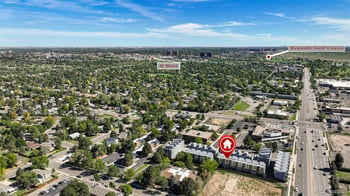
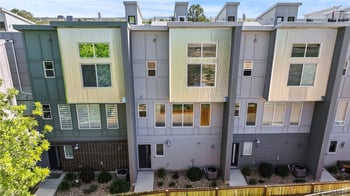
8711 E Hampden Ave #13, Denver, CO 80231
MLS#: REC8306942
.jpg)


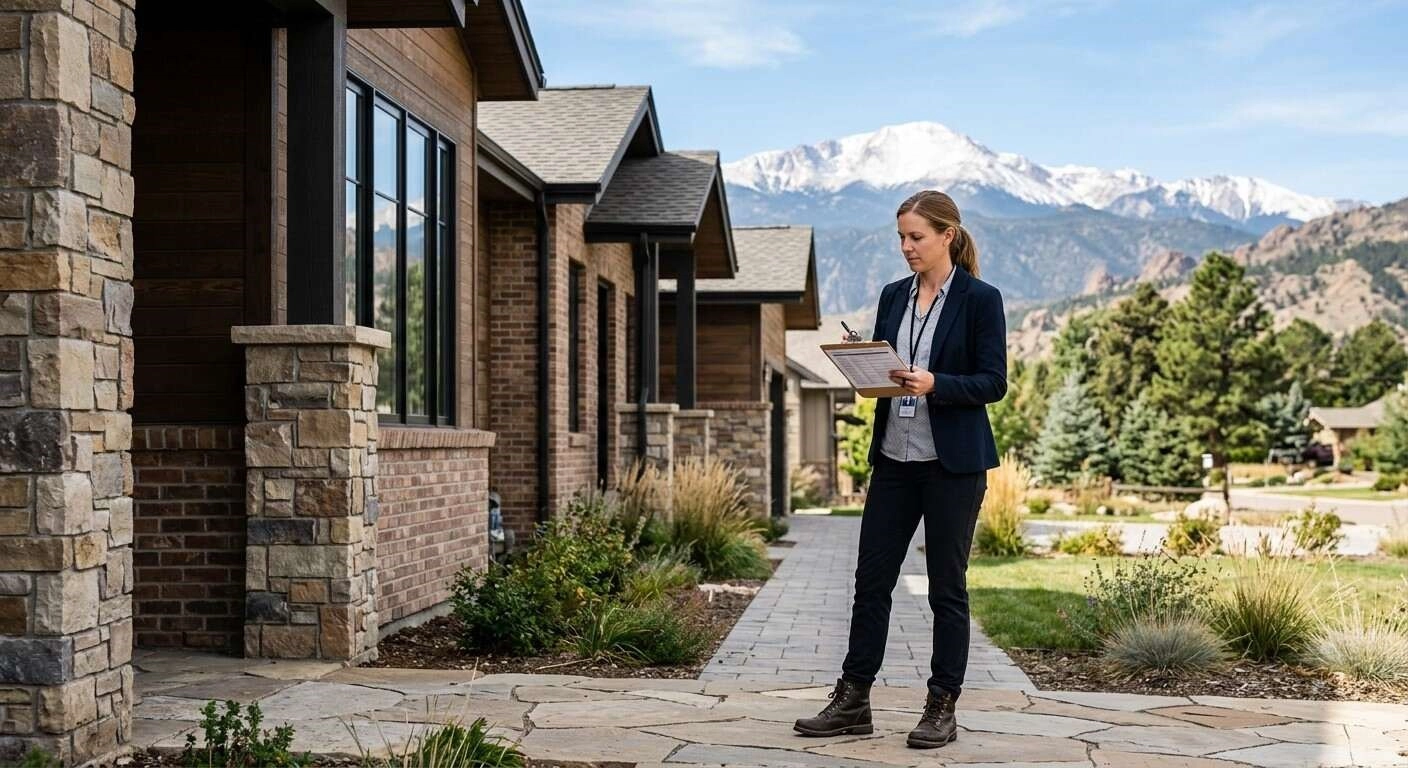
A standard Colorado home inspection is a visual review of the roof, structure, electrical panel, plumbing, HVAC and appliances. It does not run a camera down the sewer line, test for radon, put an engineer's stamp on a cracked foundation, sample for mold, pump the septic tank, or tell an insurer whether the roof survives the next hailstorm. On the Front Range, those add-ons are where the five-figure surprises live.
This guide lists every specialized inspection a Colorado buyer orders, what it costs, and when to skip it. Order the ones that match the home, get the reports back before the Inspection Objection Deadline, and use them to negotiate. The Colorado home buyer's guide covers the rest of the purchase.
Colorado does not license home inspectors, so the standard of care is whatever the inspector's certification (ASHI or InterNACHI) requires, and both standards exclude the same list: sewer laterals, radon, mold, wood-destroying insects, wells, septic systems, engineering opinions, and anything behind a finished wall. AmeriSave's 2026 mortgage guide puts the national average for a standard inspection at about $343; Denver metro inspectors charge $400 to $650 for a 2,000 square foot home. The add-ons below run $150 to $800 each.
The Colorado Contract to Buy and Sell Real Estate gives you an inspection window with three dates: the Inspection Objection Deadline, the Inspection Resolution Deadline and the Inspection Termination Deadline. On most Front Range contracts the window is 7 to 10 days, so every report below gets ordered on day one. Our post on finding a good home inspector in Denver explains how to vet the general inspector first.
Yes on any home built before 2000, and on any home with a large tree within 30 feet of the line. A sewer scope runs a camera from the cleanout to the city main and costs $150 to $300 in the Denver metro. The lateral is the homeowner's responsibility all the way to the main, and in older Denver, Englewood, Lakewood and Arvada neighborhoods that is clay tile pipe under the yard and the street.
Yes. Most Colorado counties are EPA Zone 1, the highest radon potential, and about half of Colorado homes test above the EPA action level of 4.0 picocuries per liter. A 48-hour continuous monitor test placed by your inspector costs $125 to $250. Since August 2023, Colorado law requires sellers to disclose any known radon test results and mitigation and to give the buyer the state radon brochure, so read the Seller's Property Disclosure before you order.
A mitigation system (sub-slab depressurization, a sealed pipe and a fan) costs $1,200 to $2,500 on a Front Range home and brings most readings under 2.0. A high reading is a negotiated seller credit, not a reason to terminate. The full playbook is in radon and the Denver home purchase.
Order one when the general inspector reports stair-step cracks in block or brick, horizontal cracks in a poured foundation wall, a basement slab heaved more than an inch, or doors that stick on one side of the house. A licensed Colorado professional engineer's site visit and letter costs $400 to $800.
The reason is the ground. Expansive bentonite clay underlies most of the Front Range from Fort Collins through Denver, Highlands Ranch, Castle Rock and Colorado Springs. It swells when wet, shrinks when dry, and moves foundations every freeze-thaw cycle. Colorado requires builders of new homes to give buyers a soils report and a summary of expansive soil risk (Colorado Revised Statutes Title 6, Article 6.5), so on a home built after 1984 ask the seller for the original report.
An engineer's letter that says "cosmetic, monitor" is worth as much as one that finds a problem, because the next buyer's inspector will flag the same cracks. See the inspection red flags that kill Denver home sales for the seller's side of the same list.
Not above grade, where single-digit winter humidity dries everything. It is a problem in three places: finished basements with window wells that flood in a spring downpour, bathrooms with no exhaust fan, and attics where ice dams have leaked for a decade. Order a mold inspection with air and surface sampling ($300 to $600) only when the general inspector or the thermal scan finds moisture. Remediation of a basement wall runs $2,000 to $6,000; a whole finished basement runs $10,000 to $25,000. Our guide to hidden water damage warning signs in Colorado homes shows what to look for at the showing.
Acreage in Elbert, Douglas, Weld, Larimer, El Paso and Park counties comes with a domestic well permitted by the Colorado Division of Water Resources and an on-site wastewater treatment system (septic) regulated by the county health department under Colorado Regulation 43. Neither is covered by a standard inspection. Order all four:
The Colorado horse property buying guide covers water rights and outbuildings, and you can browse acreage on the Colorado horse properties for sale page.
Colorado's hail season runs May to September, and a Front Range asphalt roof sees a damaging storm every 3 to 7 years. The general inspector looks from a ladder; a roofing contractor ($0 to $200, most waive it) gets on the roof and counts bruised shingles per test square. Ask the seller for the install date, the shingle class and the claim history.
Insurance cost feeds the mortgage payment, so get a binding quote during the inspection period. The Kenna Real Estate Group refers buyers to Mike Oswald, VP of Mortgage Lending at Rate, NMLS 261003, Equal Housing Lender, for that payment check; you are free to use any lender. Details are on the Colorado home financing guide. For roof lifespans by material, see the roof report for Colorado home buyers.
Federal Pacific Electric Stab-Lok panels were installed in Colorado homes from the 1950s into the 1980s, and Zinsco (and Sylvania-Zinsco) panels through the 1970s. FPE breakers fail to trip on overload at a high rate; Zinsco breakers weld to the bus bar. Most Colorado insurers decline the policy or require replacement before binding. The general inspector identifies the brand from the label; an electrician's evaluation is $100 to $200.
Yes from October through April, when the indoor-outdoor temperature difference exceeds the 20 degrees Fahrenheit the scan needs. The U.S. Department of Energy's guidance on thermographic inspections describes how an infrared camera finds missing insulation, air leaks, wet drywall and hot breakers that no visual inspection sees. Many Denver inspectors add the scan for $75 to $150, and the heat map of a 1970s Centennial bi-level with thin attic insulation turns into a $2,000 insulation credit.
Subterranean termites are rare above 5,000 feet, but carpenter ants, wood-boring beetles and mice are not. A wood-destroying insect (WDI) inspection is $100 to $175 in the Denver metro. FHA and VA appraisers require a pest clearance whenever they note evidence of infestation, so on a government-backed loan order the WDI report on day one. The same logic scales up: on commercial and industrial property, buyers pay for engineering-grade evaluations and for heat treatment services that relieve stress in structural steel, because the cost of missing a defect exceeds the cost of finding it.
Radon (builders rarely test), a sewer scope (crushed laterals and construction debris are common on new streets in Parker, Erie and Windsor), and a thermal scan for missing insulation bays. The builder's one-year warranty covers workmanship, not the ground under the house.
The Colorado contract gives you three moves by the Inspection Objection Deadline: ask for repairs, ask for a credit, or terminate and get the earnest money back. Denver metro sellers prefer a credit over a repair, because a credit closes without contractors in the house. Bring quoted numbers, not adjectives: a $2,100 radon system, a $3,800 panel, a $9,500 sewer repair. Check that the credit fits your loan's seller-contribution limit (3% to 6% of the price); the Colorado closing costs guide shows where the credit lands on your settlement statement.
The Kenna Real Estate Group at Keller Williams DTC schedules every inspection on day one of the contract, brings vetted sewer, radon, structural and roofing inspectors to the property, and turns the reports into a written objection before the deadline. Call or text 303-955-4220. A live person answers. Not a robot, not a phone tree. Start with the home itself and search every home for sale in Colorado.
Questions about any home in Colorado? Call or text 303-955-4220. A live person answers.
Sewer scope $150 to $300, radon $125 to $250, thermal scan $75 to $150 and a WDI report $100 to $175, so $450 to $875 on top of the $400 to $650 general inspection.
No. Colorado has no state license for home inspectors. Hire one certified by ASHI or InterNACHI and ask for a sample report.
The EPA action level is 4.0 picocuries per liter. About half of Colorado homes test above it, and a mitigation system costs $1,200 to $2,500 on the Front Range.
Order one on any home built before 2000, and on any newer home with a big tree near the line or slow drains. Older Denver laterals are clay tile or Orangeburg and fail without warning.
Most Colorado carriers decline or require replacement first. Budget $2,000 to $4,500 for a new 200-amp panel and ask for it as a seller credit.
Jefferson, Boulder and El Paso are among the Front Range counties that require a transfer-of-title septic inspection and use permit. Confirm with the county health department before the Inspection Objection Deadline.
You lose the right to object or terminate over what they found. Order every specialized inspection the day the contract is signed.
Yes. A pump yield test ($300 to $500) and a water quality lab test ($150 to $400) are separate from the home inspection, and the Division of Water Resources permit must match the well.