How many horses the land allows
Counties set animal units per acre. Douglas County, for example, asks for 2.5 acres for the first two horses. Check the county, not the listing.
Colorado · horse property · the Front Range and beyond
Every horse property, equestrian estate and acreage home for sale in Colorado, on a live map, with the answers horse people actually need before they buy: zoning, water, fencing, financing, and what the land really costs. Kenna has been selling horse property along the Front Range since 2002.
A live person answers. Not a robot, not a phone tree. Everything you tell us stays private.
Counties set animal units per acre. Douglas County, for example, asks for 2.5 acres for the first two horses. Check the county, not the listing.
Most wells on parcels under 35 acres are household-use only, which bars livestock watering. You want domestic or livestock use on the permit.
Under about 10 acres with a home that carries the value, normal conventional, FHA and VA loans work. Bigger tracts run 25 to 35 percent down.
The grid below finds homes on an acre or more whose listing mentions horses or equestrian. Zoning, water and covenants still have to be verified, and we do that with you.
Search on the map
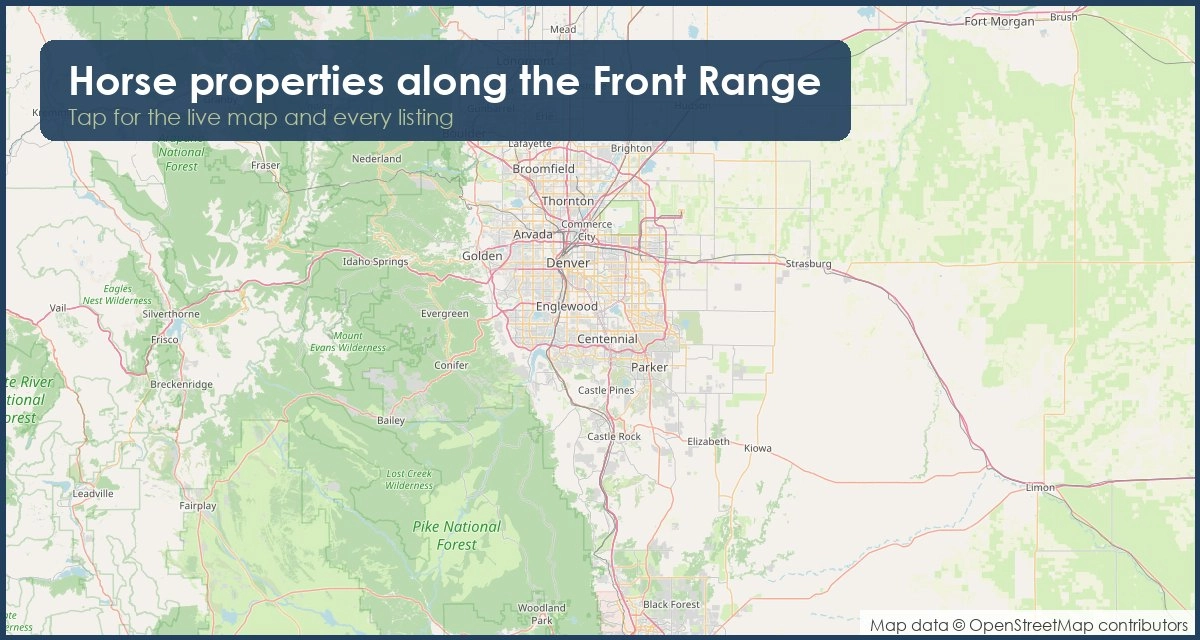
The live map shows each horse property for sale today with photos, prices and a save-this-search button, from Wellington and Fort Collins down through Brighton, Parker, Elizabeth and Castle Rock to Black Forest and Colorado Springs. New listings text you the day they hit the MLS.
Open the live map and listings Call or text 303-955-4220Colorado horse property
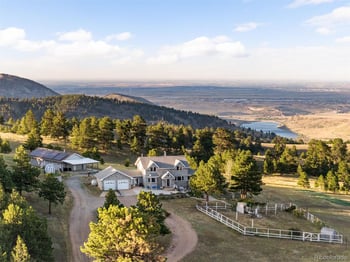
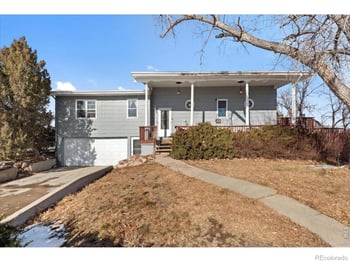
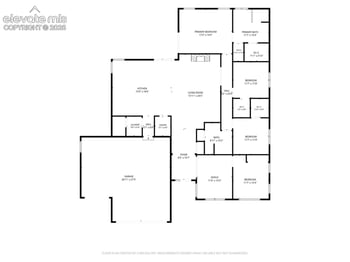
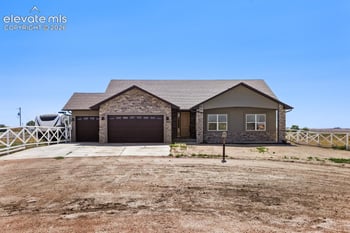
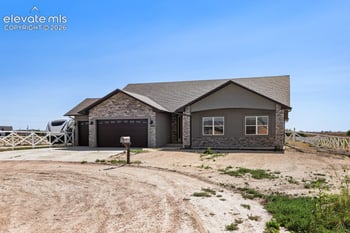
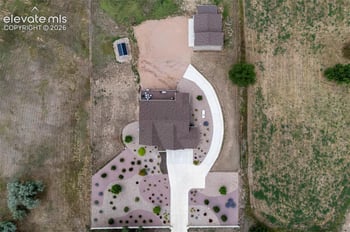
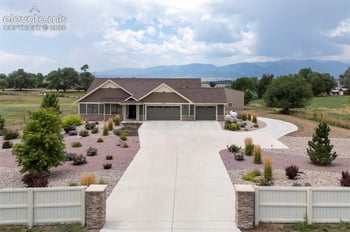
Land where you can legally keep horses: usually an acre or more, zoned agricultural or rural residential, with a well or water right that allows livestock, fencing, and room for a barn or loafing shed. Along the Front Range that means Elbert and Douglas County ranchettes around Parker, Elizabeth and Franktown; Adams and Weld County acreage around Brighton, Hudson and Greeley; Larimer County around Loveland, Berthoud, Fort Collins and Wellington; Jefferson County foothills around Golden, Evergreen and Conifer; Boulder County around Longmont and Niwot; and El Paso County around Black Forest, Peyton, Falcon and Colorado Springs. Below is every matching property for sale today, the map, and the answers to the questions horse owners ask us most.







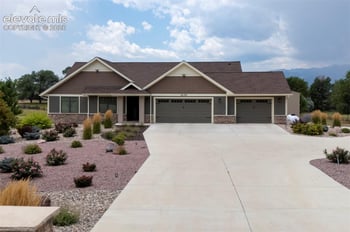


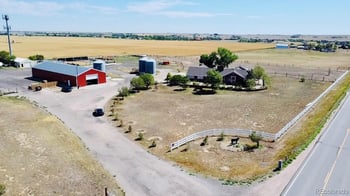


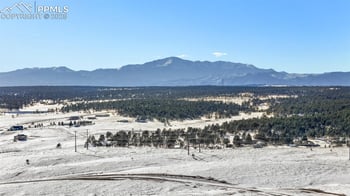
Local anchors
Elbert and Douglas County ranchettes from 2 to 40 acres, the densest horse country within an hour of Denver. Arenas, boarding barns and feed stores on every county road.
Adams and Weld County acreage with a farming history, flatter land, easier fencing, and prices that still leave money for the barn. Rocking Horse Farms and Buckley Acres are the names buyers ask about.
Surrey Ridge, Castle Park Ranch and the Daniels Park side of Douglas County: bigger estates, trail access, and covenants that matter.
Larimer County horse country with mountain views, irrigation ditches and water rights that have to be read carefully.
Jefferson County foothills: steeper ground, fewer flat acres, a shorter grazing season, and riding straight out onto open space.
El Paso County pines and prairie. Colorado Springs is the largest single horse market on this site, with well and septic on almost every parcel.
The honest answer is two numbers. The county's number is zoning: each county sets animal units per acre, and it decides how many horses you may keep. Douglas County, for example, requires 2.5 acres for the first two horses in its rural residential zones; other counties are looser or much stricter, and a few parts of the Front Range want 35 acres before you can run more than a handful. The land's number is grazing: on dry Front Range pasture, plan on one to two acres per horse if you feed hay year-round, and far more if you expect the pasture to carry them. Most Colorado horse owners on small acreage feed hay and use the land for turnout, not grazing.
Ask the county planning office for a written zoning verification for the parcel before you write the offer, or make the offer contingent on it. The listing agent's word and the word horse in the remarks are not zoning. Watch for: parcels zoned residential that only allow household pets, HOA covenants that cap or ban livestock even where the county allows it, setback rules for barns and manure storage, and whether a commercial boarding or training operation would need a special use permit.
This is the one that stops deals. In Colorado a well on a parcel under 35 acres is often permitted for household use only, which prohibits watering livestock and outdoor irrigation. You want a domestic well permit, or one that lists livestock watering as an allowed use, and you confirm it with the Colorado Division of Water Resources, not the seller. On larger parcels and irrigated ground, look for adjudicated water rights with a decreed volume and priority date; shares in a ditch company are a different thing again. If the property is on a rural water district or a city tap, ask what an outside hydrant and stock tank will cost you per month.
Perimeter fencing is the first thing buyers underestimate: horse-rated fencing (no barbed wire near horses, no field fence that traps a hoof) runs real money per linear foot, and a five-acre square is roughly 1,900 feet of it. A barn or loafing shed with a windbreak matters more in Colorado than a fancy stall barn; the wind and the sun are harder on horses here than the snow. Arenas need drainage and footing, and both are permits and dirt work in most counties. Manure has to go somewhere: composting area, spreading rights on your own land, or a haul-away contract, and neighbors and HOAs notice.
Many Front Range horse communities are covenant-controlled and horse-friendly on purpose: they write horses in and trailers in. Others allow horses but limit the count, the outbuildings or the fencing style. Read the covenants and the plat before you fall in love with the barn.
If the house carries most of the value and the parcel is roughly 10 acres or less, a normal conventional, FHA or VA loan usually works; FHA and VA both accept agricultural zoning as long as the property is primarily residential and not a commercial boarding operation. Above that, or when the land and outbuildings carry the value, lenders move you to acreage or rural products with 25 to 35 percent down and a different appraisal. Mike Oswald at Rate looks at the parcel size, the zoning and the outbuildings with Kenna buyers before the offer so the loan does not fail at appraisal. Read our guide to equestrian property financing in Colorado.
Keeping your own riding horses does not make the land agricultural for property-tax purposes. Colorado assessors classify by use, not acreage, and personal horses are a residential hobby in their eyes. Ag status takes a bona fide agricultural operation with the paperwork to show it. Budget for residential taxes on the whole parcel unless the seller can show you the current classification and how it was earned.
Boarding along the Front Range is a real alternative, and for one or two horses it is often cheaper per year than the mortgage difference between a subdivision home and five acres. The reasons people buy anyway: they want the horses outside the kitchen window, they ride at dawn, they have three or more, or they want to build a program. Our guide to boarding horses in the Denver area runs the numbers.
From the MLS, 2025-09-22 to 2026-09-17, homes on an acre or more whose listing mentioned horses or equestrian use: 1,000 closed (the first 1,000 analyzed of 1,336 matches), median sold price $885,500, median $318 per square foot, and they sold at 98 percent of asking on median. Right now 746 are for sale at an average asking price of $1,708,899. These are listing-description matches, not a zoning census, so treat them as the shape of the market rather than a count of horse-zoned parcels.
Horse property sells to a small, specific buyer pool, and the listing has to answer their questions before they drive out: zoning, well permit, water rights, fencing, outbuilding condition, access in a March snow. The Smart Pricing Report™ prices your place against horse-property sales, not against every house in the county, and the Property Showing Report tells you what the buyers who did drive out actually said. Start with what you need to know when selling your horse property in Colorado.
Every item here has stopped a Colorado horse-property closing at least once. Get them in writing, or make the contract contingent on them.
Fit check
Horse property has few true comparables. We find the ones that matter, net out the outbuildings and the water, and show what this place is worth today.
Fair, high, or a bargain, and what to offer. No pressure; it is your money and your horses.
Text us the address and you have the report the same day, usually within hours.



By zoning, it depends on the county: Douglas County asks 2.5 acres for the first two in its rural residential zones, and other counties differ. By the land, plan on one to two acres per horse if you feed hay, which nearly everyone on Front Range acreage does. Get the county's number in writing before you offer.
No. That permit class bars livestock watering. You need a domestic permit or one that lists livestock use, or a separate legal water source such as a rural water tap. Confirm it with the Division of Water Resources, not the listing.
Often yes, when the home carries most of the value, the parcel is modest (roughly 10 acres or less) and there is no commercial boarding or breeding operation. Larger or income-producing properties need acreage or rural loans with bigger down payments.
No. Colorado classifies land by agricultural use, not by acreage or by what animals live there. Personal riding horses are a residential hobby to the assessor.
Parker, Elizabeth and Franktown in Elbert and Douglas County, then Brighton and Hudson in Adams and Weld County, then the Castle Rock and Sedalia side of Douglas County. Colorado Springs and Black Forest are the biggest single market on this site.
No, and no website can promise that. The grid shows homes on an acre or more whose listing mentions horses or equestrian use. We verify zoning, water and covenants on each one with you before you offer.
The market statistics under the grid show today's asking prices and price per square foot; the sold numbers in the guide show what actually closed in the last year. Land, water and outbuildings move the price far more than the house does.
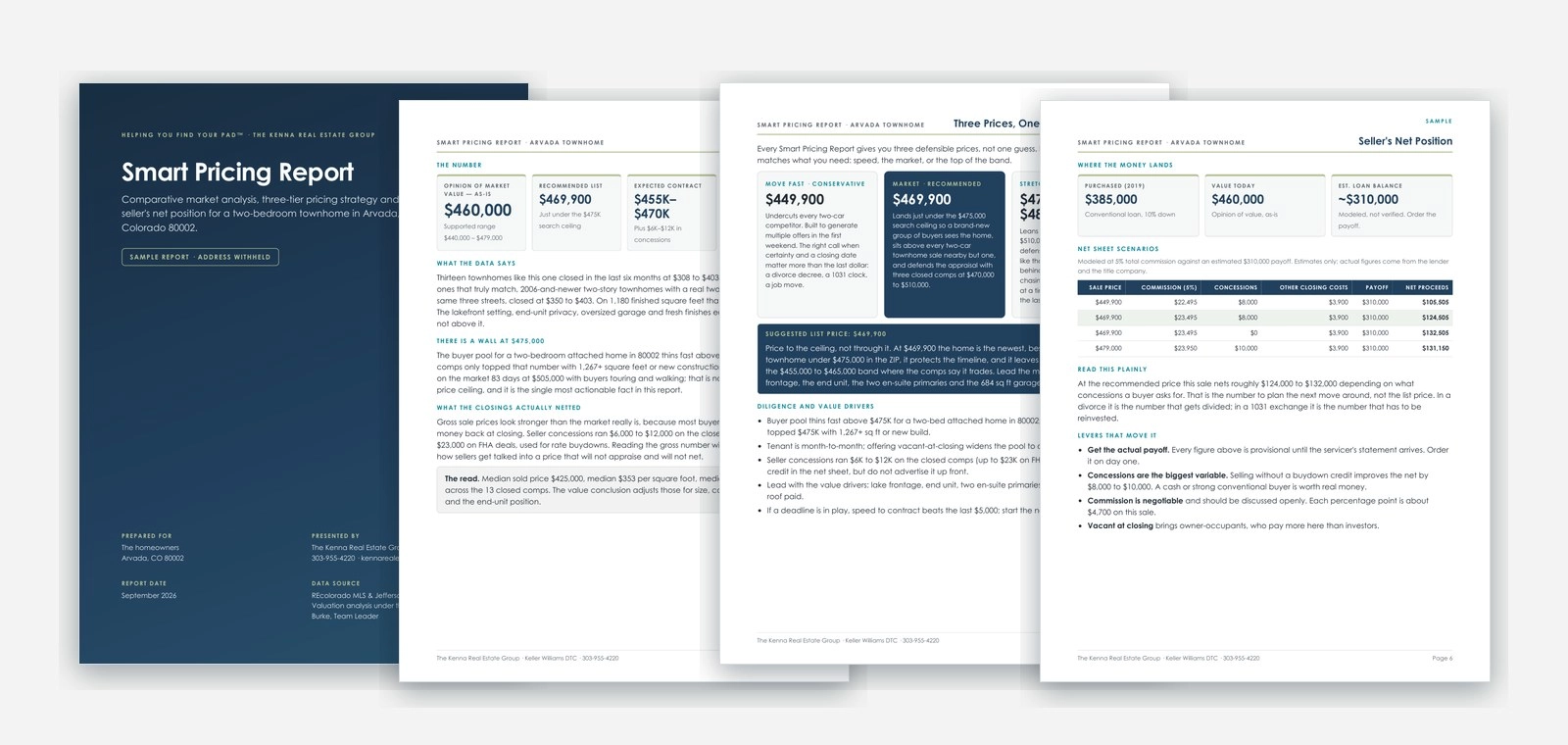
Order the free Smart Pricing Report below. It prices your property against horse-property sales specifically, separates the land and the improvements, and comes with a net sheet.
Intelligence reports provided by  ™
™
Free for every seller
Before a sign goes in the yard, every Kenna seller gets the Smart Pricing Report™: three defensible prices, the comparable evidence with concessions netted out, a seller's net sheet and a written strategy for Colorado. Proprietary to Kenna, built on AgentCOS™ market intelligence. Not a generic CMA. Free.
Call or text 303-955-4220A live person answers. Not a robot, not a phone tree. We start on your report the same day.
Free, private, no pressure
Free, no pressure. Call or text and a live person answers; we will read the zoning, the well permit and the covenants with you, and run the Buyers Advantage Report before you offer.
Kenna Real Estate Group at Keller Williams Realty DTC, LLC, 6300 S Syracuse Way, Suite 150, Centennial, CO 80111. We are REALTORS® and licensed real estate professionals, not attorneys, water engineers or county planners: zoning, water and covenant facts on this page are general and change by county and parcel, so verify every one with the county, the Division of Water Resources and your own inspection before you rely on it. Listing data from the MLS, updated through the day; sold figures are the window shown. Equal Housing Opportunity.